Wombat Interview #10 – Vinnum Sabbathi

The English version is after the French one. 


Bien loin de son terrier, Wombat Cult s’est rendu par delà les océans pour rencontrer Vinnum Sabbathi, formation mexicaine désormais incontournable, et pilier de la scène -comme nous prenons plaisir à l’appeler- Interstellar Doom.


VERSION FRANÇAISE :

Wombat Cult : Vinnum Sabbathi commence à devenir un nom incontournable de la scène Doom internationale. Je me rappelle de votre présence sur l’affiche du Sonic Blast il y a quelques années, m’ouvrant à votre univers.
Pouvez-vous revenir sur les débuts, les balbutiements, de votre aventure ?

Juan : Salutations du Mexique, merci pour cette interview et aussi pour ces bien belles paroles. Le groupe a commencé comme un projet solo en 2012. J’ai enregistré chez moi une démo merdique cette année-là tout en jouant de la guitare avec un groupe appelé Bloodwitch où j’ai rencontré notre bassiste Samuel et aussi son frère Daniel (de Satánico Pandemonium et Rivers of Gore) , à la fin de cette année, j’ai enregistré le premier EP et Sam a rejoint le groupe peu de temps après.

Nous avons joué quelques concerts en duo et un jour, Bloodwitch a joué avec Bar de Monjas où nous avons rencontré Gerardo, nous lui avons demandé de se joindre à Vinnum Sabbathi et en 2013 nous avons enregistré le deuxième EP. Mon frère Roman s’est joint à l’aventure pour jouer des Samples et des FX en 2014 lorsque nous avons commencé à jouer plus souvent, à partir de cette année-là avec le festival Nrmal et beaucoup de showcases avec Lxs Grises, qui était un collectif d’artistes underground.

En 2015, nous avons tourné avec Bar de Monjas et enregistré le Split Fuzzonaut et un 4-way Split avec El Ahorcado, Terror Cósmico et Weedsnake, puis Gerardo a dû partir quelques temps à l’étranger pour ses études. Notre ami Leonardo (de Nazareno el Violento & Apocalipsis) nous a alors rejoint en tant que batteur pendant quelques années pour nous aider avec nos concerts au Mexique.

Wombat Cult: La grande particularité de Vinnum Sabbathi, au-delà de votre sens de la composition hors pair, est la présence des Sample en guise de « chant ».
Comment cela fonctionne, comment vous y prenez-vous pour que cette tonalité assez monocorde puisse devenir un élément clé de votre univers ?

Juan : Je pense que très tôt il était évident que le chant ne ferait pas partie du son du groupe, l’idée initiale de VS était, d’une certaine manière, d’essayer de devenir la bande sonore d’événements liés à la science comme un décollage de vaisseau spatial, avec un mur de riffs lourds et forts, associé au flux de communication.

Les Samples sont devenus une partie essentielle de notre son, parfois l’ambiance de ces derniers guide la musique et l’inverse également. Je suis un grand fan des vieux documentaires liés à l’espace et souvent ceux-ci en sont l’inspiration, mais nous avons également incorporé des sujets liés à la science-fiction, en particulier dans nos albums, alors que toutes nos chansons de la série HEX restent des sujets spatiaux / scientifiques.

Pour moi, toute la substance liée au satanisme, à la sorcellerie ou encore à la magie noire qui entoure le genre n’est pas attrayante, si vous voulez une catastrophe, vous n’avez qu’à écouter les nouvelles ou regarder autour de vous, en tout cas c’est ce que l’on perçoit ici et je pense que c’est en partie ce nous voulons transmettre à travers les échantillons vocaux; rien de plus réel qu’Isaac Asimov lui-même qui vous parle des effets secondaires possibles de la manipulation génétique et de la détérioration de l’environnement pour l’avenir.

Wombat Cult: On parle de plus en plus d’une scène Space Doom qu’il s’agisse de vous ou encore Vestjysk Orken, Comacozer ou encore Yuri Gagarin. De manière personnelle je préfère qualifier le genre d’Interstellar Doom, rebondissant sur la caractéristique de ces groupes à offrir un voyage entre les astres à la découverte de sonorités nouvelles. Comment arriveriez-vous à définir le concept même d’Interstellar Doom d’un point de vue architectural sonore ?

Juan: Nous sommes fans de ces groupes également, Yuri Gagarin nous a fait fondre la cervelle au Sonic Blast il y a quelques années et évidemment nous ne pouvons toujours pas croire que nous avons pu collaborer avec les gars de Comacozer pour le Split.
C’est une question difficile cependant; Personnellement, je lutte toujours chaque fois que la musique doit être étiquetée dans les divisions Stoner / Doom, mais oui, le lien entre les thèmes liés à l’espace / science-fiction avec des riffs lourds et lents devient peut-être paysage musical à part entière, l’Interstellar Doom pourrait alors être précis pour la ligne actuelle de groupes dans ce domaine (même les maîtres Ufomammut me viennent à l’esprit), cela étant dit, ma référence ultime pour qualifier cela est la formation hollandaise 35007.

Wombat Cult: Le travail autour du rendu sonore sur vos albums est très précis, néanmoins la proposition que vous faîtes avec Of Dimensions &Theories est stupéfiante, le son y est si volumineux et vaste qu’il produit de vraies échappées émotionnelles.
Dans quelles conditions avez-vous enregistré cet album ? Comment s’est déroulé le travail autour du mix et du mastering, qui nous propulse vers des horizons où la curiosité est reine ?

Juan: L’idée de l’album a commencé il y a presque deux ans lorsque nous développions «The Good Earth is Dying» et la tournée avec Cegvera, lors des répétitions précédant l’enregistrement, nous nous sommes retrouvés avec la longue chanson qui allait devenir «A Superstring Revolution I- II »et à partir de là, le reste de l’album a commencé à se rassembler lentement, puisque nous ne nous voyons généralement pas très souvent, nous assemblons toujours la plupart du matériel en seulement quelques répétitions. Le concept de l’histoire est basé sur « The Elegant Universe » de Brian Greene, mais Gerardo a également ajouté quelques idées clés pour le fusionner avec The Sixth Glare de Cegvera.

De retour à la mi-2019 après une tournée «intéressante» avec Fumata en Europe, je me suis retrouvé dans un barbecue pot Astral Fest à Bristol avec beaucoup de grands groupes internationaux de la famille Stolen Body Records et juste par curiosité, j’ai réussi à enregistrer certains d’entre eux en leur demandant de répondre à une question dans leur propre langue, je pense que cela a suscité l’idée d’enregistrer tous les Sampl esdu nouvel album à partir de zéro.
Nous avons donc fini par écrire des scripts pour toute l’histoire, qui ont été enregistrés par de bons amis de différentes nationalités, et à la fin 2019, nous avons réussi à enregistrer des démos pour l’album avec ces Samples. Lorsque nous étions en route vers le studio, nous avons écouté ces démos durant de longues heures, pour développer nos idées avant d’enregistrer.

L’album a été enregistré pendant une période de 3 jours, du 3 au 5 janvier 2020 au Testa Estudio à Guanajuato, propriété de Victor Velazquez alias «KB». Nous avons enregistré précédemment le Split avec Cegvera et aussi le Split 4 Way là-bas, donc nous étions déjà familiers avec le studio et la dynamique de travail.
Nous avons tout enregistré ensemble dans la même pièce et ajouté des secondes guitares, synthés et samples plus tard. Pour cet enregistrement, nous avons eu la chance d’expérimenter avec différents matériels, pour les guitares j’ai fini par utiliser mon Beta Lead dans l’un des baffles que j’ai fabriqué pour le studio, chargé avec Eminence V1216 et Texas Heat, pour les deuxièmes guitares j’ai utilisé une Blackface Fender Twin Reverb. Pour la basse, Sam a utilisé un Fender Bassman 100 dans un Ampeg 115HLF et pour la batterie, Gerardo a utilisé un mélange de tambours Ludwig du studio.

La chanson «Beyond Perturbative States» a été composée à la dernière minute lors de l’enregistrement, nous avons eu l’idée d’une sorte de chanson Drone mais nous n’avions rien de prêt avant de nous rendre en studio, nous avons utilisé un Fender Rhodes pour la première partie et nous avons improvisé un Jam Dronesque en une seule prise pour la fin, et même si tout était fait à la dernière minute, nous avons tous adoré le résultat final. Après 3 jours en studio, nous avons ramené un mix brut à la maison, puis KB a fait des ajustements plus tard sur cette base, nous avons fini par faire 3 révisions et KB a également fait le master numérique et vinyle, comme pour le matériel utilisé pour le mix et le master : seul KB sait ce qui s’est passé là-bas.

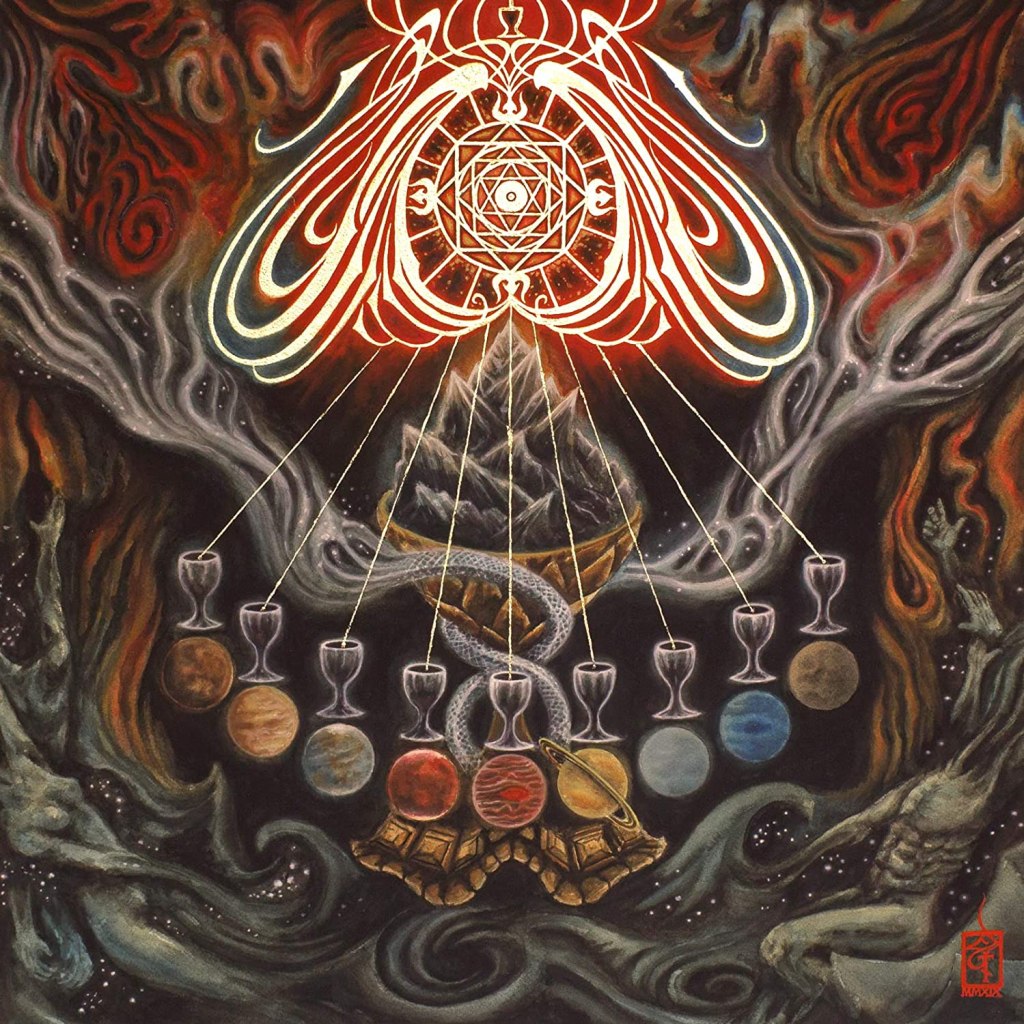
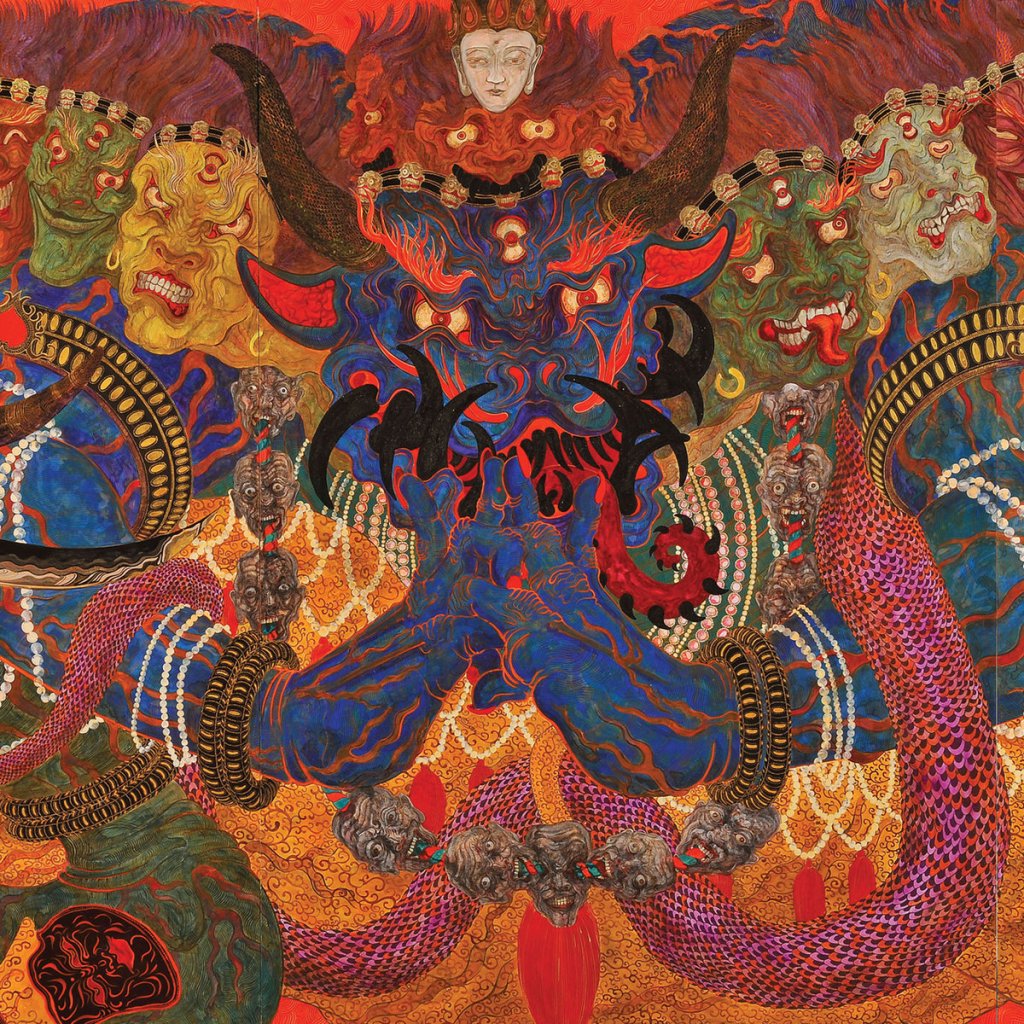
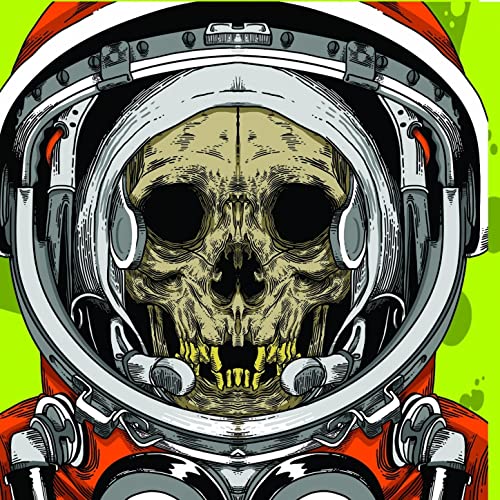
« Of Dimensions And Theories » by Vinnum Sabbathi / Designed by Asep Yasin Abdulah

Wombat Cult: A de nombreuses reprises, nous avons pu voir que vous apportiez un soin tout particulier au choix de votre matériel pour définir une image sonore au plus proche de celle que vous ressentez.
Pouvez-vous revenir sur le matériel utilisé pour créer le son Vinnum Sabbathi et les raisons pour lesquelles vous avez choisi de vous équiper de la sorte ?

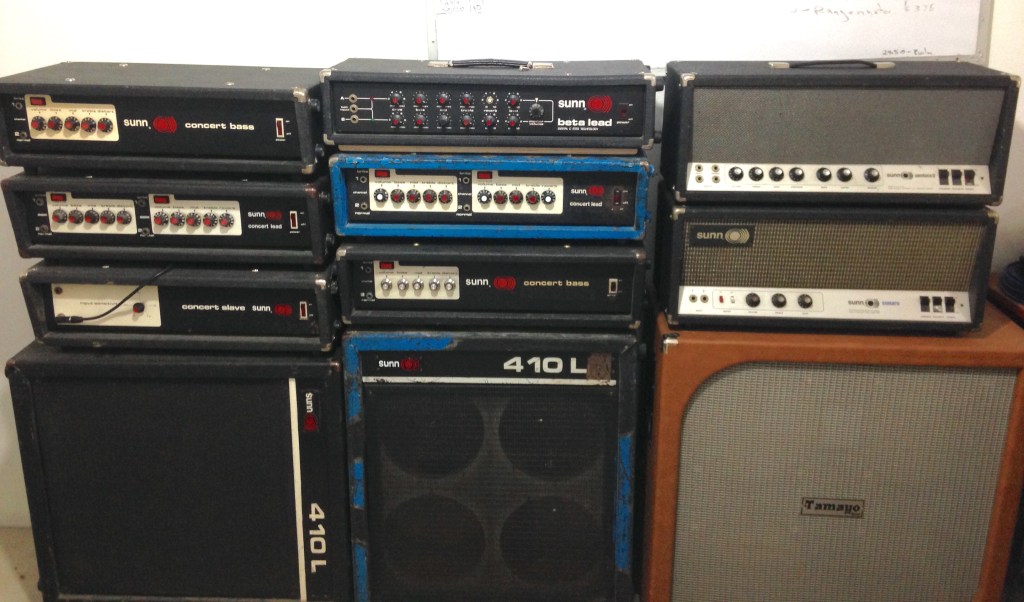
Juan : En règle générale, notre choix d’équipement reflète ce que nous pouvons nous permettre et ce qui nous semble vraiment bon, nous sommes toujours à la recherche de bonnes affaires et essayons autant que nous le pouvons (les équipements coûteux « doom » sont hors de notre portée). Pour la guitare et la basse, nous utilisons des amplis Sunn à semi-conducteurs pour à peu près tout, car ces amplis sont des bêtes de somme, super bruyants, faciles à réparer et ici au Mexique, ils sont encore assez bon marché par rapport au marché américain.

J’avais déjà expérimenté la série Concert mais en ce moment je joue via un Beta Lead associé à un cab 2 × 12 que j’ai fabriqué, qui est chargé de G12T-75. Je joue sur une Epiphone SG depuis le début, sur ma planche il y a un V845 Vox Wah, pour les pédales dirt j’utilise un overdrive et fuzz que j’ai construit il y a des années, suivi d’un Ibanez DE-7 et d’un EHX Freeze que j’ai modifié pour utiliser avec une pédale d’expression Moog comme contrôle de volume.

Samuel utilise un Concert Bass associé à un baffle de basse Sunn 215B, il joue une Fender Precision Bass et un pédalier simple avec juste un accordeur bon marché, un Boss ODB-3 et un Bass Cry Baby Wah. Pour les Samples, Roman utilise un Digitech JamMan Solo et récemment il a obtenu un Moog Sub Phatty, que nous avons inclus un peu dans le nouvel album.

Gerardo : J’ai toujours été fan de l’héritage de Bonham, qui consiste en des sons de batterie forts et profonds. J’ai une Gretsch Catalina Club (tom à air 13 ′, tom au sol 18 ′ et grosse caisse 26 ′) qui suit parfaitement cette ligne, et personnellement, je pense qu’elle correspond parfaitement au son Vinnum. Au niveau de la caisse claire, j’essaye toujours de changer un peu, normalement j’utiliserais un Yamaha Oak custom 14 × 7, mais pour ODAT j’ai utilisé un acrolite Ludwig du 70’s 14 × 5.5.

Wombat Cult :  Le visuel chez Vinnum Sabbathi semble également être une pièce maîtresse. Ce travail artistique réussit toujours à rendre pleinement compte de l’ambiance de vos différentes sorties.
Vous changez régulièrement d’artistes pour donner une image à vos compositions allant de Mike Sandoval à Asep Yasin Abdulah en passant par Hellbound Graphics.
Comment procédez-vous dans le choix de l’artiste mais également dans la collaboration avec ce dernier ?

Juan : Nous aimons collaborer avec différents artistes, la plupart d’entre eux sont locaux pour nous et aussi de bons amis depuis les premiers jours de Vinnum comme Valde (Hellbound Graphics, également d’Akuma) et Raúl (Lesuperdemon, également de Jesus on Dope) , Diego Bureau, Leonardo (Mico, également de Fumata) et Mike Sandoval.
Nous regardons constamment leur travail et nous entrons juste en contact avec qui nous pourrait avoir une bonne approche pour une idée spécifique.
Pour notre nouvel album, nous avions Yasin dans notre esprit après son travail avec Cegvera, et nous pensons qu’il a fait un superbe travail pour représenter l’ambiance de l’histoire.

Wombat Cult : Vous avez pris part à de nombreux splits que cela soit avec Comacozer récemment mais aussi Cegvera et Bar De Monjas.
Comment choisissez-vous ces partenaires musicaux mais surtout comment fonctionne la relation entre les deux groupes pour créer des albums cohérents comme vous les proposez ?

Juan : Notre premier Split est arrivé en 2014 lors d’une tournée avec certains de nos groupes préférés: Weedsnake, Terror Cósmico & El Ahorcado, c’était la première fois que nous enregistrions dans un vrai studio et nous étions super stressés à l’époque car la nuit précédente, certains connards ont volé la batterie de notre voiture, mais à part ça, nous avons eu de superbes souvenirs et cela nous a ouvert à toute l’idée de «Split».

En 2015, nous avions beaucoup joué avec Bar de Monjas et l’idée de faire un Split est venue naturellement, je pense, Fausto a inventé le terme «Fuzzonaut» et cette collaboration a commencé toute la série «HEX» pour nous. Nous nous sommes dirigés vers Vesubio 34, le studio d’enregistrement de notre bon ami Cardiel, où nous avons enregistré le tout en une seule journée!
Il a aussi involontairement lancé le tout «enregistré en une seule prise» pour la série HEX, puisque nous ne pouvions nous permettre qu’une journée en studio pour le suivi.

Le suivant s’est produit en 2018 lors d’une série de concerts dans les villes frontalières nord de Tijuana et Mexicali avec nos copains d’Owain, nous avons pensé que ce serait cool d’enregistrer quelque chose là-bas et nous avons également fini par faire le tout en une seule journée à Cacho Estudio. C’est le seul enregistrement à ce jour avec notre copain Mico à la batterie.
En juin de la même année, Gerardo a amené le gang de Cegvera au Mexique pour faire une tournée ensemble, donc encore une fois l’idée de faire un Split était tout simplement naturelle et je pense que je parle au nom de tout le monde quand je dis que c’était une tournée très spéciale (nous avions un premier concert à guichets fermés à Mexico et nous avons vendu TOUS le merch de la tournée là-bas!), nous nous sommes éclatés pendant la tournée et nous avons enregistré le tout en une journée au Studio Testa, « The Good Earth is Dying » est une sortie très spéciale, pour la musique mais aussi du fait des souvenirs qu’elle nous a laissé.

Au cours de cette session d’enregistrement, nous avons réussi à obtenir deux morceaux supplémentaires qui ont fini par faire partie du Split que nous avons sorti cette année avec Comacozer, pour celui-ci l’idée est venue d’Adam, l’homme principal derrière Psychedelic Salad Records que nous avons rencontré durant le Sonic Blast en 2017.
Nous sommes fans des gars de Comacozer depuis un certain temps, donc c’était une collaboration longue distance très excitante, nous sommes impatients de visiter l’Australie dans un proche avenir et de jouer cette version ensemble.

Pour 2021, nous avons déjà quelques collaborations en cours, nous voulions les enregistrer en 2020, mais les restrictions COVID ont définitivement ralenti les choses. J’espère que nous aurons des nouvelles dans les mois à venir.
« Fuzzonaut Split » by Bar De Monjas & Vinnum Sabbathi / Artwork by Mike Sandoval

Wombat Cult: Of Dimensions Ad Theories, a le droit a un prologue musical qui a été composé par Cegvera sous le nom de The Sixth Glare. L’album est dingue et néanmoins très confidentiel contrairement à la sortie de votre second album qui s’articule pourtant avec celui de Cegvera.
Pouvez-vous nous éclairer sur l’interconnexion entre ces deux albums ?

Gerardo: Le lien entre les deux albums se joue autour de l’état actuel du monde, délabré, dans lequel nous vivons.
Le Sixth Glare se concentre sur l’événement de la sixième extinction de masse que nous vivons (pas seulement humain, mais la biodiversité dans son ensemble).
Alors que ‘Of Dimensions and Theories’ est complètement fictif. L’histoire racontée dans ‘The Sixth Glare’ est vraie à 90%: maladie + perte de biodiversité + changement climatique + catastrophes anthropiques + surpopulation + effondrement environnemental.

L’album est sorti juste avant l’arrivée du Corona, et certaines personnes nous ont dit que c’était un album «prophétique». Vérité à dire: TSG n’est pas vraiment prophétique.
La plus grande partie était déjà attendue – et même prédite par la communauté scientifique – ce n’est pas une conspiration; ce ne sont pas les illuminati.
Nous parlons d’un monde épuisé / gaspillé / fatigué par tous les dégâts qui ont été causés sans relâche pendant des siècles. Il est vrai que TSG est un peu plus confidentiel (nous n’en avons pas autant parlé), mais si cela vous intéresse, vous pouvez trouver d’horribles faits scientifiques (et peu de fiction) sur l’état actuel du monde, imprimés sur la pochette de ce disque, qui a également été publié par Stolen Body Records.

C’est là que Vinnum entre en jeu – ODAT – où 4 astronautes sont à la recherche d’un endroit propice pour perpétuer l’existence humaine. Nous avons toujours aimé faire des choses ensemble pour renforcer les liens entre les scènes heavy britanniques et mexicaines. 2020 n’a pas fait exception.

Wombat Cult: Vous avez travaillé avec une pluralité de abels depuis 2014, que cela soit Stolen Body Records, Aim Down Sight Records ou encore Interstellar Smoke Records.
Comment procédez-vous pour déterminer que tel album sortira sur tel label ?

Juan: Nous serons toujours ravis de travailler avec différents labels, c’est sûr, pour nous, c’est incroyable que notre travail soit considéré par des gens d’autres pays, souhaitant le publier sur différents formats. Nous le savons parce que nous gérons nous-mêmes un petit label, dans le but de sortir la musique de groupes underground que nous aimons, nous sommes conscients du travail acharné et des risques que cela implique donc nous sommes reconnaissants envers les personnes derrière les labels pour leur confiance.

Stolen Body Records est notre principal label, Alex et Suz font à peu près partie de notre famille depuis que nous les avons rencontrés en 2017 lors de notre tournée européenne, même sentiment avec Matthias de Aim Down Sight Records qui a sorti nos EPs et notre premier album, nous avons appris à le connaître personnellement pendant cette tournée et nous sommes de bons amis depuis.
Cette année, nous avons commencé à travailler avec Psychedelic Salad d’Australie pour le Split avec Comacozer et Interstellar Smoke Records de Pologne; Jacek, qui est l’homme derrière ISR, a travaillé avec des groupes d’Amérique latine comme Arteaga, The Wizard et nos copains Satánico Pandemonium, alors nous étions heureux d’être inclus dans leur roster.
Nous avons également travaillé avec le label indonésien Southcave Records avec une version cassette limitée de Gravity Works dans le passé.

Wombat Cult: Vu de l’Europe, la scène Stoner/Doom Sud-Américaine est en pleine explosion avec de nombreux groupes qui semblent porter le futur du genre. En tant que groupe majeur de cette sphère, pouvez-vous nous donner votre point de vue sur la situation et nous donner des noms qui méritent de rayonner par-delà les océans ?

Roman: L’histoire du rock en Amérique latine est si diversifiée, par exemple en Argentine depuis les années 70, la société a soutenu la musique rock, mais au Mexique, le rock a été interdit par le gouvernement depuis la fin des années 70 jusqu’aux années 90. Je pense que dans le cas du Stoner, Doom, Psychedelia, chaque pays a créé quelque chose de spécial parce que les groupes locaux combinaient les vieux sons Rock and Roll, la Cumbia et les sons latins avec la lourdeur du Metal, du Punk et bien sûr, l’influence du groupes principaux comme Kyuss, Pentagram, Electric Wizard, etc.

Je pense que le succès du mouvement latino-américain réside dans la diversité des sons de chaque scène et aussi, dans le contexte social: toute la scène latino-américaine partage certains problèmes comme la pauvreté, la corruption, les inégalités, la révolution sociale et plus encore. Dans le cas de la musique, nous n’avons pas les mêmes opportunités qu’en Amérique ou en Europe, donc nous essayons toujours de trouver le moyen de survivre et de continuer à faire de la musique, ce niveau de nécessité fait que beaucoup de groupes travaillent vraiment dur pour y parvenir avec des objectifs comme sortir un album sur vinyle ou jouer à l’étranger.

La scène latino-américaine et les fans sont très spéciaux, je pense que le travail des sites Web, des collectifs et des labels est très important pour la scène underground, il y a une TONNE d’informations rassemblées sur le site Doomed & Stoned Latinoamerica (https: // doomednstonedlatino. com), mais découvrez également le travail de Red House, Abraxas, Noiseground, Necio Records, Manicomio Discos, Lucifer Discos, Bruxa Verde, Void Stoner Doom Worship, etc.

Juan : Quant à notre scène locale au Mexique, vous pouvez visiter notre petit label LSDR Records (https://lsdr.bandcamp.com) où vous pouvez trouver beaucoup d’albums, de compilations et de bootlegs live de certains des groupes de heavy underground que nous connaissons, en voici quelques-uns que nous recommandons totalement :
Saturno Grooves, Terror Cósmico, Fumata, El Culto del Ojo Rojo, Satánico Pandemonium, Vyctoria, Cardiel, Sunset Images, Par Asito, Abyssal, Annapura, Tolot, Bardo, Malamadre, Moonwatcher, Weedsnake, Chivo Negro, k. and even though they don’t play anymore please check out Apocalipsis, Akuma et El Ahorcado.

Wombat Cult: Nous arrivons au terme d’une année 2020 qui aura su se composer de centaines d’albums fantastiques et de pléthore de nouvelles formations au potentiel certain.
Quels sont vos coups de cœur ?

Juan : Voici quelques-uns de nos favoris (sans ordre particulier) :
Wren – GROUNDSWELLS
Arcadian child – Protopsycho
Camel Driver – \ /
Cat Clyde – Good Bones
Yuri Gagarin – Outskirts of Reality
Satánico Pandemonium – Culto Suicida
Soden – Onwards … Towards the Tundra
Abyssal – Misanthrope (2020)
Slift – Ummon
Lowrider – Refractions
Rezn- Chaotic Divine
Cuarzo- Vol. II
IAH – III
Jupiterian – Protosapien
Ozo – Pluto
Oranssi Pazuzu –Mestrarin Kynsi
Power Plant – Cargo
Primitive Man – Immersion
Saturno Grooves – Cosmic Echoes

Wombat Cult : 2021 est arrivé, quels sont vos projets d’avenir, vos rêves?

Gerardo: Pendant que la tempête se calme: créer de la nouvelle musique, passer du temps avec ma famille, écrire des textes et profiter autant que possible des paysages naturels. Après la tempête: Tourner avec mes amis (au Mexique et peut-être une petite tournée européenne ?), voir de nouveaux endroits, de nouveaux amis et profiter des paysages naturels autant que possible

Roman : Créer de nouveaux morceaux et travailler sur de nouveaux splits, cela peut prendre un certain temps pour un nouvel album, mais c’est aussi sur ma liste.

Juan: Survivre, sortir et retourner jouer sur scène.

Pour découvrir et soutenir Vinnum Sabbathi :

Pour découvrir l’album introductif au concept de « Of Dimensions And Theories » : The Sixth Glare par Cegvera :


English Version:

Far from its burrow, Wombat Cult has traveled across the oceans to meet Vinnum Sabbathi, a now essential Mexican formation, and pillar of the scene – as we take pleasure in calling it – Interstellar Doom.


Wombat Cult: Vinnum Sabbathi is starting to become an essential name in the international doom scene. I remember your presence on the Sonic Blast poster a few years ago, opening me up to your universe.
Can you go back to the beginnings of your adventure?

Juan: Greetings from Mexico, thanks for this interview and also for the kind words. The band started as a one-man project back in 2012. I home-recorded a crappy Demo that year while playing guitar with a band called Bloodwitch where I met our bassist Samuel and also his brother Daniel (from Satánico Pandemonium and Rivers of Gore), by the end of that year I recorded the first EP and Sam joined the band shortly after.

We played a couple of shows as a duo and one day Bloodwitch played a show with Bar de Monjas where we met Gerardo, we asked him to join and by 2013 we home-recorded the second EP. My brother Roman joined to play samples and FX by 2014 when we started to play more often, starting that year with Nrmal festival and a lot of showcases with Lxs Grises, which was an underground collective of artists.

By 2015 we toured with Bar de Monjas and recorded the Fuzzonaut Split and a 4-way Split with El Ahorcado, Terror Cósmico and Weedsnake, then Gerardo had to go overseas for his PhD studies for a bit and our buddy Leonardo (from Nazareno el Violento & Apocalipsis) joined as drummer for some years to help us with our shows in Mexico.

Wombat Cult: The great peculiarity of Vinnum Sabbathi, beyond your sense of the composition, sharpened, is the presence of the Samples by way of « singing part ».
How does it work, how do you go about making this fairly monotonous tone can become a key part of your universe?

Juan: I think very early on it was obvious that vocals were not part of the sound of the band, the initial idea for VS was to, in a certain way, try to become the soundtrack of science related events like a spaceship liftoff, with a wall of heavy and loud riffs paired with the communication feed.

Samples have become an essential part of our sound, sometimes the vibe of the samples guides the music and the other way around as well. I’m a huge fan of old space related documentaries and often those are the inspiration, but we have also incorporated some sci-fi related threads, especially in our Albums, while all our songs on the HEX series remain space/science topics.

For me the whole satanic/witchcraft/black magic thing that surrounds the genre is not appealing, if you want doom you only have to turn on the news or go look around, at least that’s the vibe around here and I think that’s in part what we want to transmit through the voice samples; nothing more real than Isaac Asimov himself telling you about the possible side effects of genetic manipulation and the deterioration of the environment for the future.

Wombat Cult: We are talking more and more about a Space Doom scene whether it is you or Vestjysk Orken, Comacozer or Yuri Gagarin. In a personal analysis, I prefer to qualify the genre of Interstellar Doom, playing with the characteristics of these bands to offer a trip between the stars searching for new sounds, new possibilities.
How will you come to define the very concept of Interstellar Doom from an architectural sound point of view?

Juan: We’re all fans of those bands as well, Yuri Gagarin melted our brains in Sonic Blast some years ago and obviously we still can’t believe we were able to collaborate with the Comacozer guys for the Split.
This is a difficult question though; I personally always struggle whenever the music has to be labeled within the stoner/doom divisions, but yeah the connection between space/sci-fi related themes with heavy and slow riffs is becoming its own thing maybe, so Interstellar Doom might be accurate for the current line of bands into this (even the masters Ufomammut come to mind), that being said, my ultimate reference for this is the great dutchmen 35007.

« Gravity Works » by Vinnum Sabbathi / Artwork by Mike Sandoval

Wombat Cult: The work around the sound rendering on your albums is very precise, nevertheless the proposal you make with Of Dimensions & Theories is astounding, the sound is so large and vast that it produces real emotional escapes.
Under what conditions did you record this album? How was unfolded the work around the mix and mastering, which propels us towards horizons where curiosity is queen at each listening?

J: The idea of the Album started almost two years ago when we were developing “The Good Earth is Dying” and the tour with Cegvera, during the rehearsals previous to the recording we ended up with the long song that would become “A Superstring Revolution I-II” and from there the rest of the Album started to come together slowly, since we usually don’t see each other very often we always put together most of the material in just a couple of rehearsals. The concept for the story is based in “The Elegant Universe” from Brian Greene, but also Gerardo added some key ideas to merge it with Cegvera’s The Sixth Glare.

Back in mid-2019 after an “interesting” tour with Fumata in Europe, I ended up in a post Astral Fest BBQ in Bristol with lots of great international bands from the Stolen Body family and just by curiosity I managed to record some of them answering a question in their own languages, I think that sparkled the idea to record all the samples for the new Album from scratch, so we ended up writing scripts for the whole story, which were recorded by some good friends from different nationalities, and by the end of 2019 we managed to record demos for the Album already with the samples, so while heading to the studio we only listened to those demos for hours on the road.

The Album was recorded during a 3-day period, from January 3 rd to 5 th 2020 at Testa Estudio in Guanajuato, owned by Victor Velazquez aka “KB”. We recorded previously the Split with Cegvera and also the 4-way Split there, so we were already familiar with the studio and the work dynamics. We recorded everything together in the same room and added second guitars, synths and samples later on. For this recording we had the chance to experiment with different gear, for guitars I ended up using my Beta Lead into one of the cabs I made for the studio, loaded with Eminence V1216 and Texas Heat, for the second guitars I used a Blackface Fender Twin Reverb. For bass Sam used a Fender Bassman 100 into an Ampeg 115HLF and for drums Gerardo used a mix of Ludwig drums from the studio .

The song “Beyond Perturbative States” was composed last minute while recording, we had the idea of some kind of drone song but we had nothing ready before heading to the studio, we used a Fender Rhodes for the first part and we improvised a drone(ish) jam in a single take for the end, and even though it was all last minute we all loved the final result. After 3 days in the studio, we took a raw mix back home and then KB made adjustments later on based on that, we ended up doing 3 revisions and KB also did the digital and vinyl master, as for the gear used for mix and master only KB knows what happened there haha.

Wombat Cult: On many occasions we have seen that you are bringing a particular care in choosing your equipment to define a sound image closest to what you feel.
Can you come back to the material used to create the Vinnum Sabbathi sound and the reasons why you chose you to equip in this way?

Juan: Generally, our gear choice reflects what we can afford and what sounds good to us really, we’re always on the hunt for good deals and trying stuff as much as we can (expensive “doom” gear is way out of our reach). For guitar and bass we have been using solid state Sunn amps for pretty much everything, because those amps are workhorses, super loud, easy to repair and here in Mexico are still pretty cheap to get compared with the US market.

I had experimented with the Concert series before but right now I’m playing through a Beta Lead paired with a 2×12 cab that I made, which is loaded with G12T-75s. I have been playing an Epiphone SG since the beginning, on my board there’s a V845 Vox Wah, for dirt pedals I use an overdrive and fuzz that I built years ago, followed by an Ibanez DE-7 and a EHX Freeze which I modified to use with a Moog expression pedal as volume control.

Samuel uses a Concert Bass paired with a Sunn 215B bass cab, he plays a Fender Precision Bass and a simple pedalboard with just a cheap tuner, a Boss ODB-3 and a Bass Cry Baby Wah. For samples, Roman uses a Digitech JamMan Solo and recently he got a Moog Sub Phatty, which we included for a bit in the new Album.

Gerardo: I’ve always been a fan of the Bonham’s legacy, which is loud and deep drum sounds. I have a Gretsch Catalina Club (13′ air tom, 18′ floor tom and a 26′ bass drum) which follows that line perfectly, and personally, I think it fits perfectly with the Vinnum sound. Snare-wise I always try to change a little bit, normally I would use a Yamaha Oak custom 14×7, but for ODAT I used a Ludwig acrolite form the 70’s 14×5.5.
Wombat Cult: The visual at Vinnum Sabbathi also seems to be a centerpiece. This artistic work always succeeds in fully reflecting the atmosphere of your different releases. You regularly change artists to give a new image to your compositions ranging from Mike Sandoval to Asep Yasin Abdulah but also Hellbound Graphics.
How do you proceed in choosing the artist but also in collaboration with him?

Juan: We love to collaborate with different artists as much as we can, most of them are local to us and also good friends since the early Vinnum days like Valde (Hellbound Graphics, also from Akuma) and Raúl (Lesuperdemon, also from Jesus on Dope), Diego Bureau, Leonardo (Mico, also from Fumata) and Mike Sandoval. We are constantly looking at their work and we just get in touch with who we think might have a good approach for a specific idea, for our new Album we had Yasin in our mind after his work with Cegvera, and we think he did a superb job to represent the vibe of the story.

Wombat Cult: You have taken part in many splits, whether with Comacozer recently but also Cegvera and Bar De Monjas.
How do you choose these musical partners but especially how works the relationship between the two bands to create albums consistent as you suggest?

Juan: Our first Split took place back in 2014 while on tour with some of our favorite bands: Weedsnake, Terror Cósmico & El Ahorcado, it was the first time we recorded in a real studio and we were super stressed at the time because the night before some asshole stole our car’s battery, but apart from that we had the best times and it opened the whole “Split” idea to us.

By 2015 we had been playing a lot together with Bar de Monjas and the idea of doing a Split kinda happened naturally I think, Fausto coined the term “Fuzzonaut” and that collaboration started the whole “HEX” series thing for us. We headed to Vesubio 34, the recording studio owned by our good friends Cardiel, where we recorded the whole thing in a single day! It also involuntarily started the whole “recorded in a single take” thing for the HEX series, since we only could afford a day in the studio for tracking.

The next one happened back in 2018 during a run of shows in the north border cities of Tijuana and Mexicali with our buddies Owain, we thought it would be cool to record something over there and we also ended up doing the whole thing in a single day at Cacho Estudio. This is the only recording so far featuring our buddy Mico on drums (fun fact). By June of that same year Gerardo brought the Cegvera gang to Mexico to do a tour together, so again the idea of doing a Split was just natural and I think I speak on behalf of everyone when I say that was one very special tour (we had a sold out first show in Mexico City and we sold ALL the tour merch there!), we had a blast during the tour and we recorded the whole thing in a day at Testa Studio, “The Good Earth is Dying” is a very special release, for the music but also from the memories behind it.

During that recording session we managed to get two extra tracks that ended being part of the collaboration we released this year with Comacozer, for this one the idea came from Adam, the main man behind Psychedelic Salad Records who we met in Sonic Blast back in 2017. We have been fans of the Coma guys for some time so this was a very exciting long-distance collaboration, we are looking forward to visit Australia in a near future and play this release together.

For 2021 we already have a couple of collaborations in process, we wanted to record those in 2020 but COVID restrictions definitely slowed things down. Hopefully we’ll have news in the upcoming months.
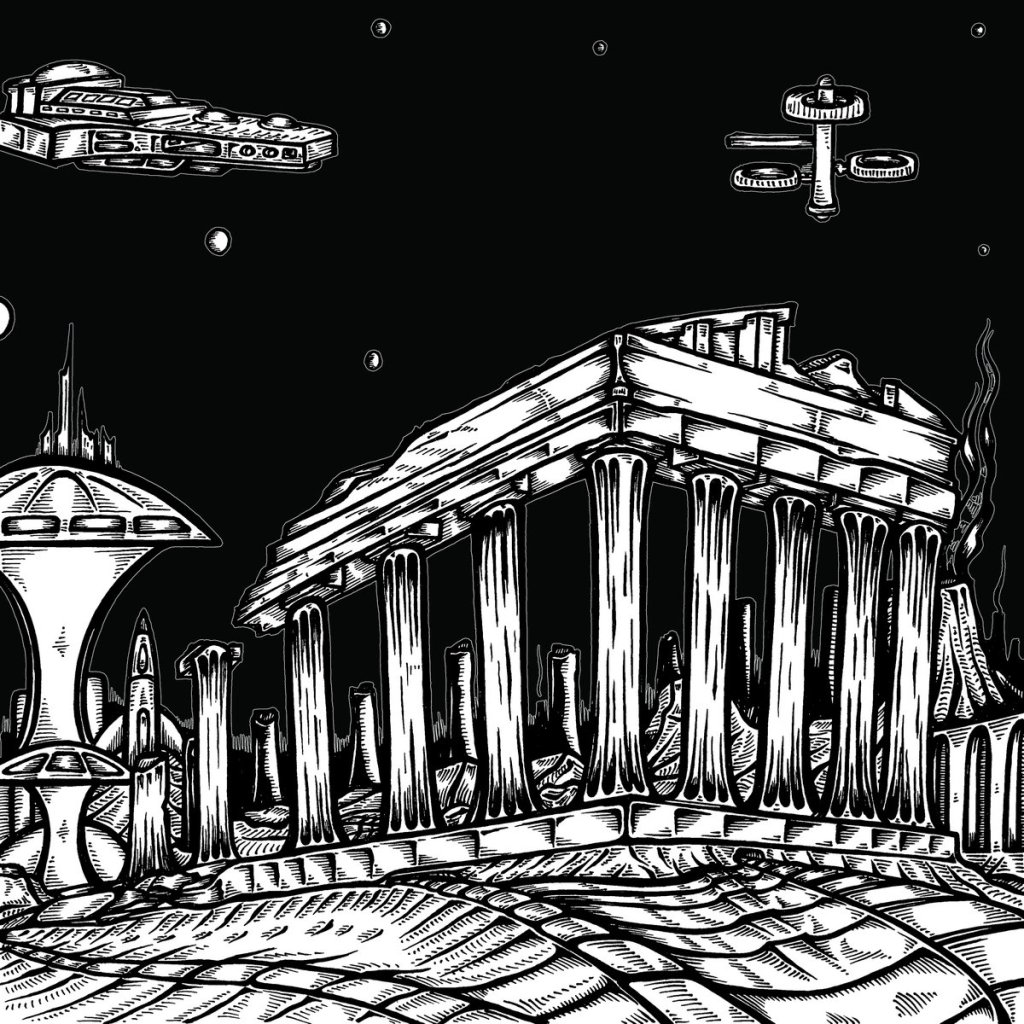
« Here And Beyond » by Comacozer & Vinnum Sabbathi / Artwork by SIX.D.SIX

Wombat Cult: Of Dimensions & Theories, has the right to a musical prologue which was composed by Cegvera under the name The Sixth Glare. The album is crazy and nevertheless very confidential unlike the release of your second album which is articulated with that of Cegvera.
Can you give us some light on the interconnection between these two albums?

Gerardo: The connection between both albums is basically the current status of the decayed world we are living in. The Sixth Glare is focused on the Sixth Mass extinction event that we are experiencing (not just human, but biodiversity as a whole). While ‘of Dimensions and Theories’ is completely fictional, the story that is narrated in ‘The Sixth Glare’ is 90% true: Disease + Biodiversity Loss + Climate change + Anthropogenic disasters + overpopulation + environmental collapse.

The album was released just before the corona strike, and some people told us it was a ‘prophetic’ album. Truth to be told: TSG is not really prophetic. Most of it was already expected -and even predicted by the scientific community- it is not a conspiracy; it is not the illuminati. We are talking about a depleted/wasted/tired world and all the damage that has been done tirelessly for centuries. It is true that TSG is a bit more confidential (we have not talked about it as much), but if interested, you can find horrific scientific (and few fictional) facts about the current status of the world printed on the sleeve of this record which was also released by Stolen Body Records.

This is where Vinnum jumps in – ODAT – where 4 astronauts are in search of a place that’s suitable to perpetuate human existence. We have always liked doing things together to strengthen the bonds between British and Mexican heavy scenes. 2020 was not the exception.

« The Sixth Glare » by Cegvera / Artwork by Hellbound Graphics

Wombat Cult: You worked with many different labels like Stolen Body Records, Aim Down Sight Records or Interstellar Smoke Records.
How do you process to choose which album will be released on which label?

Juan: We will always be happy to work with different labels for sure, for us is amazing that our work is considered by people in other countries to be released on any format. We know it because we run a small label ourselves, with the goal to release the music from underground bands that we love, we are aware of the hard work and risk it involves so we’re grateful with the people behind the labels for their trust.

Stolen Body Records has been our main label, Alex and Suz have been pretty much part of our family since we met them back in 2017 during our Euro tour, same feeling with Matthias from Aim Down Sight Records who released our EPs and our first Album, we got to know him in person as well during that tour and we have been good friends since then. This year we started working with both Psychedelic Salad from Australia for the Split with Comacozer and Interstellar Smoke Records from Poland; Jacek who’s the man behind ISR has been working with bands from Latin America like Arteaga, The Wizard and our buddies Satánico Pandemonium so we were happy to be included in their roster. We also have worked with the Indonesian label Southcave Records with a limited cassette version of Gravity Works in the past.

Wombat Cult: Seen from Europe, the South American Stoner / Doom scene is in full swing with many bands that seem to carry the future of the genre.
As a major band in this sphere, can you give us your take on the situation and give us names that deserve to shine beyond the oceans?

Roman: Rock history in Latin America is so diverse, for example in Argentina since the 70’s the society supported the rock music, but in México the rock was banned by the government since the late 70’s until the 90’s.
I think in the case of the Stoner, Doom, Psychedelia, each country created something special because the local bands combined the old rock and roll sounds, cumbia and the Latin sounds with the heaviness of metal, punk and of course, the influence of the main bands like Kyuss, Pentagram, Electric Wizard, etc.

I think the success of the Latin American movement lays in the diversity of sounds of each scene and also, the social context: the entire Latin American Scene shares some issues like poverty, corruption, inequality, social revolution and more. In the case of the music, we don´t have the same opportunities like in America or Europe, so we always try to find the way to survive and keep doing music, that level of necessity makes a lot of bands work really hard to achieve goals like to release an album on vinyl or to play overseas.

The Latin American scene and the fans are very special, I think the work of websites, collectives, and labels are very important to the underground scene, there’s a TON of info gathered in the Doomed & Stoned Latinoamerica site (https://doomednstonedlatino.com), but also check out the work of Red House, Abraxas, Noiseground, Necio Records, Manicomio Discos, Lucifer Discos, Bruxa Verde, Void Stoner Doom Worship, etc.

Juan: As for our local scene in Mexico, you can visit our small label LSDR Records ( https://lsdr.bandcamp.com) where you can find a lot of Albums, compilations and live bootlegs from some of the underground heavy bands we know, here are some that we totally recommend: Saturno Grooves, Terror Cósmico, Fumata, El Culto del Ojo Rojo, Satánico Pandemonium, Vyctoria, Cardiel, Sunset Images, Par Asito, Abyssal, Annapura, Tolot, Bardo, Malamadre, Moonwatcher, Weedsnake, Chivo Negro, k. and even though they don’t play anymore please check out Apocalipsis, Akuma and El Ahorcado.

Wombat Cult: We are coming to the end of the year 2020 which will have been made up of hundreds of fantastic albums and a plethora of new formations with certain potential. What are your favorites?

Juan: Here are some of our favorites (in no particular order):
Wren – GROUNDSWELLS
Arcadian child – Protopsycho
Camel Driver – \ /
Cat Clyde – Good Bones
Yuri Gagarin – Outskirts of Reality
Satánico Pandemonium – Culto Suicida
Soden – Onwards … Towards the Tundra
Abyssal – Misanthrope (2020)
Slift – Ummon
Lowrider – Refractions
Rezn- Chaotic Divine
Cuarzo- Vol. II
IAH – III
Jupiterian – Protosapien
Ozo – Pluto
Oranssi Pazuzu –Mestrarin Kynsi
Power Plant – Cargo
Primitive Man – Immersion
Saturno Grooves – Cosmic Echoes

Wombat Cult: 2021 is upon us, what are your plans for the future, your dreams?

Gerardo: While the storm calms down: To create new music, to spend some time with my family, write some research stuff and enjoy natural landscapes as much as I can. After the storm: Tour with my friends (within Mexico and maybe a small European tour?), new places, new friends and enjoy natural landscapes as much as I can.

Roman: Create new tunes and work in some new splits, might take a while for a new Album but also have that on my list.

Juan: Survive. Go out and play live shows again.

« Live Session » by Vinnum Sabbathi – Artwork by Jacob Ramirez

To Discover And Support Vinnum Sabbathi:

To Discover the prequel album around « Of Dimensions And Theories »: The Sixth Glare by Cegvera:

Wombat Cult Selection/ An image of 2020 in 30 albums

Au cours d’une année 2020 marquée par le chaos qu’il soit sanitaire, économique et social, qu’il n’est en rien utile de rappeler, car connue de tous, il est parfois bon de revenir sur des mois certes éloignés de la scène, de l’attraction sonore, vibratoire, parfois abrupte, brusque tout comme contemplative, émotionnelle ou tout simplement effrayante et euphorisante, en se souvenant d’un année 2020 d’une richesse musicale inouïe.
Loin du sentier difficile mais fascinant des tournées, de l’excitation de la foule qui éructe, s’émerveille, les artistes de tous horizons n’ont cessé de créer, penser leur musique.
Une année intermède qui aura permis à de nombreuses formations de se lancer telles que Las Historias, Plague Organ, Jointhugger, Moonstone, Malsten, Spiralpark, Pilori, Hadewijch ou encore Cavalerie.
Une année qui aura su révéler de nouvelles sonorités permettant la rencontre d’artistes de divers horizons qu’il s’agisse de Thou et Emma Ruth Rundle à Full Of Hell et Health, en passant par Bell Witch et Aerial Ruin, les frontières, barrières classificatoires, n’ont cessé de se mouvoir pour laisser apparaître un avenir aux sonorités nouvelles, qui espérons le saura raisonner/résonner au cœur de l’actualité mondiale, pour ouvrir des voies de vies alternatives à la rencontre de nos proches qu’il s’agisse de l’humain comme de la nature et ses mille merveilles.
Une année qui, enfin, aura su voir des artistes s’approprier l’atmosphère des mois qui se sont succédés pour changer, développer leurs paroles artistiques et se révéler marqueurs temporels, témoins de l’histoire comme Kadavar avec The Isolation Tapes ou encore l’extraordinaire proposition de GOLD avec leur compilation Recession refermant le diamant brut The Isolation Sessions.
Au-delà de ces sorties, artistes, qui nous ont permis de tenir en tant que gardien essentiel de nos âmes, de nos réflexions, nous souhaiterions revenir sur cette année au dessein quelque peu particulier avec une image, celle de trente albums qui ont su nous porter, nous supporter.
Bonne lecture à tous, et prenez soin les uns des autres, nous en avons tant besoin.


During a year 2020 marked by chaos, whether health, economic and social, that it is in no way useful to recall, because known to all, it is sometimes good to look back on months certainly distant from the scene, of sound, vibratory, sometimes abrupt, abrupt as well as contemplative, emotional or simply frightening and euphoric attraction, remembering a year 2020 of incredible musical richness.
Far from the difficult but fascinating path of the tours, from the excitement of the crowd which belches, marvels, artists from all horizons have never stopped creating, thinking their music.
An interlude year which has allowed many formations to get started such as Las Historias, Plague Organ, Jointhugger, Moonstone, Malsten, Spiralpark, Pillory, Hadewijch or even Cavalry.
A year that will have revealed new sounds allowing the meeting of artists from various horizons, from Thou and Emma Ruth Rundle to Full Of Hell and Health, including Bell Witch and Aerial Ruin, borders, barriers classificatory, have never ceased to move to reveal a future with new sounds, which we hope will know how to reason / resonate at the heart of world news, to open up alternative ways of life to meet our loved ones, of humans as of nature and its thousand wonders.
A year which, finally, will have seen artists appropriate the atmosphere of the months which have followed one another to change, develop their artistic words and prove to be temporal markers, witnesses of history such as Kadavar with The Isolation Tapes or the extraordinary proposal from GOLD with their compilation Recession closing the rough diamond The Isolation Sessions.
Beyond these releases, artists, who have allowed us to hold as an essential guardian of our souls, of our reflections, we would like to come back to this year with a somewhat particular purpose with an image, that of thirty albums that have known carry us, support us.
Happy reading everyone, and take care of each other, we need it so much.

30. Spectral Lore & Mare Cognitum – « Wanderers: Astrology Of The Nine »
Entropic Recordings & I, Voidhanger Records
Divinatory Black Metal

Cover painting by Elijah Tamu of Ikonostasis Art. Design by Francesco Gemelli.

L’année 2020 avait commencé sous des auspices d’une beauté infinie avec cette collaboration aux allures de mirage, parcours astral composé et assemblé d’une main de maître par deux artistes qui ne cessent de révolutionner les limites du Black Metal à grand renfort d’un paysage ambient, expérimental, atmosphérique et contemplatif.
Au coeur de cette association, les deux entités ont façonné, modelé, leurs sons par le biais d’un voyage stellaire, divinatoire et ésotérique, symbolisant chaque morceau, mondes indépendants les uns des autres, par des planètes.
D’un Black Metal traditionnel en passant par des variations Harsh, Ambient, Acoustique ou parfois même Drone, Mare Cognitum et Spectral Lore démontrent tout leurs potentiels en frôlant parfois une articulation sous forme de catalogue des possibilités, sans pour autant chuter dans ce piège démonstratif, gardant toujours une ampleur d’une impressionnante vertu.
Un voyage qui encore un an après sa sortie ne cesse de résonner dans l’esprit de ceux s’y étant frottés.

Pour découvrir et soutenir :

The year 2020 began under the auspices of infinite beauty with this collaboration that looks like a mirage, an astral journey masterfully composed and assembled by two artists who are constantly revolutionizing the limits of Black Metal with some ambient, experimental, atmospheric and contemplative soundscapes.
At the heart of this association, the two entities have shaped, modeled, their sounds through a stellar, divinatory and esoteric exploration, symbolizing each piece, worlds independent of each other, by planets.
From a traditional Black Metal passing through Harsh, Ambient, Acoustic or sometimes even Drone modulations, Mare Cognitum and Spectral Lore demonstrate all their potentials, sometimes touching an articulation in the form of a catalog of possibilities, without falling into this demonstrative trap , always keeping a mastering of impressive virtue.
A journey that still a year after its release continues to resonate in the minds of those who have encountered it.

To Discover and Support :

29. Old Man Gloom – « Seminar VIII : Light Of Meaning » & « Seminar IX : Darkness Of Being »
Profound Lore Records
(Schizophrenic Sludgy-Noise/Doom)

Artwork and design by A. Turner

Old Man Gloom est de retour 6 ans après son double album « The Ape Of God I » et « The Ape Of God II », avec de nouveau une oeuvre bicéphale se présentant de la manière suivante « Seminar VIII : Light Of Meaning » et « Seminar IX : Darkness Of Being ».
Notre platine a eu l’immense honneur de faire tourner ce diptyque, durant plusieurs jours, plongeant la salle d’écoute dans le chaos le plus total. Old Man Gloom réussit de nouveau à déconstruire la scène underground dans toutes ses extrémités, pour nous proposer une oeuvre abstraite mêlant musique expérimentale à tendance Noise, Sludge et Post-Doom.
Une chute au cœur d’une oeuvre schizoïde dont nous ne ressortons pas indemne.

Pour Découvrir et Soutenir :

Old Man Gloom is back 6 years after his double album « The Ape Of God I » and « The Ape Of God II », with again a double trip looking like « Seminar VIII: Light Of Meaning » and  » Seminar IX: Darkness Of Being « .
Our turntable had the immense honor of spinning this diptych, for several days, plunging the listening room into the most total chaos. Old Man Gloom once again succeeds in deconstructing the underground scene in all its extremities, to offer us an abstract work mixing experimental music with a Noise influence, Sludge and Post-Doom.
A fall at the heart of a schizoid work from which we do not come out unscathed.

To Discover and Support:

28. Boris/ Merzbow – « 2R0I2P0 »
Relapse Records
(Noise and Doom Japanese Legendary Mixture)

La surprise de clôture de l’année 2020 réside en cette nouvelle collaboration entre Boris et Merzbow.
Après l’incontournable Gensho, sorti en 2016, l’association la plus bruyante et expérimentale de la scène internationale revient pour continuer à explorer les prismes sonores les plus singuliers entre l’inspiration Doom Experimental de Boris et la Noise insidieuse de Merzbow, on ne pouvait que frissonner à l’idée de sombrer de nouveau dans ce paysage sonore à la couleur unique et fascinante tant elle paraît imaginaire, forgée dans la matière même qui forge nos rêves mais aussi nos cauchemars les plus intimes.
Avec « 2R0I2P0 », anagramme pour RIP 2020, Boris et Merzbow nous proposent de tirer le rideau sur cette année tortueuse, lui conférant la saveur des songes.

Pour Découvrir et Soutenir :

The closing surprise of 2020, lives in this new collaboration between Boris and Merzbow.
After the unmissable Gensho, released in 2016, the noisiest and most experimental association on the international scene returns to continue exploring the most singular sound prisms between Boris’s Doom Experimental inspiration and Merzbow’s Insidious Noise, we could only shudder at the idea of ​​sinking again into this soundscape with a unique and fascinating color, it seems so imaginary, forged in the very material that forges our dreams but also our most intimate nightmares.
With « 2R0I2P0 », anagram for RIP 2020, Boris and Merzbow invite us to draw the curtain on this tortuous year, giving it the flavor of dreams.

To Discover And Support:

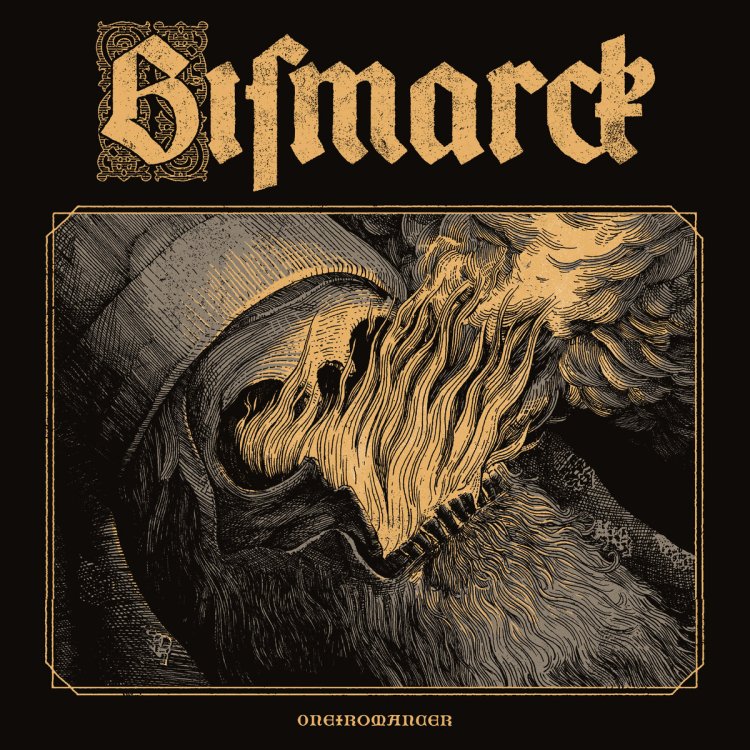
27. Bismarck – « Oneiromancer »
Apollon Records
(Norwegian Battle Doom)

Artwork by Vaderetro

Vous êtes du genre à chercher l’oeuvre la plus monolithique de l’année ?! Ne cherchez plus, le nouvel album de Bismarck se charge de vous.
Démarrant sur une introductions aux sonorités orientales, l’oeuvre que propose Bismarck est d’une efficacité sans pareil , une machine robuste qui pourtant réussit à atteindre des sommets en matière d’élévation de par ses lignes de chants. En matière de Battle Doom, le groupe ouvre de nouvelles portes que l’on n’aurait pas soupçonné et qui pourtant révèlent un groupe qui a tout des plus grands.

Pour découvrir et soutenir :

Are you the type looking for the most monolithic work of the year ?! Look no further, Bismarck’s new album takes care of you.
Starting with an introduction to oriental tones, the work offered by Bismarck is unparalleled in efficiency, a robust machine which nevertheless succeeds in reaching new heights in terms of elevation. In terms of Battle Doom, the band opens new doors that we would not have suspected and which nevertheless reveal a band that has everything of the greatest.

To Discover and Support:

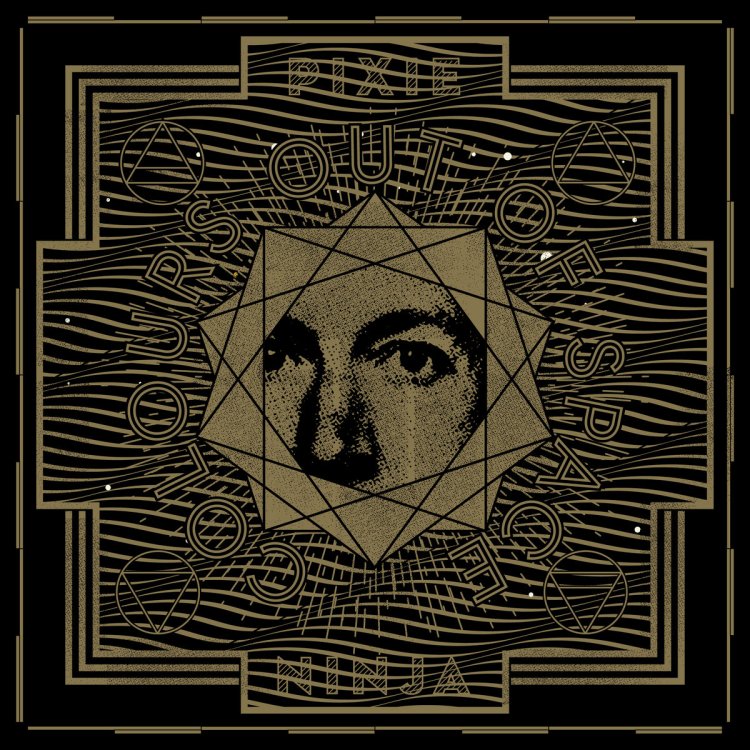
26. Pixie Ninja – « Colours Out Of Space »
Apollon Records
(Lovecraftian Landscape Infused in Progressive Rock Magma)

Cover by Henning Lindahl

Au-delà des habituelles formations norvégiennes tournées vers les landes du Black Metal ou bien les plaines de la scène Stoner /Doom, la Norvège recèle mille et un trésors en matière de créativité musicale et c’est ce que vient nous démontrer Pixie Ninja avec son deuxième album.
Colours Out Of Space mêle toutes les nuances qui font du Rock cette entité crépusculaire indomptable et surprenante, amenant de manière progressive l’auditeur au cœur d’une image sonore intense à la lisière entre imaginaire littéraire et cinématographique où Pixie Ninja semble exceller à chaque tournant de leurs morceaux, mondes à part entière.

Pour Découvrir et Soutenir Pixie Ninja :

Beyond the usual Norwegian formations turned towards the moors of Black Metal or the plains of the Stoner / Doom scene, Norway conceals a thousand and one treasures in terms of musical creativity and this is what Pixie Ninje demonstrates to us with its second album.
Colors Out Of Space mixes all the nuances that make Rock this indomitable and surprising twilight entity, gradually bringing the listener to the heart of an intense sound image on the border between literary and cinematographic imaginary where Pixie Ninja seems to excel at every turn of their pieces, worlds in their own right.

To Discover and Support Pixie Ninja:
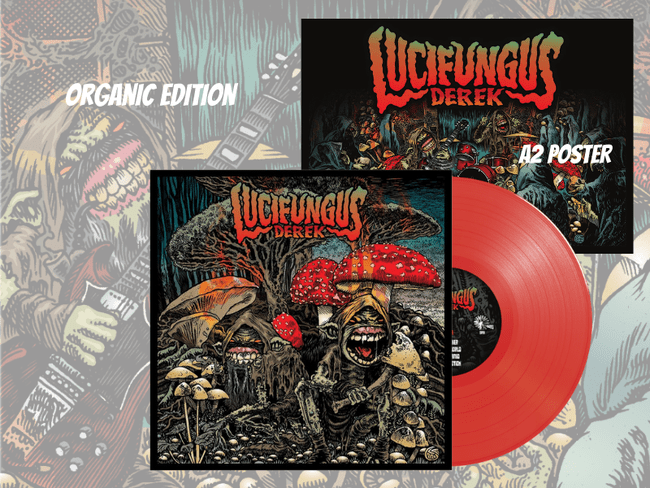
25. CB3 – « Aeons »
Instrumental Stoner and Doom Variations

Jeune formation venant tout droit de Malmö en Suède, CB3 semble matriser toutes les paternes de la scène Stoner/Doom. Le groupe réussit avec « Aeons » à délivrer une véritable leçon de réinvention instrumentale du genre et place entre nos oreilles une pièce incontournable.

Pour Découvrir et Soutenir CB3 :

A young band coming straight from Malmö in Sweden, CB3 seems to master all the arts of the Stoner / Doom scene. The band succeeds with « Aeons » to deliver a real lesson in instrumental reinvention of the genre and places between our ears an already essential piece of this year 2020.

To Discover and Support CB3:

24. Uniform -« Shame »
Sacred Bones Records
Noise Rock

Après deux collaborations d’une violence inouïe avec The Body, Uniform, formation Noise Rock, tout droit venu des US revient nous écraser la mâchoire, de manière abrupte presque animale, contre le caniveau.
L’énergie Punk qui suinte de chaque riff, faisant la renommée du groupe, est particulièrement vile venant s’incruster dans nos tympans, pour les ronger à grand coup de crasse sonore.
La proposition est éprouvante et les 34 minutes de « Shame », portent le groupe en figure de proue du genre venant jouer du coude avec Unsane.
Une oeuvre que rien ne semble pouvoir arrêter se terminant par le titre « I Am Cancer », monument de violence qu’Uniform vient ériger en conclusion d’un album déjà incontournable dans la carrière du groupe.

Pour Découvrir et Supporter Uniform :

After two collaborations of incredible violence with The Body, Uniform, formation Noise Rock, straight from the US comes back to crush our jaw, in an abrupt almost animal way, against the gutter.
The Punk energy which oozes from each riff, making the fame of the group, is particularly vile coming to become embedded in our eardrums, to eat them away with a great deal of sonic filth. The proposition is trying and the 34 minutes of « Shame », carry the group in figurehead of the kind coming to play elbow with Unsane.
A work that nothing seems to be able to stop ending with the title « I Am Cancer », monument of violence that Uniform comes to erect at the conclusion of an album already essential in the career of the group.

To Discover and Support Uniform:

23. Korto – « EP »
Six Tonnes De Chair Records
Hallucinogenic and Psychedelic Rock

Artwork: Chufy

Korto est de retour après leur apparition sur la scène française en 2017, avec un EP d’une petite vingtaine de minutes.
La formation continue de façonner sa propre approche du mouvement psychédélique et nous embarque pour une danse fiévreuse, portée par une voix aérienne, qui nous enserre et nous porte vers des hauteurs stupéfiantes.
En tout juste quatre titres, ce nouvel EP de Korto se forge une place dans le cœur des amateurs de musiques labyrinthiques, où chaque accord, note, rythmique semble être un couloir menant vers d’innombrables lectures. Une sortie qui accompagne et enivre l’âme de l’auditeur, tout simplement.

Pour découvrir et Soutenir Korto :


Korto is back after their appearance on the French scene in 2017, with an EP of about twenty minutes. The band continues to shape its own approach to psychedelic movement and takes us on a feverish dance, carried by an aerial voice, which surrounds us and carries us to amazing heights.
In just four tracks, this new Korto EP forges a place in the hearts of lovers of labyrinthine music, where each chord, note, rhythm seems to be a corridor leading to countless readings. Quite simply, an outing that accompanies and intoxicates the soul of the listener.

To Discover and Support Korto:

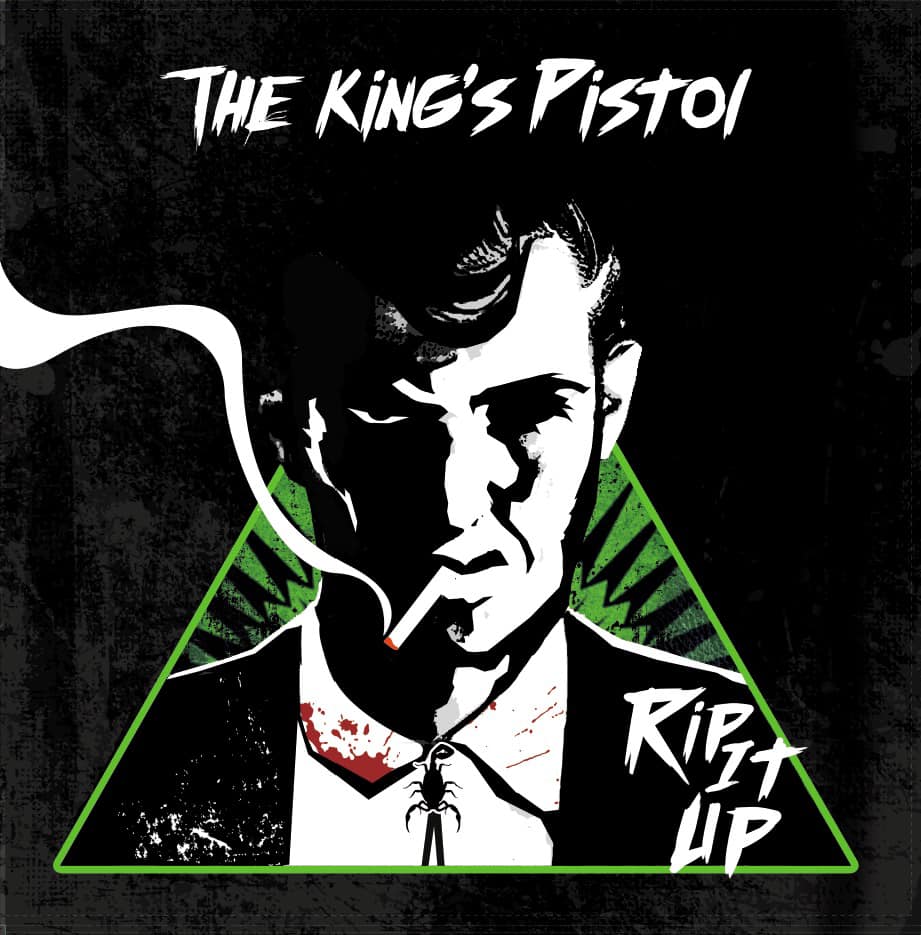
22. The King’s Pistol – « Rip It Up »
Majestic Mountain Records
Pure Rock

Artwork by Shane Horror

Ce second EP prend la suite d’un Vice qui nous menait au cœur des ruelles crasses et pourtant fascinantes des grandes villes. Rip It Up, lui, prend le parti de nous mener dans des rades où l’alcool et la musique coulent à flots, où le sol colle aux semelles, et où les vibrations se mêlent aux liquides corporelles et vapeurs émanant de ces dernières, sensuel et violent.
Sans pour autant révolutionner les courants musicaux, ce second EP, a réussi le pari d’offrir ces six morceaux qui se savourent à la manière d’une friandise acidulée. Nous en connaissons la saveur et pourtant l’effet de ces compositions est une source d’enthousiasme à chaque écoute, un plaisir soudain, direct, qui ne s’embarrasse pas à prendre mille détours et va droit au but : celui de s’encanailler avec vigueur.
Dans une année où les formations marquantes résident dans d’obscurs sous-genres, parfois même inventés par les groupes eux-mêmes, The King’s Pistol s’affiche courageux et solide dans son approche d’un genre qu’il est désormais si rare de combler d’éloge : le Rock.

Pour découvrir et soutenir The King’s Pistol :

This second EP follows up on a Vice, first EP, that took us to the heart of the filthy yet fascinating alleys of big cities. Rip It Up, he decides to take us to the roadstead where alcohol and music flow freely, where the ground sticks to the soles, and where the vibrations mingle with the body fluids and vapors emanating from the latter, sensual and violent.
Without revolutionizing musical trends, this second EP has succeeded in offering these six tracks that are savored like a tangy treat. We know the flavor of it and yet the effect of these compositions is a source of enthusiasm with each listening, a sudden, direct pleasure, which does not bother to take a thousand detours and goes straight to the goal: that of slipping vigorously.
In a year where the outstanding formations reside in obscure subgenres, sometimes even invented by the groups themselves, The King’s Pistol appears courageous and solid in its approach of a genre which it is now so rare to find. fill with praise: the Rock.

To Discover and Support The King’s Pistol:

21. Gulch – « Impenetrable Cerebral Fortress »
Closed Casket Activities
Vile And Furious Power Grindcore/Hardcore

Artwork by Boone Naka

Gulch fait sa grande entrée dans le monde foisonnant de la scène Hardcore californienne, et pourtant avec tout juste un album/EP d’une quinzaine de minutes, le groupe impose son empreinte sonore à mi-chemin entre un Full OF Hell rongé par des rythmiques D-Beat et la rage de la scène Crust-Black.
Aucun répit pour celui qui osera poser le vinyle sur sa platine, les meubles, les murs, les corps prendront cette saveur baveuse, glaireuse qui semble s’engouffrer dans la moindre interstice, pour vous poignarder avec vigueur. Une violence admirable qui viendra vous arracher les côtes dans ses segments mid-tempo.

Pour Découvrir et Soutenir Gulch :

Gulch makes its grand entry into the teeming world of the Californian Hardcore scene, and yet with just an album / EP of fifteen minutes, the group imposes its sound imprint halfway between a Full OF Hell eaten away by rhythms D-Beat and the rage of the Crust-Black scene.
No respite for those who dare to put the vinyl on their turntable, furniture, walls, bodies will take on this slobbery, mucus flavor that seems to rush into the smallest gap, to stab you with vigor. An admirable violence that will tear your ribs in its mid-tempo segments.

To Discover and Support Gulch:

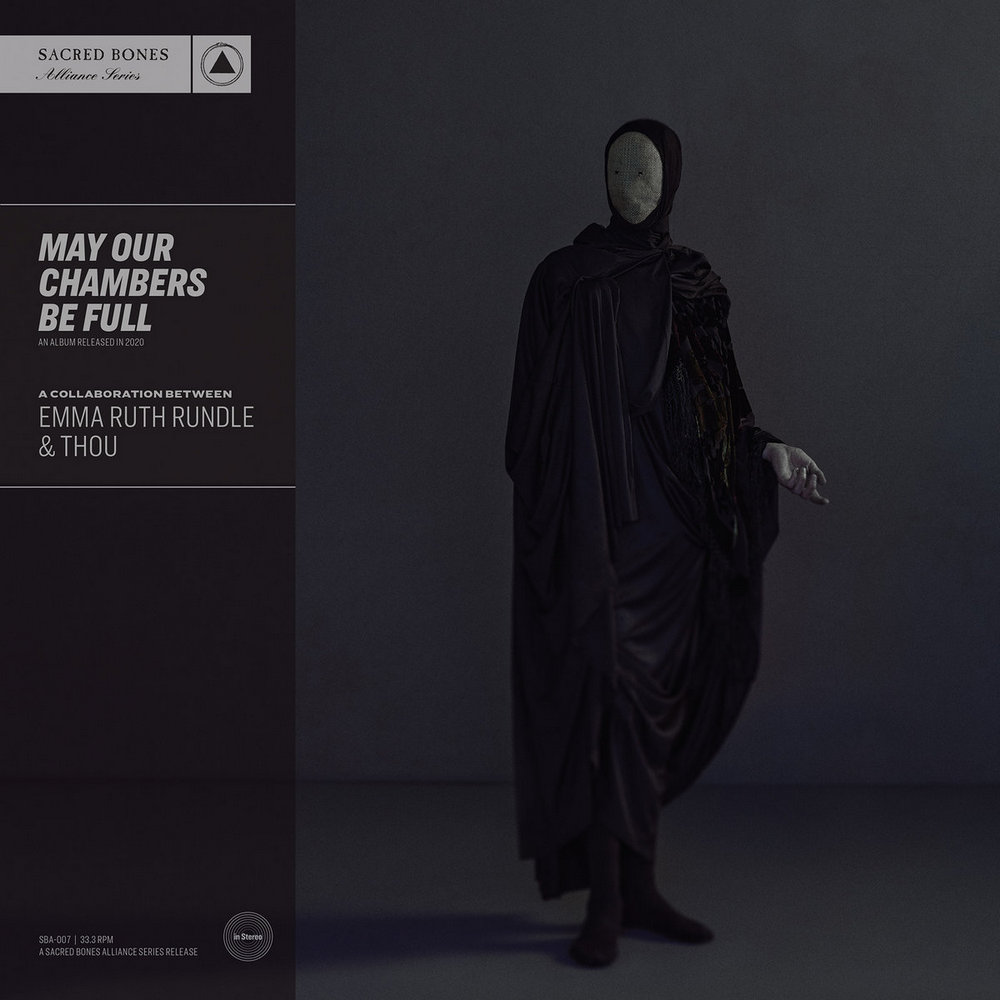
20. Emma Ruth Rundle & Thou – « May Our Chambers Be Full »
Sacred Bones Records
Foggy Experimental Doom

Artwork by Craig Mulcahy

Entre ombre et lumière, la rencontre d’Emma Ruth Rundle, artiste expérimentale aux horizons Post-Folk sinistrement resplendissants, et Thou, formation Sludge/Doom hyperactive infusée dans un bouillonnant mélange de Grunge, apparaît l’album « May Our Chambers Be Full » véritable poème clair-obscur.
Un exercice de style redoutable où la magie opère dans la collaboration entre les deux artistes, se fondant l’un dans l’autre, d’un Post-Folk aux allures de fin du monde de ERR au brouillard boueux amplifié du collectif de Bâton-Rouge, mêlant leurs patrimoines sonores afin de mettre en lumière un travail d’une finesse d’écriture rare.

Pour Découvrir et Supporter Emma Ruth Rundle & Thou :


Between shadow and light, the meeting of Emma Ruth Rundle, an experimental artist with sinisterly resplendent Post-Folk horizons, and Thou, a hyperactive Sludge / Doom formation infused in a bubbling mixture of Grunge, appears the album « May Our Chambers Be Full » true chiaroscuro poem.
A formidable exercise in style where the magic operates in the collaboration between the two artists, melting into each other, from a Post-Folk with the end of the world look of ERR to the amplified muddy fog of the Bâton-rouge collective, mixing their sound heritage in order to highlight a work of rare writing finesse.

To Discover And Support Emma Ruth Rundle & Thou:

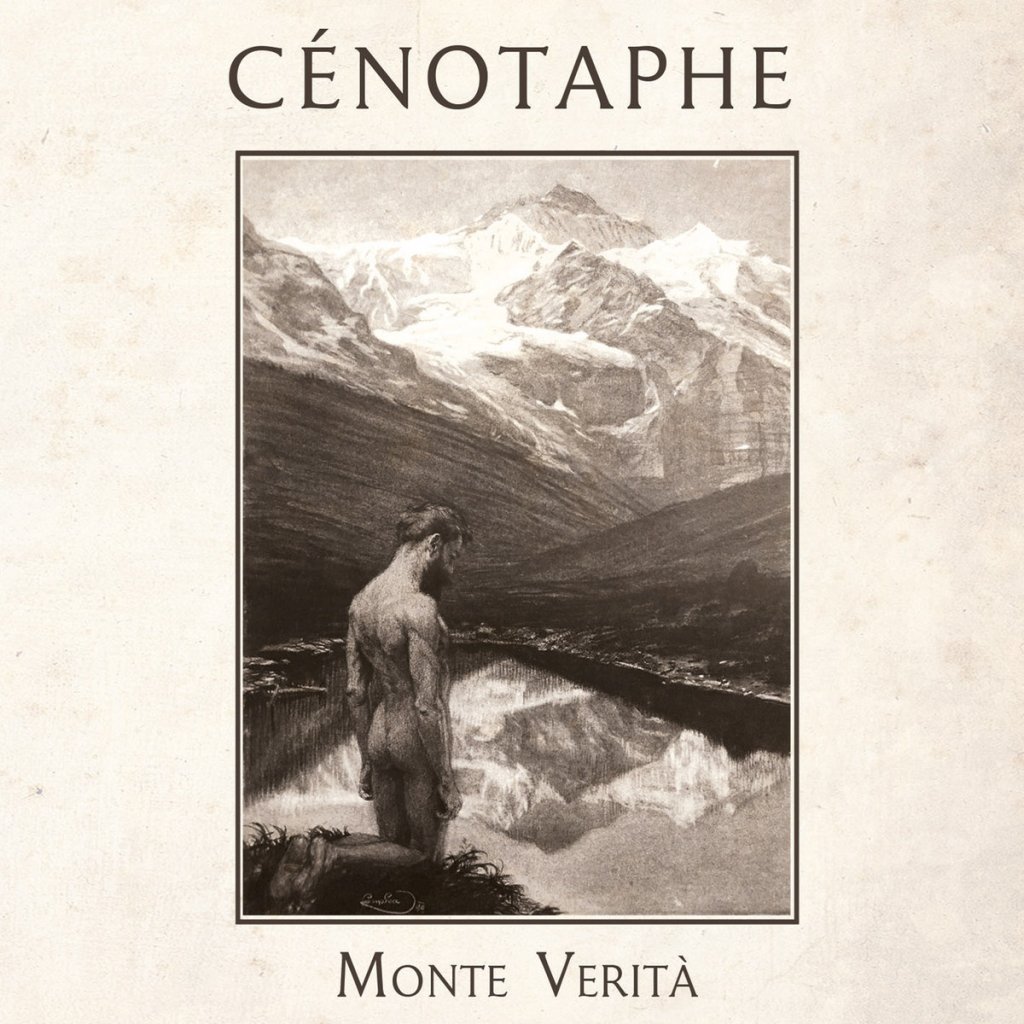
19. Cénotaphe – « Monte Verità »
Nuclear War Now! Productions & Ossuaire Records
Celestial Raw Black Metal

Front cover paint by Frantisek Kupka « Meditation », 1899

L’ascension est inouïe, révèle les forces inhérentes à tout à chacun, dépassant les obstacles, gagnant en puissance, en virulence, affirmant sa création comme projet terminal, total et majestueux.
Ce sont les mots et concepts qui accablent lorsque nous sortons de l’écoute de Monte Verità. Cénotaphe, projet tenu par Khaosgott et Fog, ne cesse de s’élever en porte-étendard de la scène Underground Black Metal française. La voix de Khaosgott, découverte sur les incontournables EP Atavisme et Ostara de Nécropole, s’est affinée dans sa radicalité et vient nous prendre aux tripes, portant la détresse et l’agonie dans la moindre de ses vocalises, assénant à l’auditeur une sensation d’oppression à la fois redoutable et délectable, renforcée par les guitares tranchantes associées aux Blast Beat envoûtés du multi-instrumentiste Fog.
Une expérience éprouvante mais nécessaire dans la quête de vérité acharnée de Cénotaphe : un sommet.

Pour découvrir et Soutenir Cénotaphe :

The ascent is incredible, reveals the strengths inherent in everyone, overcoming obstacles, gaining in power, in virulence, affirming its creation as a final, total and majestic project. These are the words and concepts that overwhelm when we come out of listening to Monte Verità.
Cénotaphe, a project run by Khaosgott and Fog, continues to rise as the standard bearer of the French Underground Black Metal scene. The voice of Khaosgott, discovered on the essential EP Atavism and Ostara of Necropolis, has refined in its radicality and comes to take us to the guts, carrying distress and agony in the least of its vocalizations, striking the listener with a a feeling of oppression both formidable and delectable, reinforced by the sharp guitars associated with the spellbinding Blast Beat of multi-instrumentalist Fog.
A trying but necessary experience in Cenotaph’s relentless quest for truth: a summit.

To Discover and Support Cénotaphe:

18. Julien Doré – « Aimée »
Sony Music
Maintstream French Mysterious Dream Pop

Loin des galeries explorées habituellement par Wombat Cult, réside un artiste pour le moins singulier sur la scène française. Un artiste populaire, présent sur toutes les chaînes télévisées et pourtant insondable, étrangement fascinant.
Pour son nouvel album « Aimée », il quitte les horizons aux teintes shoegaze de son « Esperluette », tout en gardant des sonorités planantes, en apesanteur, sur lesquelles ricoche sa voix aux antipodes des artistes de référence en matière de variété française.
Un voyage dépaysant porté par une tête bien remplie, d’un humour discret, parfois lunaire, qui aura su révéler deux artistes de leur temps, intervenant en featuring lors d’un morceau : Jean-Marc et Simone.

Pour Découvrir et Soutenir :

Far from the galleries usually explored by Wombat Cult, resides an artist who is, to say the least, unique on the French scene. A popular artist, present on all television channels and yet unfathomable, strangely fascinating.
For his new album « Aimée », he leaves the horizons with the shoegaze hues of his « Esperluette », while keeping soaring, weightless sounds, on which his voice ricochets at the antipodes of the reference artists in terms of French variety.
An exotic journey carried by a full head, with a discreet humor, sometimes lunar, which will have known how to reveal two artists of their time, intervening in featuring during a piece: Jean-Marc and Simone.

To Discover And Support:

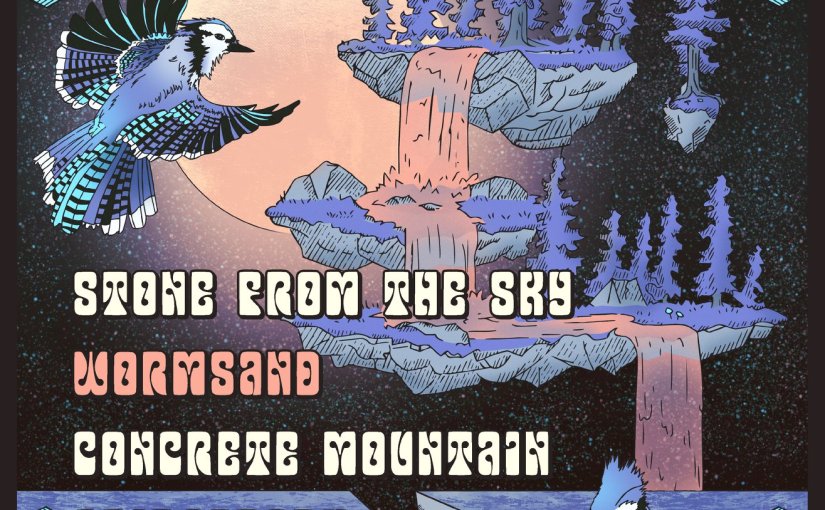
17. Concrete Mountain – « Hazedazed »
Kono Dischi
Post-Fuzz Exploration

Graphic design by Maurizio Prina

Concrete Mountain est une formaton qui ne ressemble à nulle autre au beau milieu de l’obsédante scène post, le groupe insuffle des concepts venus tout droit de sonorités Stoner/Doom. Le voyage est immédiat. Dès que les premières nappes sonores de Camionaut retentissent, l’appel de l’inconnu devient inévitable.
Les accords bouillent de toutes part, la batterie dans sa répétitivité captive l’esprit. Le groupe italien connaît les moindres recettes pour libérer les pensées de l’auditeur dans des méandres d’effets à base de Fuzz. Les morceaux sont d’une grâce infinie nous dévoilant un monolithe sonore que rien ne semble pouvoir ébranler.

Pour Découvrir et Soutenir :

Concrete Mountain is a formation unlike any other in the midst of the haunting post scene, the band infuses concepts straight from Stoner / Doom tones. The trip is immediate. As soon as Camionaut’s first sound layers sound, the call of the unknown becomes inevitable. The chords boil everywhere, the drums in their repetitiveness captivate the mind.
The Italian band knows every way to unleash the listener’s thoughts in meandering fuzz-based effects. The songs are infinitely graceful revealing to us a monolith of sound that nothing seems to be able to shake.

To Discover And Support:

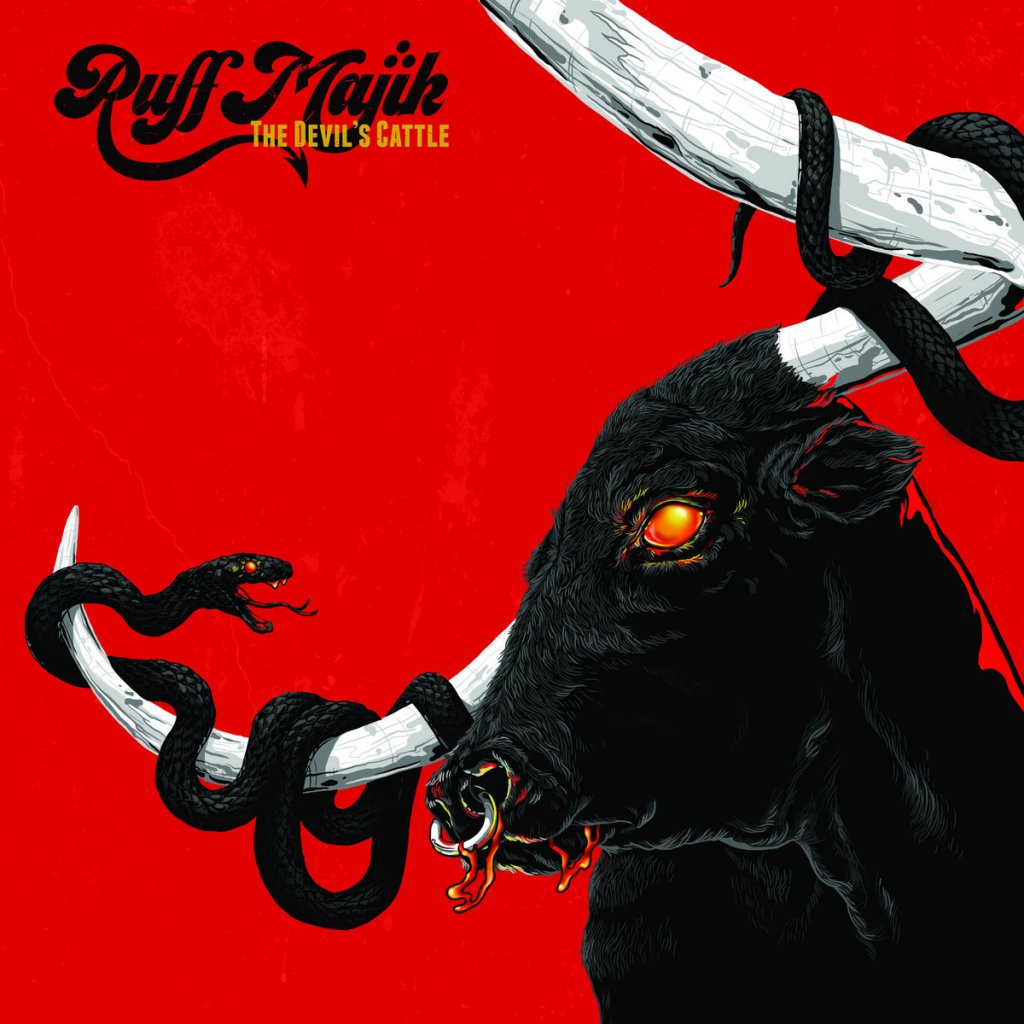
16. Ruff Majik – « The Devil’s Cattle »
Mongrel Records
Acid Stoner Doom with Punk Perfume.

All artwork by Ale & Cake Illustration

Après avoir marqué les esprits en 2019 avec Tårn, Ruff Majik revient de son Afrique du Sud natal pour frapper de manière directe et efficace avec une série de morceaux tous plus colérico-hystériques les uns que les autres avec The Devil’s Cattle.
Le groupe semble aussi énervé que le taureau ornant sa pochette, laissant un multitude de voix aux multiples tonalités, avec entre autres un ersatz d’Axl Rose sous acides, pour accompagner et multiplier les impacts d’une composition qui en laissera plus d’un sur les rotules.
Treize titres d’une telle rigueur et virulence, qu’il y aura peut-être bon nombre de mâchoires au sol lors de leurs prochains concerts à la fois à cause des hymnes qui seront chantés avec fureur, mais aussi avec un pit qui promet déjà d’être monumental, préparez-vous l’hyperactif Ruff Majik est là et n’épargnera personne.

Pour Découvrir et Soutenir Ruff Majik :


After having marked the spirits in 2019 with Tårn, Ruff Majik returns from his native South Africa to strike in a direct and effective way with a series of songs all more angry-hysterical than the others with The Devil’s Cattle.
The band seems as edgy as the bull adorning its cover, leaving a multitude of voices with multiple tones, with among others an ersatz Axl Rose under acids, to accompany and multiply the impacts of a composition that will leave more than one on the ball joints.
Thirteen titles of such rigor and virulence, that there will perhaps be many jaws on the ground during their next concerts both because of the hymns that will be sung with fury, but also with a pit that promises already to be monumental, get ready the hyperactive Ruff Majik is there and will spare no one.

To Discover and Support Ruff Majik:

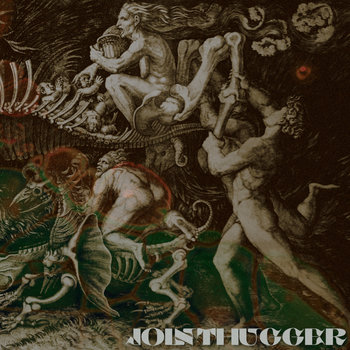
15. – Jointhugger- « I Am No One »
Interstellar Smoke Records
Groovy Doom Ritual

Artwork, design and layout by Spectral Ecstasy

Jointhugger avec ce premier album « I Am No One« , montre sa capacité à comprendre l’entièreté de la scène Doom, à se l’approprier et réussit ainsi à proposer une oeuvre nouvelle, quasi chimérique à la manière de son artwork, inspiré par les travaux de Vigeland, oeuvre à l’humanité démente. On ne peut qu’être charmé par une telle démonstration de puissance qui réside dans une intelligence d’écriture réjouissante.


Jointhugger with this first album « I Am No One », shows his ability to understand the whole of the Doom scene, to appropriate it and thus succeeds in offering a new vision, almost chimerical in the manner of his artwork, inspired by the work of Vigeland, work for demented humanity. We can only be charmed by such a display of power which resides in a cheerful writing intelligence.

To Discover And Support Jointhugger:

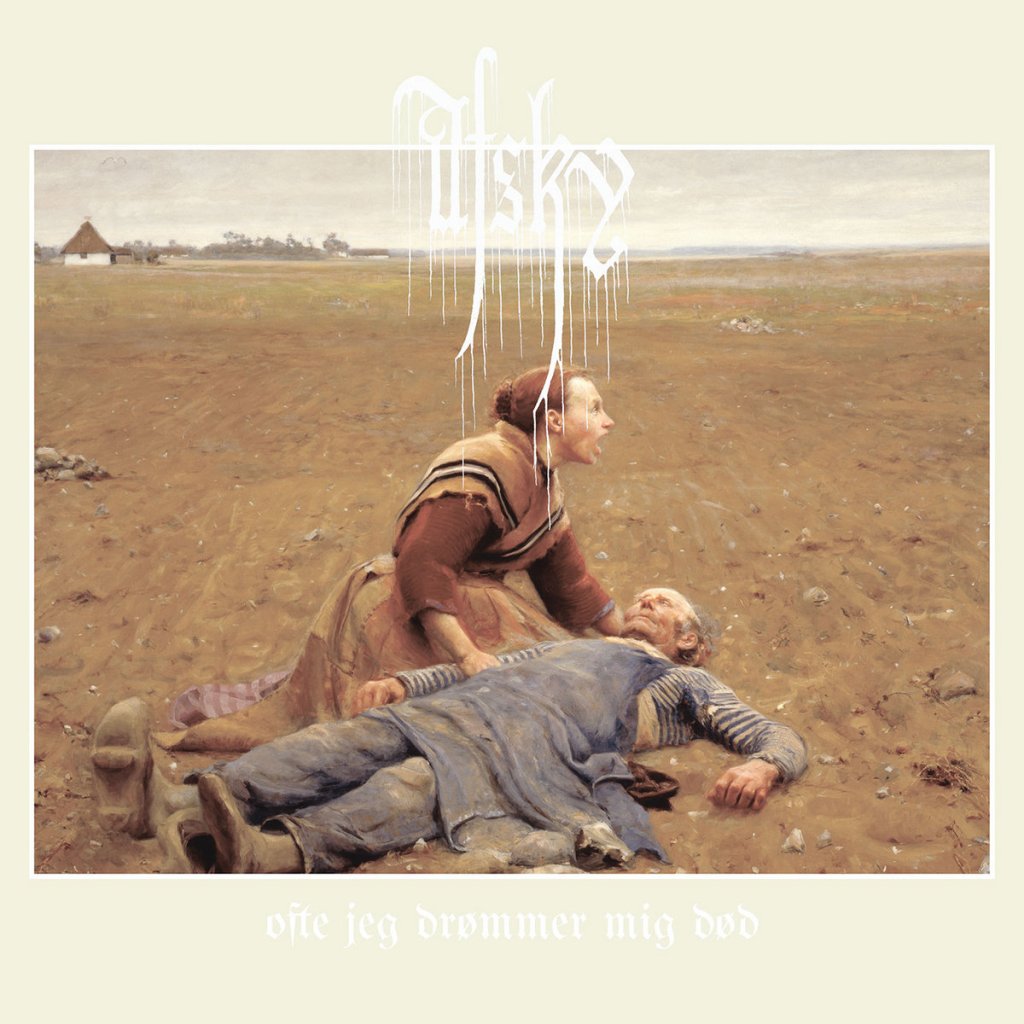
14. Afsky – « Ofte Jeg Drømmer Mig Død »
Vendetta Records
Black Metal

H.A. Brendekilde

Une toile de H.A. Brendekilde pour visuel, l’approche picturale que prend Afsky pour ce second album vient chatouiller la rétine éveillant une curiosité sans bornes.
A quoi pourrait ressembler le désespoir et la colère de la peinture du maître danois en la transposant derrière les traits sonores d’une formation Black Metal ?
Bien qu’effrayé à l’idée d’être déçu, avec cette couverture qui promet tant, « Ofte Jeg Drømmer Mig Død » impose une surprise assez conséquente, celle de réussir, en gardant une approche classique, à nous gifler, nous souffler avec une énergie et une vigueur d’une rugosité effarante, révélant un classicisme du genre sous l’aune d’une modernité sidérante.
Dès les premières écoutes, chaque modèle architectural et sonique que propose Afsky vient s’ancrer au plus profond de nos tympans, laissant une marque que l’on ne peut qu’espérer éternelle.

Pour Découvrir et Soutenir :

A painting by H.A. Brendekilde for visual, the pictorial approach taken by Afsky for this second album tickles the retina arousing boundless curiosity.
What could the desperation and anger of the Danish master’s painting look like when transposing it behind the sound lines of a Black Metal formation?
Although scared at the idea of ​​being disappointed, with this cover which promises so much, « Ofte Jeg Drømmer Mig Død » imposes a rather consequent surprise, that of succeeding, by keeping a classic approach, to slap us, to blow us with an energy and vigor of a frightening roughness, revealing a classicism of the genre under the yardstick of astonishing modernity. From the first listening, each architectural and sonic model that Afsky offers is anchored deep in our eardrums, leaving a mark that we can only hope to be eternal.

13. Bogwife – « Halls Of Rebirth »
Psychedelic Salad
Psychedelic Battle Doom

Totalement passé sous les radars de Wombat Cult à sa sortie, bien qu’avec une place prédominante dans la Doom Charts, et un retour critique audiophile unanime, il aura fallu les séances de rattrapage de cette fin d’année pour se rendre compte que Bogwife vient de pondre une nouvelle manière de jouer du Doom.
Croisant à la fois la force brute d’un Conan sous anxiolytique, faisant trembler tout ce qui pourrait se trouver sur le chemin des vibrations, à un chant et une guitare solo menée à un rythme plus décroché dans une approche soutenue, Bogwife réussit à créer une dimension parallèle dans laquelle le groupe excelle venant réveiller les amateurs de musiques pachydermiques et ronflantes avec cette fois-ci une approche nouvelle qui risque d’ouvrir un bon nombre de portes à la scène Stoner/Doom qui en avait grand besoin.

Pour Découvrir et soutenir Bogwife :

Completely passed under the radar of Wombat Cult when it was released, although with a predominant place in the Doom Charts, and unanimous audiophile critical feedback, it took the catch-up sessions at the end of the year to realize that Bogwife has just created a new way of playing Doom.
Crossing both the brute force of a Conan on anxiolytic, shaking anything in the path of vibrations, to a lead vocals and lead guitar at a more unhooked rhythm in a sustained approach, Bogwife succeeds in creating a parallel dimension in which the group excels coming to awaken fans of pachydermic and high-sounding music with this time a new approach which risks opening a good number of doors to the Stoner / Doom scene which was in great need.

To Discover And Support Bogwife:

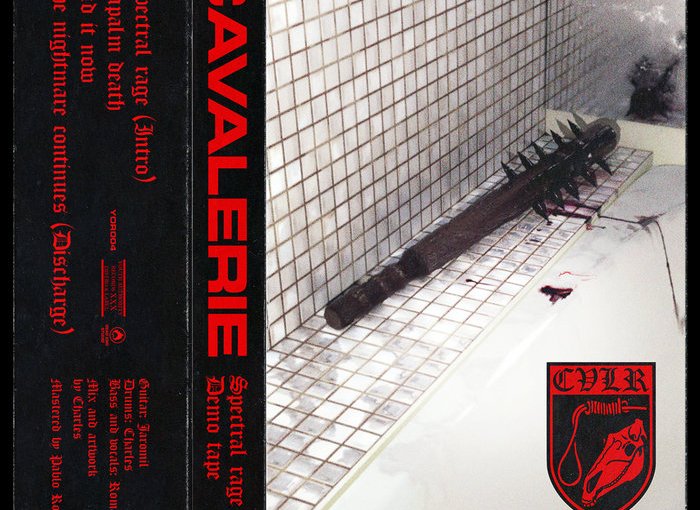
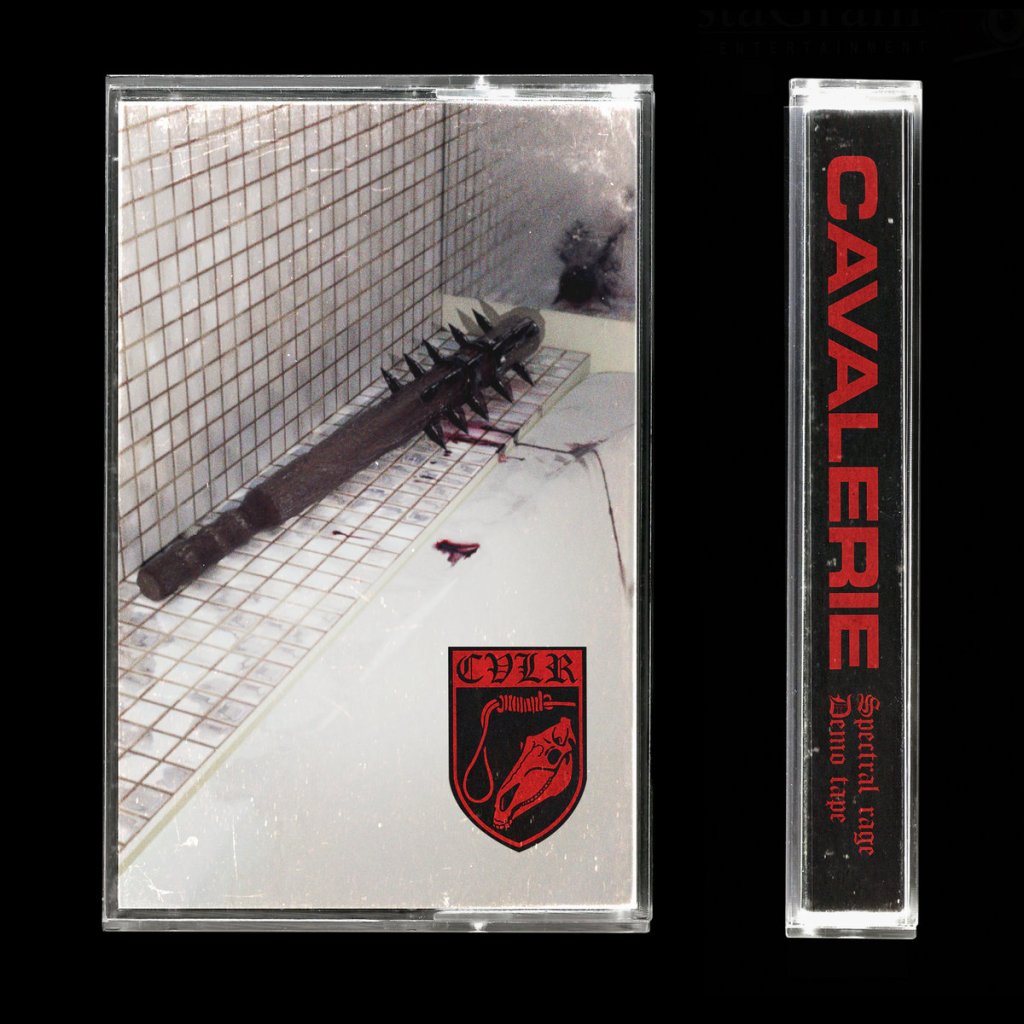
12. Cavalerie – « Spectral Rage Demo Tape »
Youth Authority Records
Raw Blackened Hardcore

Artwork by Charles

Ce Spectral Rage Demo Tape composé de seulement trois morceaux dont une reprise révèle toutes les sonorités dont Cavalerie est capable de la scène Hardcore jusqu’aux recoins obscurs des chenilles des tanks de la scène War Black.
Avec cette première Demo éclair, digne d’une attaque Blitzkrieg, Cavalerie prend en otage la scène Crust/Hardcore et creuse sa galerie qu’il semble prêt à défendre. Spectral Rage Demo Tape est une véritable décharge d’adrénaline, soudaine, extrême et incontrôlable.

Pour Découvrir et Soutenir Cavalerie :


This Spectral Rage Demo Tape made up of just three tracks which reveals all the sounds Cavalerie is capable of from the Hardcore scene to the dark recesses of the tank tracks of the War Black scene.
With this first flash Demo, worthy of a Blitzkrieg attack, Cavalerie takes the Crust / Hardcore scene hostage and digs out his gallery which he seems ready to defend. Spectral Rage Demo Tape is an adrenaline rush, sudden, extreme and uncontrollable.

To Discover and Support:

11. The Hypnagogics – « Endless Nights »
Majestic Mountain Records
Hypnotic Stoner

Cover by Hypnotist Design.

Vous êtes tristes depuis la disparition des prodigieux The Devil’s Blood ?! Ne vous inquiétez pas, nous avons trouvé un remède.
Après deux Eps assez discrets, The Hypnagogics, groupe suédois aux sonorités Heavy Psyche, déboule sur nos platines avec un premier album « Endless Nights » qui a déjà tous les atouts pour devenir un incontournable du genre.

Pour Découvrir et Soutenir The Hypnagogics :

You’re sad since The Devil’s Blood disappeared?! Today it’s time to let the riff going up again!
After two fairly discreet EPs, The Hypnagogics, Swedish band with Heavy Psyche tones, spins on our turntable with a first album « Endless Nights » which already has all the assets to become an essential of the genre.

To Discover And Support The Hypnagogics:

10. Touché Amoré – « Lament »
Epitaph Records
Post-Hardore with Screamo Reliefs

Art Direction and Design – Nick Steinhardt

Cinquième album pour Touché Amoré, formation Post-Hardcore à tendance Screamo, qui marque un tournant remarquablement fin et nuancédans la carrière du groupe portant ce « Lament » vers des sommets toujours plus raffinés.
Produit par Ross Robinson, cette nouvelle proposition en provenance de Los Angeles offre de nombreuses nouvelles pistes ouvrant discrètement mais avec talent les portes de la scène Cold-Wave, de la balade émotionnelle ou encore de la chanson à refrains pour nous surprendre, nous sortir du monolithe qu’était Stage Four et délivrer à tous une performance pulsionnelle, directe, qui irradiera l’audition de ceux qui croiseront le chemin de cet éblouissant album qu’est « Lament ».

Pour Découvrir et Soutenir Touché Amoré :


Fifth album for Touché Amoré, Post-Hardcore formation with a Screamo tendency, which marks a remarkably fine and nuanced turning point in the career of the group carrying this « Lament » to ever more refined heights.
Produced by Ross Robinson, this new proposition from Los Angeles offers many new tracks discreetly but with talent opening the doors to the Cold-Wave scene, the emotional ride or even the chorus song to surprise us, get us out of the monolith that was Stage Four and deliver to all a drive performance, direct, which will radiate the hearing of those who will cross the path of this dazzling album which is « Lament ».

To Discover And Support Touché Amoré:

9. – Höstblod – « Dikter Om Döden »
Le Narthécophore, Winter Sky Records & Fòlkvangr Records
Depressive Folk And Mortuary Contemplation Black Metal

Mélancolie, espoir perdu et obscure harmonie sont les ressentis et concepts sonores qui se dégagent de cette nouvelle proposition d’Höstblod, Projet Black Metal solo provenant de Suède.
Empli de sonorités et variantes bien connues de la scène scandinave, Dikter Om Döden se différencie, s’abroge de la parenté de ses confrères jouant sur le fil, entre Black Metal Atmosphérique, Black Folk et Depressive And Suicidal Black Metal, sans jamais positionner le pied dans un paysage précis, préférant bien plus créer sa propre dimension.
Une réflexion poétique autour de la mort, du long voyage des terres connus, le monde de la chair, vers des contrées pensées, brouillard aveuglant, le monde de l’âme.
Définitivement l’oeuvre la plus touchante et poignante de cette année 2020, Dikter Om Döden se façonne de par son humilité et sa faculté à penser de manière libre, son langage des songes, délivrant une perception de l’intangible et pourtant visible monde que seul le regard des poètes saura révéler.

Pour Découvrir et Soutenir Höstblod :


Melancholy, lost hope and obscure harmony are the feelings and sound concepts that emerge from this new proposal from Höstblod, a solo Black Metal Project from Sweden.
Filled with sounds and well-known variations of the Scandinavian scene, Dikter Om Döden differentiates himself, repeals from the kinship of his colleagues playing on the wire, between Atmospheric Black Metal, Black Folk and Depressive And Suicidal Black Metal, without ever positioning the foot in a precise landscape, preferring much more to create its own dimension.
A poetic reflection around death, the long journey of known lands, the world of the flesh, towards thought lands, blinding fog, the world of the soul. Definitely the most touching and poignant work of this year 2020, Dikter Om Döden is shaped by his humility and his ability to think freely, his language of dreams, delivering a perception of the intangible and yet visible world that only the gaze of poets will reveal.

To Discover And Support:

8. Nothing – « The Great Dismal »
Relapse Records
Diogenean Alternative Shoegaze

Voyage à la fois philosophique et sensoriel, le nouvel album de Nothing pousse l’auditeur dans une condition de remise en question permanente qui façonne l’attitude de ce dernier au fur et à mesure des écoutes, poussant, celui qui osera poser le diamant de sa cellule sur les sublimes pressages de Relapse Records, à devenir obsédé par les moindres recoins de l’album.
The Great Dismal fait parti de cette courte liste de sorties des classiques instantanés, une référence en matière de Post-Punk/Shoegaze, et une date dans l’histoire du groupe.

Pour Découvrir et Soutenir Nothing :

A journey that is both philosophical and sensory, Nothing’s new album pushes the listener into a condition of permanent questioning which shapes the latter’s attitude as and when listening, pushing those who dare to pose the diamond of their cell on the sublime pressings of Relapse Records, to become obsessed with every nook and cranny of the album.
The Great Dismal is part of this short list of instant classic releases, a benchmark in Post-Punk / Shoegaze, and a date in the band’s history.

To Discover And Support Nothing:

7. Memnon Sa – « World Serpent »
Crypt Of The Wizard & Holy Mountain Studios
Stellar and Divinatory Dark Ambient

Artwork by Alexander Tucker and Jack Gibley

Memnon Sa est un artiste très particulier dans son approche de la scène expérimentale. Depuis plusieurs années, sa musique réussit à guérir nos âmes. Après « Citadelles » et le remarquable « Lemurian Dawn », son nouvel album « World Serpent », se dessine comme son chef d’oeuvre absolu. Ne faîtes pas l’impasse sur un tel artiste car il a tout autant besoin de nous que nous avons besoin de lui.
Éteignez les lumières, fermez les yeux et prenez place à un voyage d’une incommensurable sensibilité dont vous vous souviendrez à jamais.

Pour découvrir et Soutenir Memnon Sa :

Memnon Sa is a very special artist in its approach of the experimental scene. For several years, his music has succeeded in healing our souls. After « Citadelles » and the remarkable « Lemurian Dawn », his new album « World Serpent », takes shape as his absolute masterpiece. Do not ignore such an artist because he needs us as much as we need him.
Turn off the lights, close your eyes and set off on a journey of immeasurable sensitivity that you will remember forever.

To Discover And Support Memnon Sa:

6 The Bloody Mallard – « Realm »
Onslaught Music
Herbal and Transcendental Progressive Rock

Artwork by hezaprints & Bedelgeuse

The Bloody Mallard, dévoile un savant mélange des genres entre Rock Progressif, Heavy Psyche et Post-Rock. Pas de démos, Pas d’EP, le groupe vient directement taper à nos portes et s’imposer avec un premier album : « Realm » .
A la manière d’un voyage initiatique, ce premier album-concept de The Bloody Mallard, se découvre à travers l’apparition et la conception du genre humain entre terre et lumière.
Une quête incessante vers le soleil, astre aveuglant, qui à l’inverse de nombreuses oeuvres du genre réussit à nous bercer au cœur d’un halo chaleureux, loin de toute obscurité.
Tout droit sortie des entrailles de la terre, la formation britannique parvient avec une maîtrise fantastique à créer à la fois un son, un nom, un univers mais bien plus que cela, The Bloody Mallard réussit à atteindre la lumière et compte bien nous la partager.

Pour découvrir et soutenir The Bloody Mallard :

The Bloody Mallard, reveals a clever mix of genres between Progressive Rock, Heavy Psyche and Post-Rock. No demos, No EP, the band comes directly to knock on our doors and impose themselves with a first album: « Realm ».
Like an initiatory journey, this first concept album of The Bloody Mallard is discovered through the appearance and conception of mankind between earth and light.
An incessant quest for the sun, a blinding star, which, unlike many works of the genre, manages to rock us in the heart of a warm halo, far from all darkness.
Straight out of the bowels of the earth, the British formation manages with a fantastic mastery to create at the same time a sound, a name, a universe but much more than that, The Bloody Mallard succeeds in reaching the light and intends to share it with us.

To Discover And Support The Bloody Mallard:

5- Oranssi Pazuzu – « Mestarin kynsi »
Nuclear Blast
Blackened Experimental Kraut-Rock Labyrinth

Le passage d’Oranssi Pazuzu de Svart Records à Nuclear Blast avait de quoi déconcerter et inquiéter tant de nombreuses formations n’ont pas réussi à trouver de juste équilibre au sein de ce géant dans le monde de la musique extrême.
Pourtant l’inquiétude n’avait pas lieu d’être, tant le groupe ne semble ouvert à aucun compris en matière d’approche musicale, car nous nous retrouvons face à un immense album si ce n’est d’ailleurs leur meilleur.
Le labyrinthe que nous propose Mestarin kynsi à base de Kraut-Rock expérimental aux couleurs rugueuses d’un Black Metal dément dépasse toutes les attentes et vient nous tourmenter comme peu d’album peuvent se targuer d’y parvenir.
Une expérience d’errance où Oranssi Pazuzu s’amuse à nous guider dans l’obscurité avec de légers reflets, de fines pistes, vers des univers où la folie semble être le maître mot.

Pour Découvrir et Soutenir Oranssi Pazuzu :

Oranssi Pazuzu’s move from Svart Records to Nuclear Blast was both disconcerting and worrying, so many bands have failed to find the right balance within this giant in the world of extreme music.
Yet there was no need to worry, as the band does not seem open to any understanding in terms of musical approach, because we find ourselves facing a huge album if not their best.
The labyrinth that Mestarin kynsi offers us based on experimental Kraut-Rock with the rough colors of an insane Black Metal exceeds all expectations and comes to torment us as few albums can claim to achieve it.
A wandering experience where Oranssi Pazuzu has fun guiding us in the dark with light reflections, fine tracks, towards universes where madness seems to be the watchword.

To Discover And Support Oranssi Pazuzu:

4 – Paysage D’Hiver – « Im Wald »
Kunsthall Produktionen
Atmospheric, Ambient and Experimental Black Metal

Le vent balaie les vies, les êtres. La forêt se dresse, dernier rempart face aux cataclysmes, sanctuaire pour les malheureux, ceux qui ont tout perdu, ceux qui n’ont plus que leur âme, pour méditer, penser, afin de conserver la lumière, celle des yeux qui brillent dans l’obscurité, misérable espoir face aux ténèbres.
Le nouvel album de Paysage D’Hiver, Im Wald, est un poème désespéré, qui, au travers de ses deux heures d’un Black Metal cru et glacial, réussit le pari d’élever le genre à des niveaux de contemplation rarement atteints.
Les quatre vinyles filent entre nos oreilles, nous blessent de par sa saturation à la manière de bourrasques hivernales. Le spectre sonore transforme l’écoute de l’auditeur, réussissant à transformer l’environnement direct de ce dernier dans une tourmente visuelle monochrome où la mélancolie, celle des temps perdus, s’empare de nous et vient, de façon insidieuse, nous ronger.
Une perdition de tous les instants, qui ravira les amateurs d’œuvres monstres, où le passé semble être la dernière lueur qui puisse éclairer nos avenirs.

Pour Découvrir et Soutenir Paysage D’Hiver :

The wind sweeps away the lives, the beings, the forest rises up, the last rampart against cataclysms, sanctuary for the unfortunate, those who have lost everything, those who have only their soul, to meditate, to think, in order to preserve the light, that of the eyes which shine in the sky darkness, miserable hope in the face of the void.
Paysage D’Hiver’s new album, Im Wald, is a desperate poem, which, through its two hours of raw, experimental, atmosperic and icy Black Metal, succeeds in raising the genre to levels of contemplation rarely reached.
The four vinyls spin between our ears, hurting us by their saturation like winter squalls. The sound spectrum transforms the listener’s listening, succeeding in transforming the latter’s direct environment into a monochrome visual turmoil where melancholy, that of wasted time, takes hold of us and insidiously gnaws at us.
A constant perdition, which will delight lovers of monster works, where the past seems to be the last glimmer that can illuminate our future.

To Discover And Support Paysage D’Hiver:

3. Vinnum Sabbathi – « Of Dimensions And Theories »
Stolen Body Records
Interstellar Doom

Cover artwork by Asep Yasin Abdulah

Depuis quelques années, une vraie obsession se forme autour d’une dimension spatiale au coeur de la scène Doom qu’il s’agisse de Comacozer, Vestjyk Orken, The Spacelords, Yuri Gagarin ou encore les légendaires SLEEP, tout le monde veut sa part en matière de conquête spatiale.
Dans ce sous-genre couramment bien-nommé Space Doom, que l’on préfère nommer Interstellar Doom chez Wombat Cult, Vinnum Sabbathi est le porte-étendard incontesté. C’est ce qu’ils viennent rappeler et affirmer avec leur expédition cosmique : Of Dimensions And Theories.
Ce second album, prenant le tournant d’un concept cosmique trépidant, celui de l’exploration spatiale et de l’inconnu, se transforme en voyage guidé aux confins de l’univers à la quête de nouvelles sonorités, expériences soniques.
Un voyage, porté par des amplis Sunn O))) et des samples vocaux, digne de la science-fiction d’exploitation, pour nous guider parmi les astres et contrer les lois gravitationnelles révélant une formation aux mille reflets, éclair d’ingéniosité au coeur d’une scène Doom s’obscurcissant au fil des ans, que Vinnum Sabbathi vient réveiller à grand renfort de vibrations.

Pour Découvrir et Soutenir Vinnum Sabbathi :

In recent years, a real obsession has formed around a spatial dimension at the heart of the Doom scene whether it is Comacozer, Vestjyk Orken, The Spacelords, Yuri Gagarin or even the legendary SLEEP, everyone wants their share in space conquest.
In this subgenre commonly aptly named Space Doom, which is preferred to be called Interstellar Doom at Wombat Cult, Vinnum Sabbathi is the undisputed standard-bearer. This is what they come to remember to us with their cosmic expedition: Of Dimensions And Theories.
This second album, taking the turn of a hectic cosmic concept, that of space exploration and the unknown, turns into a guided journey to the edges of the universe in search of new sounds, sonic experiences.
A journey, carried by Sunn O))) amplifiers and vocal samples, worthy of exploitation science fiction, to guide us among the stars and counter the laws of gravity revealing a formation with a thousand reflections, a flash of ingenuity at heart of a Doom scene darkening over the years, which Vinnum Sabbathi comes to wake up with a lot of vibrations.

To Discover and Support Vinnum Sabbathi:

2. Neptunian Maximalism – « Eons »
I, Voidhanger Records
Free Avant-Garde Jazz Drone With Maladive and Hypnotic Kraut-Doom Shadows

Cover art by KANEKO Tomiyuki, « Vajrabhairava », 2014
© KANEKO Tomiyuki Courtesy Mizuma Art Gallery.

Le premier album de la formation est tout aussi difficile à définir qu’à appréhender. Éons de Neptunian Maximalism, tenant sur pas moins de trois vinyles, est une expérimentation autour d’une multitude de genres et sous-genres formant un album conceptuel tout bonnement transcendantal entre Jazz, Drone, Doom et travaux psychédéliques.
Une expédition occulte, ésotérique et ritualiste au cœur d’une bête qui nécessitera plusieurs semaines et mois afin de bien la cerner.
En trois parties, Neptunian Maximalism réussit à prouver qu’il est et sera toujours possible de trouver de nouvelles sonorités et approches dans la création musicale, à la seule condition de s’affranchir des codes et se laisser à une liberté créatrice aveugle, dévoilant les contours d’une montagne, invisible, qui jusqu’à ce jour se dissimulait, face à nous, dans une lumière aveuglante, geôlière de nos inspirations.

Pour Découvrir et Soutenir Neptunian Maximalism :

The first album of the formation is just as difficult to define as it is to apprehend. Éons by Neptunian Maximalism, lasting over no less than three vinyls, is an experimentation around a multitude of genres and sub-genres forming a completely transcendent conceptual album between Jazz, Drone, Doom and psychedelic works.
An occult, esoteric and ritualistic expedition to the heart of a beast that will require several weeks and months to fully understand it.
In three parts, Neptunian Maximalism succeeds in proving that it is and always will be possible to find new sounds and approaches in musical creation, on the unique condition of freeing oneself from codes and allowing oneself to a blind creative freedom, revealing the outline of a mountain, invisible, which until this day was hidden, a blinding light, jailer of our inspirations.

To Discover And Support Neptunian Maximalism:

  1. Envy – « The Fallen Crimson »
    Pelagic Records
    Post-Hardcore/Screamo with Post-Rock Reliefs

Envy, légende de la scène Post-Hardcore, impose une fois de plus son savoir-faire en matière de composition. A la fois mélancolique, tendre, puissant, éreintant, violent, lumineux tout comme profondément heurtant de par sa tristesse et détresse qui colle au moindre riff, The Fallen Crimson est un album redoutable, qui parvient à merveille à organiser son propos pour toujours pétrifier, surprendre, l’auditeur de manière épidermique.
Une oeuvre qui obsède et s’écoute sans jamais laisser poindre l’ennui. Le nouvel album de la formation nippone se révèle un peu plus à chaque écoute et réussit à dévoiler la perle rare qu’il renferme, sa force, merveille d’une délicatesse infinie.
A l’heure où les albums déferlent par centaines chaque mois sur les plateformes de streaming, il est parfois difficile de discerner l’album qui restera dans les mémoires, laissant une trace indélébile dans le parcours des audiophiles, celui qui apportera le grand frisson durant de longs mois. L’attention du public est constamment dissipée par l’abondance d’un flux interminable qui chaque vendredi écrase les sorties de la semaine précédente, donnant une sensation d’éternelle répétition d’une formation à l’autre, un caractère interchangeable, piège qu’a déjoué avec maestria Envy en imposant une création qui fera date : The Fallen Crimson.

Pour découvrir et soutenir Envy :

Envy, legend of the Post-Hardcore scene, once again imposes its know-how in terms of composition. At the same time melancholy, tender, powerful, exhausting, violent, luminous as well as deeply shocking by its sadness and distress which sticks to the slightest riff, The Fallen Crimson is a formidable album, which manages to wonderfully organize its subject to always petrify, surprise the listener in an epidermal manner.
A work that obsesses and can be listened to without ever showing boredom. The new album of the Japanese formation reveals itself a little more with each listening and succeeds in revealing the rare pearl it contains, its strength, a marvel of infinite delicacy.
At a time when albums surge in by hundreds every month on streaming platforms, it is sometimes difficult to discern the album that will be remembered, leaving an indelible mark in the path of audiophiles, the one that will bring the great thrill during long months.
The attention of the public is constantly dissipated by the abundance of an endless flow which every Friday crushes the outings of the previous week, giving a feeling of eternal repetition from one formation to another, an interchangeable character, trap that ‘Envy masterfully foiled by imposing a landmark creation: The Fallen Crimson.

To Discover and Support Envy:


Occult Hand Order – « The Chained The Burned The Wounded »

The English version is just after the French one.

VERSION FRANÇAISE :


Occult Hand Order, formation française forgée à grands coups de Fuzz en plein coeur de Lyon, est de retour pour explorer les contours psych et les voies envoûtantes qu’ils éclairaient avec leur premier EP éponyme. Un premier effort qui montrait les différentes facettes et références du groupe, de Mars Red Sky à Stoned Jesus, façonnant le début d’une lecture du genre leur étant propre.


Le second EP d’Occult Hand Order se nomme « The Chained The Burned The Wounded ». Le titre impose de manière frontale sa condition d’oeuvre agonisante où le riff viendra chatouiller, à grand renfort de fréquences magmatiques pleines de Fuzz et d’ingéniosité, nos moindres blessures, nos moindres souffrances, nos moindres séquelles pour réveiller en nous le grand frisson, celui de la chair, celui de l’organe qui vibre, de l’excroissance qui se révèle.
Le groupe en employant cette formule sous forme de triptyque pour caractériser trois entités marquées par leurs conditions, dans le cas présent, d’êtres blessés, rappelle le cinéma italien brut et direct de Sergio Leone dont l’écho se trouverait dans le titre légendaire : The Good, The Bad, The Ugly (Le Bon, La Brute et Le Truand).

Pour le visuel de cette seconde percée sonore, la formation s’en remet de nouveau aux mains expertes de Mobsidian et propose un travail qui chatouille la rétine, fascine. Ce nouvel artwork pose le champ visuel et définit la mythologie de la formation, ouvrant de nouvelles perspectives et approches au coeur d’un paysage quelque peu rébarbatif, ces dernières années, de la scène Stoner/Doom.
On retrouve la figure de l’oeil qui était central sur le visuel du premier EP. Une figure symbolique omniprésente dans toutes les sociétés, de la Mésopotamie jusqu’à la franc-maçonnerie en passant par les sociétés celtes, qui dessine le regard de l’au-delà, de la présence surnaturelle et mystique d’un gardien sur l’homme. Ici, dieu ne semble pas être la pièce maîtresse de l’oeuvre mais plutôt une brèche au travers des fréquences sonores, l’oeil de la bête qui fait ronfler les amplis et résonner la fuzz.

L’EP composé de cinq titres s’ouvre sur Azazel, nouveau morceau hymne du groupe. Ce dernier parviendra sans aucun doute à se tailler une place incontournable dans les lives du groupe, dès qu’Occult Hand Order pourra de nouveau soulever les planches avec ce titre monolithique qui écrase tout sur son passage et son refrain que l’on ne peut cesser de scander avec ferveur et hargne.

L’entrée en matière quelque peu classique pour le genre bien que redoutable, ne nous prépare à aucun moment au voyage qui nous attend entre les mains de ce « The Chained, The Burned, The Wounded ».

Les premières vibrations de What Comes After Us, ne tardent à se frayer un chemin jusqu’à nos tympans. La vitesse d’exécution du morceau, dans sa première partie, est d’une lenteur exemplaire et délivre ce juste milieu entre sensation aérienne et gravité féroce qui nous scotche à notre dossier, renforcé par une batterie bien pensée qui va souligner l’évolution rythmique constante du titre. La voix aux accents mélancoliques, sondant les dernières bribes d’espoir, reclus dans les cordes vocales du chanteur, prennent toute leur puissance et impact dès la seconde partie du morceau. La construction de ce titre ne cesse de surprendre, nous assommant dans son introduction pour nous séduire de manière lancinante dans son coeur, et nous asséner avec rigueur et justesse une dérouillée finale dont on se souviendra.

Wound, quant à lui, troisième échappée de ce second EP, se trouve être moins surprenant bien que d’une robuste déconcertante tant la détermination du groupe semble totale dans sa manière de conduire cette blessure ouverte, nous la montrant dans toute sa virulence, avec une complaisance particulièrement satisfaisante.

Puis arrive la bête Edwin The Wise, morceau monstre qui est définitivement un des meilleurs du genre pour cette année 2020. La proposition d’Occult Hand Order est culottée avec cette montée en puissance d’une petite dizaine de minutes qui semble faire disparaitre tout rapport à la notion de temps et d’espace, les mots manquent pour décrire l’expérience. Fermez les yeux, inspirez et imaginez la destinée d’Edwin le sage, le Zarathoustra d’Occult Hand Order.

L’EP se clôture par Shore, composition acoustique de 3 minutes, à vivre sous la forme d’une outro humble et touchante qui saura venir mettre un terme à la déferlante de riffs que vient d’asséner la formation lyonnaise.

Définitivement, Occult Hand Order avec ce second EP « The Chained The Burned The Wounded » se dévoile telle une formation singulière, qui, bien que reconnaissant envers ses inspirations, affirme son propre imaginaire, ses propres sonorités, pour venir décrocher en nos âmes, la larme qui se forme entre douleur, colère, violence mais également tendresse, bienveillance et amour, donnant naissance à une petite perle sonique à la recette qui éblouit.

Pour découvrir et soutenir Occult Hand Order :

ENGLISH VERSION:


Occult Hand Order, a French formation forged with great blows of Fuzz in the heart of Lyon, is back to explore the psych contours and the bewitching ways they illuminated with their eponymous first EP. A first effort which showed the different facets and references of the band, from Mars Red Sky to Stoned Jesus, shaping the beginning of a reading of the genre being their own.


Occult Hand Order’s second EP is called « The Chained The Burned The Wounded ». The title frontally imposes its condition of dying work where the riff will tickle, with a great reinforcement of magmatic frequencies full of Fuzz and ingenuity, our least injuries, our least suffering, our slightest aftereffects to awaken in us the great thrill.
The thrill of the flesh, that of the vibrating organ, of the outgrowth that reveals itself. The band, by using this formula, in his title, with the form of a triptych to characterize three entities marked by their conditions, in this case, of wounded beings, recalls the raw and direct Italian cinema of Sergio Leone whose echo would be found in the legendary title: The Good, The Bad And The Ugly.

For the artwork of this second sound breakthrough, the band once again works with the expert hands of Mobsidian and offers a work that tickles the retina, fascinates. This new artwork sets the visual field and defines the mythology of the formation, opening up new perspectives and approaches in the heart of a somewhat forbidding landscape, in recent years, of the Stoner / Doom scene.
We find the figure of the eye which was central on the visual of the first EP. A symbolic figure omnipresent in all societies, from Mesopotamia to Freemasonry via Celtic societies, which draws the gaze of the beyond, of the supernatural and mystical presence of a guardian on the Human. Here, god does not seem to be the centerpiece of the work but rather a breach through sound frequencies, the eye of the beast which makes the amps roar and the fuzz resonates.

The five-track EP opens with Azazel, new hymn song of the band. This one will undoubtedly manage to carve out an essential place in the lives performance of the band, as soon as Occult Hand Order can once again raise the boards with this monolithic title which crushes everything in its way and its chorus that we can not stop to sing with fervor and violence.

The somewhat classic introduction to the genre although formidable, does not prepare us at any time for the journey that awaits us in the hands of « The Chained, The Burned, The Wounded ».

The first vibrations of What Comes After Us, soon make their way to our eardrums. The speed of execution of the piece, in its first part, is an exemplary slowness and delivers this happy medium between aerial sensation and fierce gravity which sticks us to our backrest, reinforced by a well thought out drums which will underline the rhythmic evolution.
The voice with melancholy accents, probing the last bits of hope, reclusive in the vocal cords of the singer, take all their power and impact during the second part of the piece. The construction of this title never ceases to surprise, knocking us out in its introduction to seduce us in a nagging way in its heart, and strike us with rigor and accuracy a derailed final that we will remember.

Wound, for his part, the third breakaway of this second EP, is found to be less surprising although of disconcerting robustness as the band’s determination seems total in its way of leading this open wound, showing it to us in all its virulence, with a particularly satisfying complacency.

Then comes the beast Edwin The Wise, monster song which is definitely one of the best of its kind for this year 2020. The proposal of Occult Hand Order is cheeky with this rise of power of about ten minutes which seems to make disappear all the notion of time and space, words fail to describe the experience. Close your eyes, inhale and imagine the destiny of Edwin the Wise, the Zarathustra of the Occult Hand Order.

The EP ends with Shore, a 3-minute acoustic composition, to be experienced in the form of a humble and touching outro that will put an end to the surge of riffs that the Lyon formation has just given.

Definitely, Occult Hand Order with this second EP « The Chained The Burned The Wounded » unveils itself as a singular formation, which, although grateful for its inspirations, affirms its own imagination, its own sounds, to come and unhook in our souls, the tear that forms between pain, anger, violence but also tenderness, benevolence and love, giving birth to a sonic little pearl with a recipe that dazzles.

To discover and support Occult Hand Order:

Lucifungus – « Derek »

The English Version is just after the French one.


VERSION FRANÇAISE :

Bien qu’encore assez confidentiel, Lucifungus commence à se débusquer une certaine notoriété au sein de la scène Stoner/Doom. Après un premier album nommé « Akuma Kin », paru chez Black Farm Records en 2018, le duo australien est de retour pour explorer leur univers fongique où la puissance sonore semble ne trouver d’obstacle qu’au niveau du noyau terrestre, faisant trembler la terre, les racines et les êtres la peuplant pour le bien du plus grand nombre. Le nom de ce nouvel effort sismique : Derek.

Akuma Kin apportait les bases de la formation à savoir un riffing fonctionnant sous forme d’échos se répondant dans ses enchaînements d’accords mais également dans sa rythmique donnant cette impression constante de terre s’écartelant dans ses structures pachydermiques, dévoilant le monde secret des champignons dans lequel Lucifungus officie en guide pour nos oreilles encore néophytes de leur pratique instrumentale. L’artwork du groupe symbolisait avec pertinence une planète recouverte de champignons, localisant le territoire dans lequel le groupe souhaite faire évoluer son univers.

Derek, deuxième et nouvel album de Lucifungus, se dévoile à travers un artwork qui en dit long sur la suite des événements. Glenn Smith est de retour pour illustrer la proposition du groupe et creuse au coeur de la planète imaginée pour le premier effort du duo australien.
Nous sommes désormais au coeur de cet univers humide, crasse et fourmillant d’excroissances suintantes à la rencontre de ses habitants eucaryotes encapuchonnés, mangeurs de chair, au beau milieu du règne des Fungi.
L’illustrateur a eu la judicieuse idée d’y incorporer deux créatures physiquement proches des gobelins, en tant qu’avatar pour les deux membres du groupe. Deux entités enragées et prêtes à en découdre avec hargne face à la famille des champignons. Une image qui reflète avec ferveur le contenu de ce deuxième album.

Le groupe se donne à fond lors des sept nouveaux morceaux proposés à travers une création d’une trentaine de minutes qui ne laisse pas un seul instant à la monotonie donnant une multitude d’embranchements possibles à la découverte des morceaux. On y retrouve le caractère lourd et sinueux, tout comme les vocaux à mi-chemin entre chant et phrasé, rappelant la légende Sleep. Cependant, contrairement aux quelques « longueurs » du premier album, tout y est construit ici avec minutie et précaution pour ne jamais relâcher l’attention de l’auditeur. Lucifungus nous offre le voyage que l’on attendait et parfois même plus.

Derek s’ouvre sur Ball Shaker qui martelle l’ouïe de l’auditeur à renfort d’accords plaqués avec une puissance qui soulève de l’intérieur. Lucifungus travaille sur ce morceau d’ouverture ses accords et sonorités pour mouvoir son avancée restant sur une base qui va évoluer dans ses intensités, rythmes sans pour autant toucher à la structure même de l’unique riff proposé évitant de plus toute répétition, une idée risquée à la saveur obsédante.
En un morceau instrumental, nous retrouvons la hargne et la virulence qui nous avait fait aimer le premier album avec une énergie qui semble déborder de toute part.

La recette autour du travail sur le riffing, celle d’une simple suite d’accord torturée , et déformée sous toutes ses coutures est ce qu’il va ressortir de manière radieuse de ce nouvel effort qu’est Derek. La manière d’étirer les riffs et d’en fouiller les moindres recoins ouvrant la voie à des refrains chantés rappelant une nouvelle fois le prophétique Sleep.

C’est d’ailleurs la tournure que prend le second morceau Burn The World. A l’exception que d’ordinaire le refrain se veut aérien et porteur, ici, Lucifungus décide de couper net et de déclencher une avalanche gravitationnelle sur cette section laissant l’espoir et la légèreté d’un tractopelle à ses couplets instrumentaux.

Pour conclure cette face A, le duo australien enterre les riffs les uns après les autres, par un procédé d’une lenteur exemplaire, rampant et creusant tels des termites au coeur d’un bois jonché d’eucaryotes hostiles avec Transpyramid et Take The Potion. La résonance des accords est telle qu’elle se transforme en une sorte de magma organique que la batterie enfonce encore et toujours plus dans un paysage Doom en pleine mutation sous l’inventivité de ses créateurs.
A noter que le morceau de clôture de cette face A boueuse à souhait, Take The Potion, est dédié à Tom G Warrior (Celtic Frost, Thorr’s Hammer) et Lee Dorrian (Cathedral), deux pointures en la matière de scène underground poisseuse. Les références sont placées, présentes mais n’en deviennent jamais envahissantes, laissant la marge idéale à Lucifungus pour démontrer leur talent en matière de riffs s’attaquant directement au tympan.

La face B débute avec un court morceau introductif, Quintro, d’une violence et force qui ferait pâlir un Conan de l’ère Blood Eagle. Si vous aviez peur de décrocher le temps de tourner le disque et de confortablement vous installer, n’ayez crainte, Lucifungus prend d’assaut cette face B et va lui conférer une ouverture sur l’avenir du groupe pour la moins réjouissante.

Avec leurs morceaux Lucifungus et Manicanimals, le duo australien enfonce le clou et démontre sa capacité à se démarquer définitivement de son premier effort et modèle sa carrière vers un avenir impitoyable tant la déferlante d’accord s’abat sur nous avec puissance. Rien ne semble arrêter l’alchimie redoutable élaborée par le groupe, s’accentuant avec majesté au rythme des morceaux tous plus lourds les uns que les autres.

La fosse est creusée, le nom ancré, l’âme hissée, Lucifungus s’est affirmé en deux petites années comme une référence sur la scène Doom moderne. Un nom que l’on ne souhaite désormais plus que de découvrir en live, pour soulever quelques planches et asséner quelques coups de masse en plein dans nos nuques qu’ils maltraitent déjà avec vigueur à grand coup de riffs assassins.
L’album ne se maîtrise pas dès la première écoute. Il saisit l’ouïe avec des images sonores marquantes au fil des rotations, qu’il laisse mûrir dans l’imaginaire de l’auditeur, se révélant, de manière habile, tout simplement incontournable.

Pour découvrir et supporter Lucifungus :


ENGLISH VERSION :


Although still quite confidential, Lucifungus is beginning to flush out some notoriety at the heart Stoner / Doom scene. After a first album called « Akuma Kin », released on Black Farm Records in 2018, the Australian duo is back to explore their fungal universe where the sound power seems to find an obstacle only at the level of the earth’s core, making tremble the earth, the roots and beings populating it for the good of the greatest number. The name of this new seismic record proposition: Derek.

Akuma Kin brought the basics of the band namely a riffing in the form of echoes responding to each other in its chord sequences but also in its rhythm, giving this constant impression of earth tearing apart in its pachydermal structures, revealing the secret world of mushrooms in which Lucifungus acts as a guide for our ears still neophytes of their instrumental practice. The band’s artwork appropriately symbolized a planet covered with mushrooms, locating the territory where the Stoner/Doom duo wishes to develop its universe.

Derek, Lucifungus second and new album, is revealed through an artwork that says a lot about what follows. Glenn Smith is back to illustrate the band’s proposal and dig into the heart of the imagined planet for the Australian duo’s first effort.
We are now at the heart of this humid, filthy universe teeming with oozing outgrowths to meet its hooded, flesh-eating eukaryotic civilization, right in the middle of the Fungi reign.
The illustrator had the wise idea to incorporate two creatures physically close to the goblins, as an avatar for the two members of the band. Two entities enraged and ready to fight with sonor effects and anger against the family of mushrooms. An image that fervently reflects the content of this second album.

The band gives their all during the seven new pieces offered through a creation of thirty minutes which does not leave a single moment to the monotony giving a multitude of possible branches to the discovery of the pieces.
We find once again there the heavy and sinuous riffs character, just like the vocals halfway between song and phrasing, straight inspired by the Sleep legend. However, unlike the few « lengths » of the first album, everything is built here with thoroughness and precaution to never relax the attention of the listener. Lucifungus offers us the trip we expected and sometimes even more.

Derek opens with Ball Shaker which hammers the listener’s hearing with reinforcement of tacked chords with a power which lifts from the inside. Lucifungus works on this opening piece its chords and sounds to move its progress remaining on a basis that will evolve in its intensities, rhythms without affecting the very structure of the single proposed riff moreover avoiding any repetition, an idea risky with a haunting flavor.
In an instrumental piece, we find the aggressiveness and virulence that made us love the first album with an energy that seems to overflow from all sides.

The recipe around working on the riffing, that of a simple tortured chord suite, and distorted in every way is what will emerge most relevantly from this new effort that is Derek. The way of stretching the riffs and digging into every nook and cranny opens the way to sung chorus reminiscent of the prophetic Sleep once again.

This is also the turn that takes the second song Burn The World. With the exception that usually the chorus wants to be airy and carrying, here Lucifungus decides to cut short and to trigger a gravitational avalanche on the chorus leaving the hope and the lightness of a backhoe loader to his instrumental verses.

To conclude this side A, the Australian duo buries the riffs one after the other, by an exemplary slow process, crawling and digging like termites in the heart of a wood strewn with hostile eukaryotes with Transpyramid and Take The Potion . The resonance of the chords is such that it transforms into a sort of organic magma that the drums sink even more and more into a Doom landscape in full mutation under the inventiveness of its creators.
Note that the closing song of this muddy side A, Take The Potion, is dedicated to Tom G Warrior (Celtic Frost, Thorr’s Hammer) and Lee Dorrian (Cathedral), two big names in the matter of the sticky underground scene. The references are placed, present but never become overwhelming, leaving the ideal margin to Lucifungus to demonstrate their talent in terms of riffs directly attacking the eardrum.

The B-side opens with a short introductory track, Quintro, of a violence and force that would make a Conan of the Blood Eagle era pale. If you were afraid to lost your attention during the face changing, you can take the time to turn the record and comfortably settle down, fear not, Lucifungus is storming this B side and will give it an opening on the future of the band for the less encouraging.

With their tracks Lucifungus and Manicanimals, the Australian duo drives the point home and demonstrates their ability to definitely stand out from their first effort and shape their career towards a ruthless future as the surge of chords hits us with power. Nothing seems to stop the formidable alchemy developed by the band, accentuating with majesty to the rhythm of the pieces, each one heavier than the other.

The album cannot be mastered from the first listen. He captures the hearing with striking sound images over the rotations, which he lets ripen in the listener’s imagination, revealing himself, in a skillful way, quite simply unavoidable.

To discover and support Lucifungus:

Wombat Interview #9 – Pilori

Photo par Sébastien Saunier / Séb CrtnBrgd Rhc


The English Version is just after the French one.


VERSION FRANÇAISE :

Pilori, groupe mélangeant la virulence de la scène Grindcore à la force sonore du Death Metal, a pris un petit moment pour entrer dans le terrier de Wombat Cult afin de parler de leur nouvelle sortie « A Nos Morts ».

Wombat Cult: Pilori n’est pas né avec ce premier album « A Nos Morts », vous avez créé le groupe en 2016 ,sorti un premier split avec Dakhma et parcouru quelques scènes prestigieuses comme celle du festival OUTCH! en 2018. Pouvez-vous revenir sur l’histoire du groupe et les raisons pour lesquelles après quatre années à ravager l’hexagone et l’Europe vous sortez enfin ce premier album ?

Gr. (chant) : Alors, Pilori c’est quatre lascars, et pour la faire courte on va dire que l’on est originaires de Rouen, en Normandie. Je la fais courte car on est trois à être de Rouen ou de sa région, mais notre batteur lui a une longue histoire : mais il vous la racontera mieux que moi ! On a commencé les répètes en 2015, premier concert en 2016. L’idée est venue de notre guitariste que je connais depuis des années et qui, lors d’une soirée, m’a fait part de son envie de monter un projet crust/grind, et m’a demandé si je serais intéressé pour y prendre le micro. J’étais évidemment complètement chaud, et quelques mois plus tard, on s’est retrouvés avec un premier batteur (parti du groupe depuis) pour commencer à répéter. L’idée de base, c’était juste de faire un groupe inspiré de trucs comme Nails, Cursed, Trap Them, All Pigs Must Die, etc., et de se faire plaisir.
On avait surtout envie de jouer, de faire des dates, et advienne que pourra. Et de fil en aiguille, je crois que l’on y a vraiment pris beaucoup de plaisir donc on a continué encore et encore en s’impliquant toujours davantage. Rien n’était calculé au départ, et c’est toujours le cas aujourd’hui. Je pense que l’on continuera tant que l’on prendra autant de plaisir à faire ce que l’on fait ; le cas échéant, on arrêtera. Sans trop se poser de questions. Et si on sort enfin un premier album, c’est sûrement parce que l’on se sentira prêts ! Et aussi parce que l’on avait assez de matières pour que ce soit considéré comme un album ! On ne s’est pas pressés pour le faire, c’est sur, mais au regard du résultat, c’est certainement mieux ainsi et il n’y a aucun regret de ce côté-là.
On a pris notre temps pour composer ce premier opus, travailler nos morceaux, faire un truc cohérent doit on soit fiers. On ne s’est pas dit qu’il fallait faire tant de morceaux obligatoirement, ou forcément faire un album, mais à force de composer, plus on avait de trucs sous le coude, et plus on avait vraiment envie de faire un long format pour franchir une sorte de cap symbolique.

Wombat Cult: Vos compositions et structures sur « A Nos Morts » délivrent un mélange à la fois rugueux et savoureux, pour ceux qui apprécient la savate en plein visage, entre la scène Hardcore et Metal Extrême. Comment vous définiriez-vous sur la scène musicale actuelle, à l’heure où les appellations ne cessent de fuser, de se mêler et de s’entrechoquer ? Quelles ont été vos influences principales lors de la création des morceaux de ce premier album ?

Gr. (chant) : Se définir, c’est toujours un exercice que je n’aime pas trop. Parce qu’au final on ne fait pas vraiment du crust, pas vraiment du grind, pas vraiment du death, pas vraiment du black metal, mais peut-être un peu de tout ça, et ce, pour la simple et bonne raison, que ce sont les genres que l’on aime et écoute tous beaucoup. On nous a rangé et classé sous plusieurs étiquettes aussi variées que différentes, ça ne me pose pas de problème.
Si certains pensent que l’on fait du deathgrind, ça me va. Si d’autres pensent que l’on fait du blackened crust, ça me va aussi. Je m’en fous complètement à vrai dire.
Les influences principales pour la création de cet album ont été nombreuses et diverses, c’est très certainement pour cela qu’au final on était un peu classables dans plein de catégories. Perso, j’écoute autant des groupes de punk hardcore à la Gallows, Ceremony, Drug Church, que du black metal à la Immortal, Darkthrone, Marduk, Glaciation, que du grind à la Full of Hell, Nails, Dead in the Dirt, que du death à la Immolation, Incantation, Unleashed, Morbid Angel, Deicide… Je parle uniquement en mon nom là, mais globalement c’est à peu de choses près la même chose pour tous les autres du groupe.
Mon batteur et mon guitariste sont les principaux compositeurs et arrangeurs des titres, et leurs influences sont assez similaires à tout ce que je viens de citer. Le panel est très large. Personne chez nous n’écoute que du death, que du grind, que du black ou que du crust, mais beaucoup de tout ça.

J. (basse): En effet, il n’est pas évident de base d’appliquer une étiquette au dos de chaque skeud que l’on peut croiser, et encore moins aujourd’hui car forcément tout a quasiment déjà été pondu, donc pour sortir un peu du lot chacun se doit de faire son petit mix d’influences et de composer avec ceux qui t’entourent et c’est à ce moment que chaque membre du groupe apporte sa pierre a l’édifice et que ça marche ou pas.
Pour mes premiers pas dans Pilori, je confirme que la composition n’est pas sur une ligne directrice mais plutôt sur ce que chacun a à exprimer, ce qui peut donner de bonnes surprises.

Wombat Cult : Le son de l’album est bon à en décrocher des mâchoires par dizaine, la bande-son idéale pour une distribution de roustes en règle. Où avez-vous enregistré et dans quelles conditions ?

Gr. (chant) : Merci beaucoup pour ces gentils compliments. Ça fait vraiment plaisir ces belles métaphores, mais il faut surtout les adresser à Damien Lefebvre, Cyrille Gachet, Bertrand Lebourgeois et Brad Boatright, qui sont les quatre grands artisans de ce chantier.
En gros, Damien était notre bassiste jusqu’à l’enregistrement de l’album. Il a fait la basse sur « À Nos Morts », et c’était son chant du cygne chez nous car il n’avait plus assez de temps et d’énergie pour se consacrer pleinement à Pilori. Il a un petit home studio, pas trop mal équipé, et il a donc, outre le fait de jouer ses lignes de basse, enregistré les prises guitare, chant et donc basse de l’album.
Juste avant, on avait fait la batterie avec Bertrand Lebourgeois, à la Gare aux Musiques, située à une demi-heure de Rouen. On avait déjà bossé deux fois avec lui par le passé pour Pilori, et certains d’entre nous y étaient également déjà allés pour d’autres projets. On a donc enregistré à la « maison » si je puis dire, avec des gens que l’on connaît bien et qui nous connaissent bien. Par conséquent, c’était hyper détendu, ce qui aide à être en confiance, à faire ses prises sans pression. Surtout, on avait pas de contraintes de temps, et ça c’est assez confortable. Si on avait eu besoin d’un jour supplémentaire pour quoi que ce soit, ce n’était absolument pas un souci.
Les journées de prises ont été productives, collégiales, faites dans un cadre limite familiale, incitant à la bonne humeur, donc pas de stress ou autre de négatif. Ça nous a permit de bosser sereinement, et d’être concentrés et investis. À titre personnel, ce sont là les prises studio qui se sont le mieux passé de ma petite expérience. Bref, une fois tout dans la boite, c’est parti au mixage chez Cyrille Gachet, qui lui est à Bordeaux. Je le connaissais un petit peu, pour l’avoir croisé avec nos potes de Fange, pour qui il a régulièrement bossé. On aimait bien ses prods, non seulement sur Fange, mais aussi sur des trucs genre Huata ou Verdun par exemple. Les échanges avec lui étaient riches, denses, et incroyablement productifs. Il nous écoutait beaucoup, respectait nos désirs et nos directions ; mais en même temps, il apportait aussi énormément par ses conseils, son savoir-faire, son expérience. Ça a été plusieurs semaines d’échanges où à chaque fois, tu es encore davantage persuadé d’avoir choisi le bon type. Comme une partie de tennis où celui avec qui tu joues te renvoie des super balles qui te permettent à ton tour de lui renvoyer de super balles.
Puis, le mastering, on l’a confié à Brad Boatright d’Audiosiege. Tout simplement parce qu’il a masterisé plus de la moitié des trucs que l’on écoute et qui nous influence directement : Nails, Full of Hell, Trap Them, All Pigs Must Die, Gatecreeper, Cult Leader, et j’en passe… Sans oublier de grosses pointures comme Obituary, Pig Destroyer, Integrity, Tragedy…
Pourquoi aller chez un type et lui demander de faire du Brad Boatright ? Autant aller directement à la source ! Pareil, encore une étape productive. Le mec masterise des gros noms, il pourrait faire Pilori par-dessus la jambe, mais non, il est carré, il est pro, il est à l’écoute. Si l’album sonne aussi bien, c’est sûrement plus grâce à eux que grâce à nous !

J. (basse) : Pour ma part, j’ai eu le rôle « d’oreille extérieur » étant arrivé dans le groupe en début d’année. La partie studio avait été effectuée quelques mois auparavant, je n’ai donc pas connu, ni vécu la conception. J’ai par conséquent pris a cœur de donner mon avis sur les différents mix & mastering qui nous ont été proposés, je ne sais plus combien mais il y en a eu… et il a fallu donner des avis sur de très légères différences qui certes ne sont pas flagrantes mais a qui il faut prêter une grande attention pour ne pas avoir a regretter ça plus tard. Et les gars qui ont eu la tête dans le guidon pendant de nombreux mois avec cet enregistrement n’ont pas dit non a l’avis externe que je pouvais apporter. Ça a été une façon alternative pour s’intégrer dans un groupe mais ce fut très important de le faire sérieusement.

Wombat Cult : Sur les morceaux « Que La Bête Meure » et « Poursuite Du Vent », on retrouve respectivement en tant qu’invités  Dylan Walker de Full Of Hell et Matthias Jungbluth de Fange. Comme ce sont passées ces fabuleuses rencontres et surtout comment avez-vous travaillé sur ces morceaux ?

Gr. (chant) : Matthias de Fange, je le connais depuis genre 5 ans maintenant. C’est devenu un ami. On a tourné deux semaines en Europe de l’Est avec Fange, donc on se connaît désormais très très bien. Je lui ai demandé parce que on voulait « inviter » un pote à poser sur l’album, pour moi c’était naturel que ce soit lui. On s’entend bien, on aime bien sa voix, et on est contents de ce qu’il a fait sur le morceau. De plus, aspect non- négligeable, mais il a écrit lui-même ses paroles pour son feat, donc ça c’est vraiment cool.
Pour Dylan Walker, on a ouvert au Gibus, à Paris, pour Full of Hell en juillet dernier. Outre le fait que c’était déjà beaucoup pour nous d’ouvrir pour ce groupe que l’on aime particulièrement, j’ai discuté un peu avec lui à la fin du concert. Le mec est tranquille, abordable. Je tente de lui proposer un feat au culot, il me dit « pourquoi pas, faut que j’écoute ». Quelques temps plus tard, je lui envoie les maquettes de quelques morceaux, et il me répond aussitôt, il me dit que ça lui plaît, qu’il est ok.
Les deux ont enregistré depuis chez eux, car non seulement c’était en période de confinement, mais surtout, on allait pas faire venir Dylan de Pennsylvanie pour 30 secondes de feat !
De ce côté-là aussi, RAS, tout s’est bien passé, les gars ont fait ça propre, se sont investis. C’est vraiment une énorme plus-value de les avoir sur l’album, je les en remercie encore.

J. (basse) : J’ai un peu bloqué quand le voile a été soulevé sur les featuring qui étaient au programme et en attente d’enregistrement. Donc patiemment, tout comme pour les mix, mastering, etc…, j’étais au taqué sur le moindre son qui allait sortir, et bien sûr ces fameux invités qui avaient quartier libre sur le titre et la partie choisie. Il y a donc forcément une excitation sur le fait de l’implication de tierce personne et les choix qui seront pris par le type qui va brailler sur le son que tu vas sortir.
Et la surprise fut grande car clairement tout était là : l’envie de faire un truc solide par ces 2 gars s’est vraiment fait ressentir aux premières écoutes. Tout le monde a accueilli cela avec beaucoup d’enthousiasme et le travail fait dessus par la suite sur le mix et mastering a permis de mettre encore plus en avant le taf fournit par Matthias et Dylan.

Wombat Cult : Le titre « A Nos Morts » questionne beaucoup, il installe un climat de devoir de mémoire, de rappel d’individus ou entités perdues, décédées. Qui sont les Morts que célèbre Pilori ?

Gr. (chant) : Ouh la non, aucun devoir de mémoire. Enfin ce n’est pas dans ce sens-là que je l’ai écrit en tout cas. Les morts que l’on célèbre, ce sont les nôtres, celles qui mettront fin à nos vies. Je pense sincèrement que beaucoup de gens sont dans le déni par rapport à la mort, alors que c’est elle qui donnera un sens à nos vies. C’est toujours la fin qui donne une globalité à tout ce qui s’est passé avant.
La mort fait partie intégrante de la vie, il ne faut pas l’oublier. Et c’est en sachant que tout cela, à un moment, aura une fin, que l’on peut vivre pleinement. Si l’on se croit immortel, on ne peut profiter pleinement. Très récemment, aux funérailles d’un ami (au passage, paix à son âme), dans l’oraison funèbre il a été dit qu’il trouvait que ses dernières années de vie où il était malade et se savait condamné étaient les plus belles pour lui. Pourquoi cela ? Et bien je pense tout simplement parce qu’il était conscient d’être on ne peut plus proche de la ligne d’arrivée, et ainsi il ressentait pleinement le parfum de la vie. Il a profité au max, croqué chaque seconde. Le temps qui passe est précieux, et tout ceci est éphémère.
Il faut en être conscient. A travers les morts que l’on célèbre, ce sont en réalité nos vies que l’on fête.

Wombat Cult : Le vocabulaire employé et les définitions que vous affichez pour vous définir renvoient à une période de colère, de mise à mort généralisée, un climat que Robespierre aurait pu vanter tant le plaisir d’abattre semblait être le tissu qu’il revêtait. Y’a t’il une histoire que vous souhaitez conter dans vos paroles ou des thématiques spécifiques que vous voulez aborder ? Comment fonctionnez-vous pour la rédaction des textes ?

Gr. (chant) : Je vais parler pour moi, mais je pense que je peux m’avancer en affirmant cela pour chacun de nous : il n’y a pas de réelle « colère » dans Pilori. Enfin, je veux dire, pas la colère dans le sens où on l’entend aujourd’hui quand tu parles d’un groupe de punk/hardcore et assimilés, c’est-à-dire être en rogne contre la société et le clamer haut et fort. Au bout d’un moment, tu vois bien que ça tourne en rond tout ça, les mecs ont des revendications qui sont toutes les mêmes d’un groupe à l’autre et surtout qui sont des épiphénomènes : si il faut être contre ça à tel moment, les mecs le seront, si il faut ensuite être engagé là-dessus à un autre moment, les mecs le seront aussi. Finalement, il n’y a plus de réel engagement, plus de vraie subversion.
Il y a beaucoup de poseurs, des mecs qui se mettent dans un mouvement parce que ça fait bien, parce qu’il faut suivre ça, parce que ça fait gagner des points sociaux, ça fait gonfler ta street cred ; mais ce n’est pas que de la pose, c’est juste que les gens s’en foutent aujourd’hui. Leurs engagements sont hyper impersonnels. Je parle de façon généraliste là hein, je ne dis pas que tout le monde fait de la merde et que moi je suis au-dessus de ça. C’est un constat global, je ne fais pas du cas par cas, je ne mets pas tout le monde dans le même sac, mais puisque tu parles de « colère », c’est ça qui m’est venu. Donc non, dans Pilori point de colère de la sorte. Nos textes ne sont pas « engagés », dans le sens où ce ne sont pas de pseudo-pamphlet révolutionnaire à deux balles. J’écris seul les textes, les gars ont bien entendu un droit de regard et de veto, mais bon jusqu’ici ils ont toujours tout validé et m’ont laissé totale carte blanche. En fait, ils me disent que c’est bien, mais ils ne doivent pas les lire haha !
Plus sérieusement, les thématiques abordées sont, je crois, assez transparentes si on lit les paroles. Ça parle beaucoup du temps qui passe inexorablement comme je le disais juste au-dessus, de nos vies à nous qui défilent, de nos morts qui célébreront ces vies-là. Ça parle aussi des vanités, des futilités, qui sont nombreuses au cours de nos vies justement. On court après des choses impalpables, après des likes, des pouces bleus, via une mise en scène de notre propre vie, de notre propre image, lors de quelque chose de très très autocentré. Ça nous détourne de pas mal de sujets intéressants du coup, j’en reviens aux gens qui n’ont plus de combats, enfin de vrais et de réels combats, qui les touche vraiment. Ces vanités, ces futilités, ont causé ça : tu vas au manif avec ton smartphone pour publier en story Insta le fait que tu y es, tu partages une publication « engagée » pour récolter toi du soutien via des likes, pas pour soutenir une cause.
Finalement, les causes s’effacent derrière tout ça, puisque c’est encore du « moi, moi, moi, moi, regardez-moi ». C’est pour ça que c’est creux, que c’est empli de vacuité, qu’il n’y a rien derrière. Tu peux pas te prendre en selfie en faisant attention à ton meilleur profil tout en te battant en même temps pour une cause X ou Y. Ça n’a pas de sens, ça n’existe pas. Voilà, dans mes réponses aux deux dernières questions, il y a le gros de l’histoire que conte cet album.
Rajoutez à cela le fait que les gens aient besoin de sang, d’inquisition, de lyncher un coupable (qu’il soit d’ailleurs coupable ou non, qu’il l’ait adulé avant ou non) plutôt que de savoir la vérité, de la chercher, de la trouver, et vous serez pas loin de la vérité.

Wombat Cult : Le visuel réalisé par Jois Cabe Artworks est vraiment obsédant de par sa saturation et cette symbolique pesante de magie noire entre les astres et les hommes. Comment s’est déroulé le processus de création de cette pochette déjà presque incontournable tant elle imprime la rétine ?

Gr. (chant) : « symbolique pesante de magie noire entre les astres et les hommes », ha ouais merde, j’avais pas vu tout ça moi, mais c’est cool si toi tu l’as vu haha ! Non mais c’est vraiment cool si tu aimes la pochette, nous aussi on l’aime beaucoup. Encore heureux tu me diras, sinon ça aurait été con de choisir ça pour illustrer notre album. Mais c’est vrai que c’est un super visuel, on en est très contents. Jois Cabe est un super type en plus. Il est indonésien, donc on ne le connaît pas personnellement, mais les nombreuses discussions avec lui à ce sujet étaient vraiment très cools et très constructives. Il a aussi dessiné notre nouveau logo, et fait le design d’un nouveau t-shirt.
En fait, à la base, au début du début, on devait travailler avec un autre type. Un mec que l’on connaît et dont on aimait aussi, forcément, beaucoup le travail. Il devait nous dessiner un truc totalement original pour le coup, faire une création, du sur-mesure selon nos désidératas et indications. Et ça ne s’est finalement pas fait car le type n’était pas ultra- réactif, disons-le clairement. Ça a beaucoup traîné, on a pas eu de nouvelles, pas eu les premières esquisses promises. Personnellement, ça m’a soûlé, ça m’a lassé. Si le mec est motivé, si il veut bosser pour toi, tu ne dois pas lui courir après alors que toutes les deadlines fixées sont dépassées. Je trouve ça chiant, lourd, irrespectueux… Et, dans le même temps, je suis tombé totalement par hasard sur le travail de Jois Cabe.
Ses illustrations m’ont beaucoup plu. Ça nous a d’ailleurs tous beaucoup plus. Je l’ai contacté car il vendait des dessins déjà fait, des « sketchs » comme on dit, et moi j’ai voulu lui en acheter pour faire du merch avec, pour des t-shirts. Et le visuel de la pochette, c’est un truc qu’il avait déjà dessiné. Ce n’est pas une création spéciale pour nous, on ne lui a rien commandé. On est tombés dessus, on a vraiment tous kiffé. On le trouvait comme toi, vraiment obsédant, d’autant que l’on cherchait quelque chose qui « détonne » un peu, quelque chose d’un peu original.
On voulait pas spécialement sortir du lot, mais on ne voulait pas avoir la même pochette que tous les groupes de notre genre, un truc super codifié et de ce fait, super cliché. On ne voulait pas un truc estampillé d’office « death/grind/crust », et on se disait que ce type de visuel aurait tout aussi bien pu convenir à un groupe de post-rock par exemple. Du coup, comme on avait pas trop de nouvelles du premier lascar, et que de toute façon on avait plus vraiment envie de tafer avec lui, ce visuel s’est imposé à nous d’office. De plus, on y trouvait une signification relative à l’album. Pas dans le sens mystique, astral ou magie noir, mais dans le sens d’une sorte de célébration de nos morts.
Et puis de toute façon, on y voit ce que l’on veut comme toi tu y vois ce que tu veux. J’ai pas l’impression que toutes les pochettes d’album, même les plus cultes, soient forcément en lien quelconque avec le titre, voire même le thème, de celui-ci.

Wombat Cult : La sortie s’est effectuée sur une myriade de labels en fonction du support proposé et principalement chez Terrain Vague Records dont l’un de vous fait partie intégrante. Comment s’est décidée cette fraction entre les différents acteurs de la scène underground pour la distribution de ce premier album ?

Gr. (chant) : Ça s’est décidé selon un facteur très simple : si les maquettes (qui en plus sonnaient vraiment très très rudes) et le projet te parle, et que tu as un peu de thunes à investir dedans, que ce soit 50 ou 500€, vas-y fonce, t’es le bienvenu ! J’ai tout chapeauté et tout diligenté avec Terrain Vague, et avec le soutien total sans faille de tous les autres labels.
On est contents car la plupart des micro-labels, à l’instar du mien, sont fauchés mais hyperactifs. Les mecs sont des passionnés, ils savent qu’ils ne vont pas forcément gagner des masses d’argent avec leurs sorties, mais si ils croient en ton truc, ils s’investissent. La scène underground est comme ça. Beaucoup d’investissement personnel, beaucoup d’implication, beaucoup de passion. Ça fait du bien. Ce qui est flatteur, c’est que le projet a plu, pour te paraphraser, a une myriade de labels d’un peu partout à travers le globe : Italie, République Tchèque, États-Unis, Taïwan, Angleterre, Allemagne, Belgique…
On les remercie tous. Du coup, chaque label a eu sa part de vinyle, proportionnellement à son investissement financier, c’est donc parti un peu partout, et c’est cool car ça permet aussi une diffusion et une distribution à plus grande échelle.

Wombat Cult :  La scène Hardcore/Crust/ Powerviolence semble depuis quelques mois se soulever et faire jaillir des nouveaux noms formidables qu’il s’agisse de Cavalerie, Bain de Sang ou encore vous-même. Quel est votre sentiment sur la scène hexagonale et quel serait le plateau idéal ?

Gr. (chant) : Je pense que la scène hexagonale est ultra riche en groupes de qualité. Bain de Sang, ce sont nos potes, leur dernière sortie est mortelle, alors que la première était déjà très bien. Cavalerie, je ne les connais pas, mais j’ai vu leur truc circuler, j’ai jeté une oreille, et ça m’a vraiment beaucoup plu pour un tout premier jet d’un jeune groupe. Là on parle de la scène crust/powerviolence, mais la scène française dans son ensemble recèle de bien des pépites : Fange, Mourir, Skelethal, Whoresnation, et j’en passe et des meilleurs. Je cite ça pêle-mêle sans réfléchir du tout, donc j’en oublie forcément plein.
On a pas à rougir, et je ne dis aucunement cela par chauvinisme. Si pas mal de ces groupes- là étaient ricains, ça tournerait à mort, et ça serait encore plus connu et reconnu. Mais voilà, en France, ce qui remplit des salles, ce qui cachetonne un max, c’est Mass Hysteria, No One Is Innocent, Tagada Jones, Ultra Vomit, etc… Le pire, c’est que je crois, sans me tromper, que ce sont des groupes qui ne s’exportent pas. Ça tourne juste sur du jeudi- vendredi-samedi dans des SMAC de Province pour faire son intermittence et terminé.
Bref, il y a un gros vivier, un gros potentiel en France, beaucoup de groupes cools, je pense que l’on est pas les plus mal lotis. Pour le plateau idéal, j’en sais rien par contre. Je dirais un plateau dont on fait partie déjà haha ! Allez, je dirais avec Fange, Whoresnation, Cowards, Bain de Sang, Worst Doubt et Nuisible pour citer les potes !

J. (basse) : On a toujours eu une belle scène qui peine de temps à autres a s’exporter, ce qui nous offre tout de même la chance de pouvoir se prendre de belles claques par des groupes souvent sous-côtés dans des caves de bar, principal endroit de sortie pour tout ce petit peuple.
De plus, la France reste un vivier dans ce style et de nombreux groupes viennent à éclore régulièrement que ce soit pour un projet à court ou long terme, on y croise souvent les mêmes têtes mais c’est bien ce qui fait vivre la scène et ça marche comme ça, malgré le coté un peu schizo de nombreux acteurs du milieu qui souhaiteraient jouer plus souvent, dans des meilleures conditions, mais qui d’un autre coté kiffe cette configuration minimale et ne voudraient rien changer afin de garder cette intimité qui fait l’unanimité.
Après pour un plateau idéal, je ne vais pas aller plus loin que ceux cités au-dessus qui sont de très bons groupes avec qui partager la scène.

Wombat Cult : L’année 2020 est déjà bien entamée, avez-vous déjà des albums ou groupes qui vous ont marqué depuis le mois de janvier ?

Gr. (chant) : Juste des trucs sortis en 2020 ? Alors qu’est-ce qui m’a bien marqué en sorties de l’année, laisse-moi réfléchir (et surtout voir si c’est bien sorti en 2020 !). Et bien, en trucs français déjà, il y a l’album de Mourir « Animal bouffe animal » que j’ai vraiment beaucoup aimé, également celui de Fange « Pudeur » (même si ce n’est pas mon effort préféré du groupe, j’avais davantage aimé « Punir » et « Purge »). Sinon, j’ai aussi bien flashé sur deux sorties Profound Lore : Caustic Wound et Warp Chamber, deux trucs death/grind bien calcinés ; ou encore l’album de Black Curse « Endless Wound ».
Il y a également « Colony Collapse » de Wvrm que j’ai beaucoup écouté avec plaisir, tout comme un « super groupe » (des trucs qui d’office me semblent toujours hyper pourris, mais là ça a marché), Umbra Vitae. L’album est vraiment très très bon. Ha oui, le « Rotted Future » d’Imperial Triumphant, grosse baffe. Et dans les trucs qui vont sortir et dont on a déjà eu quelques extraits, le nouvel album d’Incantation a l’air terrible, les premiers morceaux m’ont bien donné envie, tout comme un groupe de black autrichien, Theotoxin. Ha oui, au rayon des prochaines sorties, l’écoute des nouveaux Napalm Death, avec ce côté un peu Killing Joke, m’a fait saliver également. Qu’est-ce qu’il y a d’autre… Ha oui, un truc de crust/blackened canadien, Ahna. Leur album « Crimson dawn » a très bien marché sur moi. Et pour finir, j’ai commencé français, je finirais français, le dernier Glaciation, « Ultime éclat », vraiment un super album de black metal.
En fait non, je vais finir avec des trucs non métal, death ou grind, parce que je suis loin de n’écouter que ça, et j’ai pas mal fait tourner les albums de Partisan (« Savage Peace ») et de Deathmaze (« Eaux Rouges »), deux trucs de post-punk belges. Et un truc que j’attends à fond après avoir écouté les premiers extraits, c’est le nouvel album d’Uniform, « Shame », truc new-yorkais de noise, plus ou moins dans la veine de Daughters. Voilà ! Merci.

J. (basse) : Malgré l’année merdique, on a clairement la chance d’avoir de gros groupes qui nous ont sorti de bon skeuds. Déjà au moment ou j’écris je tiens à dire que je suis sur la 2ème écoute du nouveau Napalm Death et je n’ai pas grand-chose a lui reprocher .. Ça tabasse comme j’aime, encore des nouveaux titres qui risquent de défoncer en live. Un peu la même pour le dernier Pig Destroyer qu’il me tarde de voir aussi défendre ce nouvel album qui passe très régulièrement chez moi, tout comme le dernier Misery Index. Bon celui-là est sorti l’année dernière, mais j’étais un peu passé à côté et il commence à vraiment me plaire.
Dans un autre style, le live session de Shawn James sorti récemment , ainsi que le dernier Seasick Steve permettent de reposer un peu tout ça. Pour ces deux artistes-là, les nouvelles sorties sont rarement décevantes pour ma part.
Une première oreille a été jetée sur le premier titre du futur Anaal Nathrakh, et ça m’a bien plu donc j’attends la suite avec impatience. Et pour la partie un peu plus hardcore en ce moment je bloque bien sur Hands of God, pas révolutionnaire mais ça marche, et je tiens a mentionner les copains de Wolfpack qui ont sorti leur A.D. qui m’a beaucoup plu, et je pense qu’on est pas mal, merci !

Pour écouter et soutenir Pilori :


ENGLISH VERSION:

Pilori, modern band mixing power of Grindcore scene and Death Metal wall of sound, takes a little time to enter in the Wombat Cult burrow to speak a little bit about their new release « A Nos Morts ».

Wombat Cult: Pilori was not born with this first album « A Nos Morts », you created the bandin 2016, released a first split with Dakhma and visited some prestigious stages like the OUTCH festival! in 2018.
Can you come back around the history of Pilori and the reasons why after four years of ravaging France and Europe you are finally releasing this first album?

Gr. (Vocals): So, Pilori is four lads, and to make it short we will say that we are from Rouen, in Normandy. I keep it short because there are three of us from Rouen or its region, but our drummer has a long story for him: but he will tell it to you better than me! We started rehearsing in 2015, first concert in 2016. The idea came from our guitarist whom I have known for years and who, during a party, told me about his desire to set up a crust / grind, and asked if I would be interested in taking the mic there.
I was obviously completely hot, and a few months later, we found ourselves with a first drummer (part of the band since) to start rehearsing. The basic idea was just to make a band inspired by stuff like Nails, Cursed, Trap Them, All Pigs Must Die, etc., and have some fun. We especially wanted to play, to make dates, and come what may. And one thing leading to another, I think we really enjoyed it so we continued and continued to get more and more involved. Nothing was calculated at the start, and it still is today.
I think we will continue as long as we take as much pleasure in doing what we are doing; if it stops, we will stop. Without asking too many questions.
And if we finally release a first album, it is surely because we will feel ready! And also because we had enough material for it to be considered an album! We were in no hurry to do it, that’s for sure, but in view of the result, it’s certainly better this way and there is no regrets on that side.
We took our time to compose this first opus, to work on our songs, to do something coherent, we should be proud. We didn’t say to ourselves that we had to do so many pieces necessarily, or necessarily make an album, but by dint of composing, the more stuff we had under our elbow, the more we really wanted to do a long format for to cross a kind of symbolic milestone.

Wombat Cult: Your compositions and structures on « A Nos Morts » deliver a mixture both rough and tasty, for those who appreciate the slap in the face, between the Hardcore scene and Extreme Metal.
How would you define yourself on the current music scene, at a time when the appellations keep flowing, mingling and clashing? What were your main influences when creating the songs for this first album?

Gr. (Vocals): Defining yourself is always an exercise that I don’t really like. Because in the end we don’t really do crust, not really grind, not really death, not really black metal, but maybe a little of all that, and this, for the simple and good reason, that these are the genres that we all love and listen to a lot. We have been arranged and classified under several genres as varied as they are different, that does not pose a problem to me.
If some people think we’re doing deathgrind, that’s fine with me. If others think we’re making blackened crust, that’s fine with me too. I don’t really care.
The main influences for the creation of this album were many and diverse, which is certainly why in the end we were somewhat classifiable in a lot of categories. Personally, I listen to hardcore punk bands like Gallows, Ceremony, Drug Church, black metal like Immortal, Darkthrone, Marduk, Glaciation, as grind like Full of Hell, Nails, Dead in the Dirt, from death to Immolation, Incantation, Unleashed, Morbid Angel, Deicide… I speak only for myself, but overall it’s pretty much the same for everyone else in the band.
My drummer and guitarist are the main songwriters and arrangers of the tracks, and their influences are quite similar to everything I just mentioned. The panel is very large. No one in our area listens to death, grind, black or crust, but a lot of all that.

J. (bass): It is not easy to apply a genre on the back of each album that we can cross, and even less today because necessarily everything has almost already been laid, so to stand out a little from the crowd, everyone must make their own mix of influences and compose with those around you and that’s when each member of the group brings their stone to the building and it works or not.
For my first steps in Pilori, I confirm that the composition is not on a guideline but rather on what each one has to express, which can give good surprises.

Wombat Cult: The sound of the album is jaw-dropping by the dozen.
Where did you register and in what conditions?

Gr. (Vocals): Thank you very much for these kind compliments. These beautiful metaphors are really fun, but they should especially be addressed to Damien Lefebvre, Cyrille Gachet, Bertrand Lebourgeois and Brad Boatright, who are the four great craftsmen of this project. Basically, Damien was our bassist until the album was recorded. He did the bass on “À Nos Morts”, and it was his swan song with us because he didn’t have enough time and energy to devote himself fully to Pilori. He has a small home studio, not too badly equipped, and therefore, in addition to playing his bass lines, he recorded the guitar, vocals and therefore bass takes of the album.
Just before, we had done the drums with Bertrand Lebourgeois, at the Gare aux Musiques, located half an hour from Rouen. We had worked with him twice in the past for Pilori, and some of us had been there for other projects as well. So we recorded at « home », if I may say so, with people we know well and who know us well. As a result, it was super relaxed, which helps to feel confident, to do your holds without pressure. Above all, we had no limit of time, and that’s quite comfortable. If we needed an extra day for anything, that was absolutely no problem. The shooting days were productive, collegial, made in a limited family setting, encouraging good humor, so no stress or other negative. It allowed us to work serenely, and to be focused and invested. Personally, these are the studio takes that have gone best in my little experience.
Once everything is in the box, it’s time for mixing at Cyrille Gachet, who is in Bordeaux. I knew him a little bit, having crossed paths with our friends from Fange, for whom he worked regularly. We liked his productions, not only on Fange, but also on things like Huata or Verdun for example. The exchanges with him were rich, dense, and incredibly productive. He listened to us a lot, respected our desires and our directions; but at the same time, he also contributed enormously through his advice, his know-how, his experience. It’s been several weeks of exchanges where each time, you are even more convinced that you have chosen the right type. Like a game of tennis where the one you play with throws you super balls that allow you to return super balls to him.
Then, the mastering, we entrusted it to Brad Boatright of Audiosiege. Quite simply because he has mastered more than half of the stuff we listen to and which directly influences us: Nails, Full of Hell, Trap Them, All Pigs Must Die, Gatecreeper, Cult Leader, and so on … Without forgetting big names like Obituary, Pig Destroyer, Integrity, Tragedy …
Why go to a guy’s house and ask him to do Brad Boatright? You might as well go straight to the source! Same, another productive step. The guy masters big names, he could do Pillory over the leg, but no, he is square, he is pro, he is listening. If the album sounds so good, it’s probably more thanks to them than to us!

J. (bass): For my part, I had the role of « outside ear » having arrived in the band at the beginning of the year. The studio part had been done a few months before, so I didn’t know or experience the design. I therefore took it to heart to give my opinion on the different mixes & mastering that were offered to us, I do not know how many but there were some … and we had to give opinions on very slight differences which certainly are not obvious but to whom we must pay great attention so as not to have to regret it later. And the guys who got their heads in the handlebars for many months with this recording didn’t say no to the outside advice I could provide. It was an alternative way to integrate into a group but it was very important to do it seriously.

Wombat Cult: On the tracks « Que La Bête Meure » and « Poursuite Du Vent », we find respectively as guests Dylan Walker of Full Of Hell and Matthias Jungbluth of Fange.
How did these fabulous encounters go and especially how did you work on these songs?

Gr. (Vocals): Matthias of Fange, I’ve known him since 5 years now. He became a friend. We toured two weeks in Eastern Europe with Fange, so we know each other very well now. I asked him because we wanted to “invite” a friend to be present as guest on the album, for me it was natural that it was him. We get along well, we like his voice, and we’re happy with what he did on the track. Also, not insignificant aspect, but he wrote his lyrics for his feat himself, so that’s really cool.
For Dylan Walker, we opened at Gibus in Paris for Full of Hell last July. Besides the fact that it was already a lot for us to open up for this band that we particularly like, I talked a little with him at the end of the concert. The guy is quiet, approachable.
I try to offer him a feat with the nerve, he tells me « why not, I must listen ». Some time later, I send him the models of some pieces, and he answers me immediately, he tells me that he likes it, that it is ok.
The two has been recorded from home, because not only it was confinement, but above all, we were not going to bring Dylan from Pennsylvania for 30 seconds of feat!
On this side too, nothing to say, everything went well, the guys made it clean, got involved. It’s really a huge added value to have them on the album, I thank them again.

J. (bass): I got a bit stuck when the veil was lifted on the features that were on the program and awaiting recording. So patiently, just like with the mixes, mastering, etc …, I was in awe of every sound that was going to come out, and of course those famous guests who had free rein on the title and the chosen part. So there is bound to be an excitement about the third party involvement and the choices that will be made by the guy who is going to bawl at the sound you are going to put out.
And the surprise was great because clearly everything was there: the desire to do something solid by these 2 guys was really felt at the first listening. Everyone greeted this with great enthusiasm and the work done on it afterwards on the mix and mastering allowed to highlight even more the work provided by Matthias and Dylan.

Wombat Cult: The title « A Nos Morts » intrigue a lot, it sets up a climate of duty to remember, to recall lost and deceased individuals or entities.
Who are the Deads that Pilori celebrates?

Gr. (Vocals): Ooh no, no remembrance duty.
Finally, it is not in that sense that I wrote it anyway. The deaths we celebrate are our own, those who will end our lives. I sincerely believe that a lot of people are in denial about death, when it is death that will give meaning to our lives. It is always the end which gives a globality to everything that has happened before.
Death is an integral part of life, it should not be forgotten. And it is knowing that all of this, at some point, will have an end, that we can live fully. If we believe ourselves to be immortal, we cannot fully enjoy it.
Very recently, at the funeral of a friend (by the way, peace to his soul), in the funeral oration it was said that he found that his last years of life when he was ill and knew he was condemned were the most beautiful for him. Why that ?
Well I think just because he was aware of being closer to the finish line, and so he felt the scent of life fully. He made the most of it, crunched every second. The time that passes is precious, and all of this is fleeting.
You must be aware. Through the deaths that we celebrate, it is in reality our lives that we celebrate.

Wombat Cult: The vocabulary used and the definitions that you display to define yourself refer to a period of anger, of generalized killing, a climate that Robespierre could have praised as the pleasure of slaughtering seemed to be the fabric he wore.
Is there a story you want to tell in your lyrics or specific themes you want to address? How do you work for writing texts?

Gr. (Vocals): I will speak for myself, but I think I can go forward by affirming this for each of us: there is no real “anger” in Pilori.
Finally, I mean, not anger in the sense we hear it today when you talk about a punk/hardcore band and the like, that is to say to be pissed off at society and claim it high and loud. After a while, you can see that it all goes round and round, the guys have demands which are all the same from one band to another and above all which are epiphenomena: if we have to be against that to « A certain moment », guys will be, if you then have to be committed to it at another time, guys will be too. Finally, there is no more real commitment, no more real subversion.
There are a lot of chillers, guys who get into a movement because it feels good, because you have to follow it, because it earns social points, it inflates your street cred; but it’s not all chilling, it’s just that people don’t care today. Their commitments are hyper impersonal. I’m speaking in a generalist way. I’m not saying that everyone is doing shit and that I’m above that. It’s a global observation, I don’t do it on a case-by-case basis, I don’t put everyone in the same bag, but since you talk about “anger”, that’s what came to me.
So no, in Pillory there is no such anger. Our texts are not « committed », in the sense that they are not revolutionary pseudo-pamphlet with two bullets. I write the texts alone, the guys of course have the right to review and veto, but they have always validated everything and left me complete carte blanche. In fact, they tell me it’s good, but they shouldn’t read them!
More seriously, the themes tackled are, I believe, quite transparent if you read the lyrics. It speaks a lot about the time that inexorably passes as I was saying just above, of our own lives passing by, of our deaths who will celebrate those lives. It also speaks of vanities, trivialities, which are numerous in our lives. We run after intangible things, after likes, blue thumbs, via a staging of our own life, of our own image, during something very very self-centered. It distracts us from a lot of interesting subjects suddenly, I come back to people who have no more fights, well real and real fights, which really touches them. These vanities, these trivialities, caused that: you go to the demonstration with your smartphone to publish in Insta story the fact that you are there, you share a « committed » publication to collect your support via likes, not to support a cause .
Finally, the causes disappear behind it all, since it is still “me, me, me, me, look at me”. That’s why it’s hollow, it’s filled with emptiness, there’s nothing behind it. You can’t take a selfie paying attention to your best profile while at the same time fighting for an X or Y cause. It doesn’t make sense, it doesn’t exist. So, in my answers to the last two questions, there is the bulk of the story this album tells.
Add to that the fact that people need blood, an inquisition, to lynch a culprit (whether he is guilty or not, whether he has worshiped him before or not) rather than knowing the truth. , to seek it, to find it, and you will not be far from the truth.

Wombat Cult: The visual produced by Jois Cabe Artworks is really haunting due to its saturation and this heavy symbolism of black magic between the stars and men.
How did the process of creating this already almost essential cover go as it imprints the retina?

Gr. (Vocals): « heavy symbolism of black magic between stars and men », ha yeah shit, I hadn’t seen all that myself, but it’s cool if you saw it!
No, but it’s really cool if you like the cover, we like it a lot too. Still happy you will tell me, otherwise it would have been stupid to choose this to illustrate our album. But it’s true that it’s a great visual, we are very happy with it. Jois Cabe is a great guy too. He’s Indonesian so we don’t know him personally, but the many discussions with him about it were really cool and very constructive. He also designed our new logo, and designed a new t-shirt.
Basically, at the beginning of the beginning, we had to work with another guy. A guy that we know and whose work we also liked, obviously. He had to design something totally original for us, make a creation, tailor-made according to our desires and indications. And it didn’t happen in the end because the guy wasn’t ultra-responsive, let’s be clear. It dragged on for a long time, we haven’t heard from, we haven’t had the first sketches promised. Personally, it got me drunk, it bored me. If the guy is motivated, if he wants to work for you, you must not run after him when all the fixed deadlines are exceeded. I find it boring, heavy, disrespectful… And, at the same time, I completely stumbled upon Jois Cabe’s work.
I really liked his illustrations. It has us all a lot more. I contacted him because he was selling drawings already done, “sketches” as they say, and I wanted to buy him some to do merch with, for t-shirts. And the cover art was something he had already drawn. It’s not a special creation for us, we haven’t ordered anything from it. We stumbled upon it, we all really enjoyed it. We found him like you, really obsessive, especially as we were looking for something that “clashes” a little, something a little original.
We didn’t especially want to stand out from the crowd, but we didn’t want to have the same cover art as all the bands of our genre, something super codified and therefore super cliché. We didn’t want something automatically stamped « death / grind / crust », and we said to ourselves that this type of visual could just as well have been suitable for a post-rock band for example. Suddenly, since we hadn’t heard much from the first guy, and anyway we didn’t really want to work with him, this visual was imposed on us automatically. In addition, there was a meaning related to the album. Not in the mystical, astral or dark magic sense, but in the sense of a sort of celebration of our dead.
And anyway, we see what we want as you see what you want. I don’t have the impression that all album covers, even the most cult, are necessarily in any way whatsoever with the title, or even the theme, of it.

Wombat Cult: The release took place on a myriad of labels depending on the medium offered and mainly at Terrain Vague Records of which one of you is in.
How was thes choice has been decided between the various actors of the underground scene for the distribution of this first album?

Gr. (Vocals): It was decided according to a very simple factor: if the models (which also sounded really very, very rough) and the project speak to you, and you have a little money to invest in them, either 50 or 500 €, go for it, you’re welcome! I oversaw everything and diligently did everything with Terrain Vague, and with the full and unwavering support of all the other labels.
We’re happy because most micro-labels, like mine, are broke but hyperactive. Guys are passionate, they know they aren’t necessarily going to make a lot of money with their outings, but if they believe in your thing, they get involved. The underground scene is like that. A lot of personal investment, a lot of involvement, a lot of passion. It feels good. What is flattering is that the project pleased, to paraphrase you, has a myriad of labels from all over the world: Italy, Czech Republic, United States, Taiwan, England, Germany, Belgium …
We thank them all. Suddenly, each label had its share of vinyl, in proportion to its financial investment, so it went everywhere, and it’s cool because it also allows a larger scale distribution and distribution.

Wombat Cult: The Hardcore / Crust / Powerviolence scene seems since a few months now to be rising and spouting new formidable names be it Cavalerie, Bain De Sang or even yourself.
What is your feeling on the French scene and what would be the ideal set to tour?

Gr. (Vocals): I think the French scene is very rich in quality bands. Bain De Sang, these are our friends, their last outing is fatal, while the first was already very good. Cavalerie, I don’t know them, but I saw their stuff going around, I threw an ear, and I really liked it very much for a very first draft of a young band.
Here we are talking about the crust/powerviolence scene, but the French scene as a whole conceals many nuggets: Fange, Mourir, Skelethal, Whoresnation, and so on and the best. I quote that jumbled up without thinking at all, so I inevitably forget a lot.

There is nothing to be ashamed of, and I am not saying that out of chauvinism. If a lot of these groups were American, it would turn to death, and it would be even more known and recognized.
But here, in France, what fills the rooms, what seals a max, it is Mass Hysteria, No One Is Innocent, Tagada Jones, Ultra Vomit, etc … The worst is that I believe, without being mistaken , that these are bands that do not export. It just runs on Thursday-Friday-Saturday in provincial SMAC to do its intermittent and finished.
In short, there is a big breeding ground, a big potential in France, a lot of cool bands, I think we are not the worst off.
For the ideal set, however, I don’t know. I would say a tray that we are already part of haha! Come on, I would say with Fange, Whoresnation, Cowards, Bain de Sang, Worst Doubt and Nuisible to quote the pals!

J. (bass): We have always had a beautiful scene that struggles to export from time to time, which still gives us the chance to be able to take a good slap in the face of bands often under-sides in cellars. bar, the main outlet for all these little people.
In addition, France remains a breeding ground in this style and many bands come to emerge regularly whether for a short or long term project, we often meet the same heads but this is what brings the scene to life and it works like that, despite the somewhat schizo side of many players in the field who would like to play more often, in better conditions, but who on the other hand enjoys this minimal configuration and would not want to change anything in order to keep the privacy that makes unanimity.
Afterwards, for an ideal set, I will not go further than those mentioned above which are very good bands with which to share the stage.

Wombat Cult: The year 2020 is already well underway, do you already have albums or groups that have marked you since January?

Gr. (Vocals): Just stuff released in 2020?
So what marked me well in the outings of the year, let me think (and especially see if it came out well in 2020!).
Well, in French stuff already, there is the album of Mourir « Animal bouffe animal » which I really liked, also that of Fange « Pudeur » (even if it is not my favorite effort of the band, I liked more “Punish” and “Purge”).
Otherwise, I also really liked two Profound Lore releases: Caustic Wound and Warp Chamber, two very charred death / grind stuff; or the Black Curse album « Endless Wound ».


There is also “Colony Collapse” by Wvrm which I listened to a lot with pleasure, as well as a “great band” (stuff that always seems super rotten to me, but it worked), Umbra Vitae. The album is really, really good. Oh yes, Imperial Triumphant’s “Rotted Future”, big slap. And in the stuff that is going to come out and of which we have already had some extracts, the new Incantation album looks terrible, the first songs made me want to, just like a black Austrian band, Theotoxin.

Ha yes, in the radius of the next releases, listening to the new Napalm Death, with this side a little Killing Joke, also made me salivate. What else is there… Oh yeah, some Canadian crust / blackened thing, Ahna. Their album “Crimson dawn” worked really well for me. And to finish, I started French, I will finish French, the last Glaciation, “Ultime brilliance”, really a great black metal album.
Actually no, I’m going to end up with non-metal, death or grind stuff, because I’m far from listening to all that, and I’ve run the Partisan (“Savage Peace”) and Deathmaze albums a lot. (“Eaux Rouges”), two Belgian post-punk stuff. And one thing that I fully expect after listening to the first extracts is Uniform’s new album, « Shame », a New York noise thing, more or less in the vein of Daughters. Here ! Thank you.

J. (bass): Despite the crappy year, we are clearly lucky to have big bands that gave us good albums. Already when I write I want to say that I am on the 2nd listening of the new Napalm Death and I don’t have much to reproach him.
A bit the same for the last Pig Destroyer which I can’t wait to see also defend this new album which is played very regularly with me, just like the last Misery Index. Well this one came out last year, but I kinda missed it and I’m starting to really like it.
In another style, the recently released live session by Shawn James, as well as the latest Seasick Steve, give it a bit of rest. For these two artists, the new releases are rarely disappointing for me.
A first ear was cast on the first title of the future Anaal Nathrakh, and I liked it so I look forward to the sequel. And for the more hardcore part at the moment I’m blocking on Hands of God, not revolutionary but it works, and I want to mention the friends of Wolfpack who released their AD which I really liked, and I think that ‘we are not bad, thank you!

To listen and support Pilori:

Wombat Interview #8 – Pixie Ninja

The english version of the interview is just after the French one.


Au-delà des habituelles formations norvégiennes tournées vers les landes du Black Metal ou bien les plaines de la scène Stoner /Doom, la Norvège recèle mille et un trésors en matière de créativité musicale et c’est que nous a prouvé Pixie Ninja en deux albums. Leur album Colour Out Of Space vient de sortir et mêle toutes les nuances qui font du Rock cette entité crépusculaire indomptable et surprenante.
Nous avons eu le plaisir de rencontrer Jostein et Marius afin d’échanger autour du groupe et de cet album marquant au fer rouge l’année 2020.


VERSION FRANÇAISE :

Wombat Cult : Trois ans après votre premier album, Ultrasound, vous revenez sur le devant de la scène avec un second effort nommé Colours Out Of Space. Ce nouvel album est bien différent de votre première proposition.
Ultrasound prônait une multidiversité de schémas instrumentaux qui lui donnait une approche quasiment insaisissable bien que fascinante.
Colours Out Of Space, quant à lui, est bien plus aéré et prend le temps de développer les atmosphères entre ombre et lumière.
Comment avez-vous travailler ce virage dans votre processus créatif ?

Jostein de Pixie Ninja : Quand nous avons enregistré Ultrasound, nous sommes devenus fous de tout. Nous avons beaucoup expérimenté avec les sons et, en gros, nous avons essayé toutes sortes de choses étranges, ce qui s’est avéré génial à la fin.
Mais sur cet album, nous voulions juste prendre notre temps avec tout et comme tu le dis, laisser les choses évoluer. Je pense que nous avons beaucoup grandi musicalement depuis Ultrasound, et nous avons également convenu avant de commencer l’album que nous allions vraiment laisser la musique parler d’elle-même, et ne rien précipiter.

Marius de Pixie Ninja : Nous voulions enregistrer un nouvel album en utilisant certains des éléments d’Ultrasound, mais il fallait quand même se sentir frais, du moins pour nous. Ultrasound était un projet expérimental où nous faisions tout ce que nous voulions.
Nous avons essayé un tas d’idées folles, certaines ont fonctionné, d’autres pas. Colors out of Space est d’abord inspiré de certaines des histoires courtes de H.P Lovecraft, donc cette fois, nous devions planifier un peu mieux les choses pour que cela se sente bien.
Nous avons vraiment pris notre temps pour développer des atmosphères, et de l’air entre les parties de folie totale, avec des éléments cosmiques, et presque d’un autre monde, qui décrivent l’univers créé par Lovecraft.

Wombat Cult : Les sonorités utilisées au coeur de ce nouvel album sont surprenantes. Comme dit précédemment, votre proposition nous guide dans l’obscurité tendant toujours dans une démarche positive à tendre vers la lueur qui vacille au coeur des ténèbres.
Vous êtes une formation instrumentale et pourtant votre musique parle et laisse passer ce message d’échapper à l’inéluctable fin.
Auriez-vous des thématiques, ambiances importantes à vos yeux, à vos coeurs que vous souhaitez laisser ressentir à travers vos morceaux ?

Jostein de Pixie Ninja : Le thème de cet album se base sur les histoires de H.P Lovecraft. Nous essayons de capturer l’essence des histoires et de leur donner vie dans les chansons. C’est définitivement notre point de vue sur ses récits, et depuis le début et tout au long de la réalisation de l’album, je crois vraiment que nous avons réussi à le faire.
L’album est assez sombre, brut et mystérieux, et nous avons essayé d’en capturer l’aspect cosmique, ainsi que la sensation parfois psychédélique des écrits du romancier.
Il a des éléments plus classiques que Ultrasound, mais a définitivement le son d’un album de Pixie Ninja.

Marius de Pixie Ninja : Nous n’avons pas de recette en soi pour peindre notre paysage de manière musicale. Nous n’utilisons pas de voix dans notre musique comme vous l’avez peut-être entendu.
Mais quand même, nous parvenons à parler à travers la façon dont nous écrivons notre musique. Nous avons rarement des thèmes ou des ambiances en tête lorsque nous écrivons de la musique. Personnellement, je sens que la musique s’écrit presque d’elle-même, on enregistre ce que l’on ressent sur-le-champ.
Moi, Jostein et Mattias avons les mains libres lorsque nous écrivons de la musique, et c’est peut-être pour cela que nous avons réussi à créer notre propre identité musicale. La façon dont nous sommes trois personnalités totalement différentes, avec des goûts différents en matière de musique et d’autres points de vue artistiques.

PIcture taken by Marius Leiranes

Wombat Cult : Pixie Ninja est assez unique en son genre, et m’a vraiment stupéfait dès la première écoute.
Comment est-il possible qu’un tel projet puisse naître ? Comment est-il possible que la rencontre de quatre individus ait pu invoquer une telle singularité sonore ? Pouvez-vous revenir sur votre création en tant que groupe ?


Jostein de Pixie Ninja : Marius et moi avons joué de la musique ensemble depuis aussi longtemps que je me souvienne et après avoir tout joué, des albums de guitare acoustique pure au black metal, nous avons en quelque sorte senti que nous devions essayer autre chose. Et c’est là que Pixie Ninja est né. Nous nous sommes assis un jour et avons décidé de prendre un chemin totalement différent. Notre seule règle était de faire quelque chose que nous n’avions jamais entendu auparavant. Et nous avons juste commencé à tripoter nos synthétiseurs, guitares, basse et pratiquement tous les instruments que nous pouvions trouver. Nous avons toujours été dans le prog, donc tout a débuté à partir de là. Je pense que c’est lors de l’enregistrement du morceau « Polysomnographic » que nous avons décidé de contacter Mattias Olsson. Nous lui avons envoyé une démo du morceau et lui avons demandé s’il pouvait être intéressé de venir derrière la batterie sur l’album.
Cela semblait si long à l’époque, et nous connaissions son travail antérieur avec Anglagård, Necromonkey, Molesome et la liste s’allonge encore et encore. Il a vraiment apprécié. Il est aussi un grand producteur, donc il a vraiment pris une grande part à faire d’Ultrasound un excellent disque.
A partir de là, tout est allé très vite. Nous sommes allés dans son studio à Stockholm pour répéter pour des concerts et c’est à ce moment-là que nous avons rencontré Fredrik Klingwall, qui est un vieil ami de Mattias et un grand musicien. Nous avions entendu beaucoup de bien sur lui, et nous lui avons demandé s’il était intéressé jouer en live avec nous, ce qu’il a fait, et voilà où nous en sommes aujourd’hui tous les quatre.

Marius de Pixie Ninja : Jostein et moi-même avons commencé à jouer ensemble en 2008. À cette époque, nous étions dans le black metal, donc naturellement nous avons commencé comme un groupe de black metal nommé : Entangling Roots. Plus tard, Jostein a déménagé dans une autre ville, et j’ai commencé mon propre groupe avec deux autres gars dans ma ville natale nommé : Rusty Crown (Jan-Tore Bredesen et Kim Brian Furumo). Nous avons joué quelques concerts entre 2012 et 2014 avant de nous dissoudre.
À cette époque, Jostein était retourné à Rognan, alors nous nous sommes réunis et avons décidé de faire de la nouvelle musique ensemble. Cette fois, nous voulions faire quelque chose de complètement différent de jouer du rock/métal. C’est ainsi que Pixie Ninja est né.

Wombat Cult : Le titre de votre album semble être une référence directe à Lovecraft, tout comme la présence d’une partie du visage de l’auteur sur l’artwork.
Quelle est l’âme de Pixie Ninja et quelle est la place de Lovecraft au coeur de votre oeuvre ? Quelles sont vos influences culturelles ?

Marius de Pixie Ninja : La première idée était d’écrire un album concept basé sur «The Modern Prometheus» écrit par Mary Shelley.
Mais un soir, je buvais un verre avec mon ami (Niklas), j’ai décidé de partager le concept du nouvel album que nous avions en tête. Il m’a juste regardé avec un sourire sur le visage et a dit que nous devrions plutôt utiliser Lovecraft comme source d’inspiration. Il a ramassé des livres de Lovecraft et nous avons commencé à discuter d’idées.
Donc Niklas est l’homme principal derrière toute l’idée de Lovecraft, donc un grand merci à lui. Niklas a demandé que je lise certaines des nouvelles de Lovecraft. Alors je l’ai fait, et je les ai adorées. La façon dont Lovecraft écrit et l’univers qu’il a créé avec sa fiction d’horreur cosmique et ses mythes est au-delà de l’incroyable. Je crois que Lovecraft est l’un des écrivains d’horreur les plus influents de tous les temps, alors nous avons pensé que faire un album basé sur certaines de ses nouvelles était la bonne chose à faire.

Wombat Cult : Dans l’album, il y a la présence de nombreux invités. J’imagine donc que ce n’était pas facile de travailler et d’enregistrer avec toutes ces personnes autour du projet. Où l’album a été enregistré? Quelles étaient les conditions?

Jostein de Pixie Ninja : L’album a été principalement enregistré par moi et Marius dans notre studio à Rognan. C’est où nous écrivons nos chansons et les enregistrons et faisons tout ce que nous pouvons avant envoyer les pistes à Mattias. Et à partir de là, il fait ce qu’il fait de mieux.
On parle des pistes, de la structure, de chaque partie et jusque dans les moindres détails. De là, il met une partie de sa magie sur la musique, les mellotrons, les orgues, les tambours et autres. Quant aux musiciens invités sur cet album, je crois qu’ils vivent tous à Stockholm non loin de son studio.
Ils ont tous été très professionnels, donc il n’y a jamais eu problème pendant l’enregistrement. Toutes les personnes avaient la liberté de faire ce qu’ils voulaient, et si cela fonctionnait, cela restait sur l’album.

Wombat Cult : Une sensation de liberté musicale se fait ressentir dans vos manières de jouer et de composer. Le fait d’avoir mis en avant le clavier me rappelle parfois certains albums d’Ulver. Le fait de mettre en avant cet instrument par rapport à la traditionnelle guitare renvoie à la fois aux modes de fonctionnements des années 80 mais échappe à ses sonorités kitsch venant embrasser plus volontier les pâturages de la scène expérimentale.
Quelles sont les albums et groupes qui vous ont inspiré pour penser et laisser résonner les notes de la sorte dans nos esprits ?

Jostein de Pixie Ninja : Comme tu l’as mentionné, Ulver est définitivement un groupe par lequel nous sommes influencés. En particulier dans les conditions d’utilisation des synthétiseurs. C’est juste en quelque sorte un plus et c’est plus facile de exprimer et expérimenter toutes les possibilités illimitées qu’il peut contenir.

Pour ce qui est des albums, Perdition City et Blood Inside de Ulver montrent vraiment qu’il n’y a pas de limite à ce qui peut être fait en termes d’expérimentation, de structure et d’écriture. Deux albums époustouflants qui nous ont beaucoup inspirés au fil des ans et le seront pour les années à venir. Mais il y a tellement de grands groupes qui continuent de briser les frontières et c’est vraiment inspirant aussi.

Marius de Pixie Ninja : Motorpsycho doit également être mentionné ici. Nous avons vraiment été influencés par leur style de jeu unique qu’ils ont réussi à créer au cours des dernières années. Motorpsycho est une institution en matière de musique et de leur évolution depuis les années 90 est incroyable.
Habituellement, les groupes produisent leurs meilleurs albums au début de leur carrière. Plus tard, beaucoup d’entre eux finissent par se copier à nouveau. L’une des principales raisons pour lesquelles j’ai un si grand respect pour Motorpsycho, c’est qu’ils continuent d’évoluer. Je dis toujours que « c’est le meilleur album de Motorpsycho » quand ils sortent un nouvel album.

Picture taken by Anne-Marie Forker

Wombat Cult : Votre artwork est très particulier mêlant différents types de procédés artistiques, de la même manière que votre musique d’ailleurs.
Comment avez-vous procédé pour la création visuelle de ce nouvel album ?

Jostein de Pixie Ninja : Il n’y a jamais vraiment eu d’autre graphiste dans notre esprit que l’incroyable Henning Lindahl. Il est extrêmement talentueux et a beaucoup d’idées lorsqu’il s’agit de visualiser nos idées pour l’artwork. Donc, fondamentalement, nous essayons d’expliquer le thème, l’atmosphère et la musique du mieux que nous pouvons, et il semble toujours comprendre ce que nous recherchons, ainsi que ses propres idées géniales pour la pochette.

Marius de Pixie Ninja : Henning Lindahl a également fait un grand nombre de pochettes d’albums pour d’autres groupes tels que Weserbergland, Necromonkey, Molesome, Anima Morte et bien d’autres.

Wombat Cult : L’ambiance que parvient à créer vos morceaux donne des visions très cinématographiques, il est assez aisé d’imaginer tout un monde, toute une histoire autour de vos créations.
Si une oeuvre cinématographique devait s’adapter à votre travail compositionnel, à quoi ressemblerait le film ?

Jostein de Pixie Ninja : Je n’ai vraiment aucune idée de ce à quoi un film ressemblerait pour être honnête, mais je crois que ce serait assez fou ! Lorsque nous créons la musique, avant qu’elle ne prenne vie, nous visualisons toujours chaque partie pour que tout se connecte de manière étrange. Si je devais expliquer à quoi ressemblerait un film basé sur cet album, ce serait probablement avec un univers très sombre et tordu.

Marius de Pixie Ninja : Si jamais on nous demandait de faire une bande originale pour un film, j’aimerais pouvoir travailler avec SpectreVision. Ils ont fait des films comme Mandy, et bien sûr l’adaptation cinématographique de Color out of Space, le film mettant en vedette Nicolas Cage. J’adore ce studio.

Wombat Cult : Vous m’aviez parlé la dernière fois d’une différence musicale en fonction du support (CD, Vinyl) avec lequel on découvre ce nouvel album. Pouvez-vous nous en dire plus ?


Jostein de Pixie Ninja : Oui, il y a donc quelques surprises en fonction du CD ou du vinyle, mais fondamentalement, le vinyle contient la version originale et le CD la version numérique, il y a des fins alternatives et de petits changements sur certaines parties ici et là. C’était en fait l’idée de Mattias et ça s’est avéré géniale.

Marius de Pixie Ninja : C’était en fait gardé secret (jusqu’à présent). Donc, si vous voulez profiter pleinement de l’album, vous devez posséder les deux versions de l’album.

Wombat Cult : Vous êtes signés chez Apollon Records depuis 2017. Le label n’arrête pas de prendre de l’ampleur et de propulser des groupes comme Bismarck ou encore Kryptograf depuis quelques mois.
Avez-vous perçu en tant que groupe le développement du label pour la sortie de votre second album ?

Marius de Pixie Ninja : Apollon Records ressemble à une maison de disques qui ne cesse de grandir. Ils signent de nouveaux groupes souvent, et sortent constamment de la nouvelle musique. Nous sommes signés sur le label prog d’Apollon, et nous pouvons voir aujourd’hui la croissance de ce label. Apollon records prog a été reconnu dans le monde entier en raison de tous les excellents groupes qu’ils ont signés ces dernières années, et il semble qu’ils continueront de le faire pendant de nombreuses années venir.

Wombat Cult : Nous avons déjà bien avancé sur l’année, nous sommes en août, avez-vous eu des coups de coeur depuis le début de l’année en matière de groupes ou de nouveaux albums ?

Marius de Pixie Ninja : Je crois que cette année est la meilleure depuis bien longtemps.
Beaucoup de mes groupes préférés ont sorti un nouvel album cette année comme; Motorpsycho, Ulver (pas encore sorti), Gösta Berlings Saga, Weserbergland, Arabs In Aspic, Wobbler (pas encore sorti). Greg Puciato de The Dillinger Escape Plan, et The Black Queen sort également son premier album en solo plus tard cette année qu’il a nommé; Child Soldier: Creator Of God. Je suis un grand fan de Greg et je suis très enthousiasmé par ses débuts en solo. Donc, comme je l’ai dit, ce sera une excellente année pour la musique!

Pour découvrir et soutenir Pixie Ninja :


ENGLISH VERSION:


Beyond the usual Norwegian formations turned towards the moors of Black Metal or the plains of the Stoner / Doom scene, Norway conceals a thousand and one treasures in terms of musical creativity and this is what Pixie Ninja has proven to us in two albums. . Their album Color Out Of Space has just been released and mixes all the nuances that make Rock this indomitable and surprising twilight entity.
We had the pleasure of meeting Jostein and Marius to discuss about the band and this album marking the year 2020.

Wombat Cult: Three years after your first album, Ultrasound, you are back in the spotlight with a second effort called Colours Out Of Space. This new album is very different from your first proposal. Ultrasound advocated a multidiversity of instrumental schemas that gave it an almost elusive, yet fascinating, approach.
Colours Out Of Space, meanwhile, is much more airy and takes the time to develop atmospheres between shadow and light. How did you work this shift in your creative process?

Jostein from Pixie Ninja: Well, when we recorded Ultrasound we kinda just went nuts on everything. We experimented a lot with sounds and basically just trying out all sorts of weird things, which turned out great in the end. But on this album we wanted to just take our time with everything and as you say, let things develop. I think we have grown musically quite a bit since Ultrasound, and we also agreed before starting on the album that we were going to really let the music speak for itself, and not rush anything, so it was important to us that the album didn’t end up like a copy of the last one.

Marius from Pixie Ninja: We wanted to record a new album using some of the elements from Ultrasound, but still it needed to feel fresh, at least to us. Ultrasound was an experimental project where we did whatever we felt like. We tried out a bunch of crazy ideas, some ideas worked, others did not. Colours out of Space is first of all inspired by some of the short stories by H.P Lovecraft, so this time we needed to plan things a bit better to make it feel right. We really took our time to develop atmospheres, and air between the layers of utter madness, with cosmic, and almost otherworldly elements, which describes the universe Lovecraft created.

Wombat Cult: The sonorities used in the heart of this new album are surprising. As said before, your proposal guides us in the dark always leading in a positive approach to tend towards the glow that wavers in the heart of darkness.
You are an instrumental band and yet your music speaks and let pass this message of escaping the inevitable end.
Do you have themes, atmospheres that are important to you, to your hearts that you want to let feel through your songs?

Jostein from Pixie Ninja: The theme for this album are stories from the great author H.P Lovecraft. And we try to capture the essence of the stories and bring them to life in the songs. It’s definitely our take on the stories, and from the beginning and throughout the making of the album, I really believe we managed to do that. So the album is quite dark, raw and mysterious, and we also tried to capture the cosmic aspect of it, as well as the sometimes psychedelic feel. It has more classic elements to it than Ultrasound but it definitely got the unmistakable sound of a Pixie Ninja album.

Marius from Pixie Ninja: We do not have a recipe per say in how we paint our landscape music wise. We do not use vocals in our music as you may have heard. But still, we manage to speak through the way we write our music. We rarely have themes or atmospheres in mind when we write music. I personally feel that the music almost writes itself, we record what we feel there and then. Me, Jostein and Mattias have free hands when we write music, and maybe that’s why we have managed to create our own musical identity. The way we are three totally different personalities, with different tastes in music and other artistic viewpoints.

Picture taken by Marius Leiranes

Wombat Cult: Pixie Ninja is quite one of a kind, and really blew me away from the first listen.
How is it possible that such a project could be born? How is it possible that the meeting of four individuals could invoke such a sonic singularity? Can you come back to your creation as a group?

Jostein from Pixie Ninja: Me and Marius have played music together for as long as i can remember and having played everything from pure acoustic guitar albums to black metal, we kind of felt we needed to try something else. And that is where Pixie Ninja was born. We sat down one day and decided to take a totally different path. Our only rule was to make something we haven’t heard before. And we just started fiddling around on our syntheseizers, guitars, bass and basically every instrument we could find. We have always been into prog, so everything just kind of went on from there.
I think it was during the recording of the track « Polysomnographic » that we decided to reach out to Mattias Olsson, so we sent him a demo of the track and asked if he could be interested in playing drums on the album. It seemed like such a longshot at the time, and we knew about his earlier work with Anglagård, Necromonkey, Molesome and the list just goes on and on, and we just had to ask him. He really enjoyed it and that was it. He is also a great producer as well, so he really took a big part of making Ultrasound a great record.
And from there on, everything just went upwards. We went down to his studio in Stockholm to rehearse for live shows and that is when we met Fredrik Klingwall, which is an old friend of Mattias and a great musician, and we knew all too well about him as well, and asked if he would be interested in playing live with us, which he did, so there you have it.

Marius from Pixie Ninja: Jostein and myself started playing together in 2008. At that time we were into black metal metal, so naturally we started out as a black metal band named; Entangling Roots. Later on Jostein moved to another town, and I started my own band with two other guys in my hometown named; Rusty Crown (Jan-Tore Bredesen & Kim Brian Furumo). We played a few shows in the time between 2012-2014 before we disbanded. At that time Jostein had moved back to Rognan, so we got back together and decided to make new music together. This time we wanted to do something completely different than playing rock/metal. So that’s how Pixie Ninja was born.

Wombat Cult: The title of your album seems to be a direct reference to Lovecraft, as does the presence of part of the author’s face on the artwork.
What is the soul of Pixie Ninja and what is Lovecraft’s place at the heart of your work? What are your cultural influences?

Marius from Pixie Ninja: The first idea was to write a concept album based on “The Modern Prometheus” written by Mary Shelley. But one night I was having a drink with my friend (Niklas), I decided to share the concept of the new album we had in mind. He just looked at me with a grin on his face and said that we should use Lovecraft as inspiration instead. He picked up some Lovecraft books and we started discussing ideas. So Niklas is the main man behind the whole Lovecraft idea, so a big thanks to him. Niklas requested that I read some of the short stories by Lovecraft. So I did, and I loved them. The way Lovecraft writes, and the universe he has created with his cosmic horror fiction and mythos is beyond amazing. I believe that Lovecraft is one of the most influential horror writers of all time, so we felt that making an album based on some of his short stories was the right thing to do.

Wombat Cult: In the album, there’s the presence of many guest musicians. So I imagine that it wasn’t easy to work and record with all these persons around the project.
Where the album has been record? Whats were the conditions? Speak us about this recording time!

Jostein from Pixie Ninja: The album was mainly recorded by me and Marius at our studio in Rognan. That’s where we write our songs and record them and do as much as we possibly can before sending the tracks to Mattias. And from there, he does what he does best. We talk about the tracks, the structure, every part and down to the smallest detail. From there on he puts some of his magic on the music, mellotrons, organs, drums and what not. As for the guest musicians on this album, I believe they all live in Stockholm not far away from his studio. And they have all been really professional so it never was any problem during the recording. And it never was under any conditions really. Everyone had the freedom to do what they wanted, and if it worked, it stayed on the album.

Picture taken by Marius Leiranes

Wombat Cult: A feeling of musical freedom is felt in your ways of playing and composing. The fact of having put forward the keyboard sometimes reminds me of certain Ulver albums. The fact of putting forward this instrument compared to the traditional guitar returns at the same time to the modes of operation of the 80s but escapes its kitsch sounds coming to embrace more readily the pastures of the experimental scene.
What are the albums and bands that inspired you to think and let the notes resonate in this way in our minds?

Jostein from Pixie Ninja: As you mentioned, Ulver is definitely a band that we are influenced by. Especially in terms of using synthesizers. It just sort of cuts through more and it’s easier to express and experiment with all the unlimited possibilities that it may contain. As for albums, Perdition City and Blood Inside by Ulver really shows that there is no limit to what can be done in terms of experimentation, structure and songwriting. Two really breathtaking albums that have inspired us greatly through the years and will for many years to come.
But there are just so many great bands out there that continue to break boundaries and that is really inspiring too.

Marius from Pixie Ninja: Motorpsycho must also be mentioned here. We have really been influenced by the unique play style they have managed to create during the past years. Motorpsycho is an institution when it comes to music and the way they have evolved during their beginning in the early nineties is incredible. Usually bands produce their best albums early in their career. Later many of them just end up copying themselves again again. One of the main reasons I have such huge respect for Motorpsycho, is that they still continue to evolve. I always say that “this is the best album of Motorpsycho” when they release a new album. Only to repeat myself whenever they release a new one.

Wombat Cult: Your artwork is very particular mixing different types of artistic processes, in the same way as your music for that matter.
How did you proceed for the visual creation of this new album?

Jostein from Pixie Ninja: It was never really any other artwork designer in our minds but the amazing Henning Lindahl. He is extremely talented and easy to work with when it comes to visualizing our ideas for the artwork. So basically we try to explain the theme, the atmosphere and the music as best as we possibly can, and he always seems to understand what we are looking for, as well as his own great ideas for the artwork.

Marius from Pixie Ninja: Henning Lindahl has also done a great number of album covers for other bands as well such as; Weserbergland, Necromonkey, Molesome, Anima Morte, and many more.

Wombat Cult: The atmosphere that your pieces manage to create gives very cinematographic visions, it is quite easy to imagine a whole world, a whole story around your creations. If a cinematographic work had to adapt to your compositional work, what would the movie look like?

Jostein from Pixie Ninja: I really have no idea what a movie would look like to be honest, but i believe it would be pretty fucked up, haha! But I mean, when we are creating the music, before it comes to life, we always visualize each part so that everything kind of connects in a weird way. But if i had to explain what a movie based on this album would look like, it probably would be with a very dark and twisted universe.

Marius from Pixie Ninja: If we ever were requested to make a soundtrack to a movie I would love to be able to work with SpectreVision. They made movies like Mandy, and of course the movie adaption of Color out of Space, the movie starring Nicolas Cage. I absolutely love that studio.

PIcture by Marius Leiranes and Christian Arnaud

Wombat Cult: You told me the last time about a musical difference depending on the medium (CD, Vinyl) with which we discover this new album. Can you tell us more ?

Jostein from Pixie Ninja: Yeah, so there are a few surprises on both CD and vinyl, but basically the vinyl contains the original version and on the CD and digital version there are some alternate endings and small changes on some parts here and there. It was actually Mattias’s idea and it turned out great.

Marius from Pixie Ninja: It’s actually been kept a secret (until now). So if you want the full experience of the album, you should own both versions of the album.

Wombat Cult: You have been signed to Apollon Records since 2017. The label has not stopped growing and propelling bands like Bismarck or Kryptograf for a few months. As a band, did you feel the development of the label for the release of your second album?

Marius from Pixie Ninja: Apollon Records seems like a Record Company that keeps on growing. They sign new bands often, and release new music constantly. We are signed to the prog label of Apollon, and we can see today the growth of that label. Apollon records prog has been recognized worldwide because of all the excellent bands they have signed over the past couple of years , and it seems like they will continue to do so for many years to come.

Wombat Cult: We have already made good progress over the year, it is August, have you had any favorites since the beginning of the year in terms of groups or new albums?

Marius from Pixie Ninja: Yes I have! I believe this specific year to be the best of many because of the releases so far. Many of my favorite bands have released a new album this year like; Motorpsycho, Ulver (not yet released), Gösta Berlings Saga, Weserbergland, Arabs In Aspic, Wobbler (not yet released). Greg Puciato from The Dillinger Escape Plan, and The Black Queen is also releasing his solo debut later on this year which he named; Child Soldier: Creator of God. I’m a huge fan of Greg, and I’m super excited about his solo debut. So like I said, it’s going to be a great year for music!

To discover and support Pixie Ninja:


Wombat Interview #7 – Black Farm Records

The English version is after the French one.


En ce mois d’août à la fois crépusculaire et caniculaire Wombat Cult s’est réfugié dans la vieille ferme à vinyles de Thomas et JB. Une bonne occasion pour laisser la parole à Thomas au cours d’une interview fleuve sur leur jeune et prometteur label et plus globalement sur la passion du format physique, dernier rempart face à l’engloutissement du monde digital.


VERSION FRANÇAISE :

Wombat Cult : Black Farm Records est aujourd’hui un label influent sur la scène Stoner/Doom. Comment cette aventure a-t-elle débuté ?


Black Farm Records : L’aventure Black Farm est née il y a 5 ans environ. Avec mon ami (et associé) JB, l’idée nous est venue assez naturellement. Nous avions bossé dans le disque ensemble, et même si nos trajectoires professionnelles avaient radicalement évolué l’idée de monter notre propre label nous avait toujours titillés. Nous souhaitions devenir acteurs de cette scène Stoner et Doom, et en tant que collectionneurs de disques, nous nous sommes logiquement spécialisés sur le format vinyle. Nous avons créé la structure juridique et go !


Influent ? Je sais pas trop, mais je l’espère ! Mais ce qui est sûr c’est que le nom circule, que les groupes sont satisfaits de la relation que nous mettons en place avec eux, satisfaits également des conseils qu’on leur donne, et la liberté totale que nous leur garantissons.
Nous veillons aussi à ce que nos clients soient complètement satisfaits, depuis leur commande sur le shop jusqu’à la réception de leur colis, ou pour toute question qu’ils peuvent avoir ; le service offert doit être irréprochable. Nous sommes nous aussi des consommateurs de vinyles, et nous voulons offrir l’expérience d’achat idéale.

Wombat Cult : Ta ligne éditoriale s’oriente vers des groupes d’une certaine diversité au coeur de la scène Doom. On y trouve Dope Smoker, Pesta, Grave Disgrace, Mammon’s Throne ou encore Mephistofeles.
Quelle est ta manière de choisir un groupe que tu souhaites signer ?


Black Farm Records : Cette scène est vaste et très riche, notre souhait est d’essayer de la représenter dans sa diversité, de ne pas nous enfermer dans une niche mais plutôt de surprendre ceux qui nous suivent depuis le début.
Le fait d’être deux associés avec des sensibilités différentes nous a permis de sélectionner les groupes avec, je pense, une certaine rigueur.
Nous ne suivons pas de « règle » particulière pour signer tel ou tel autre artiste, tout part de l’album en question. Si on a le poil qui se dresse, bingo ! On contacte le groupe et lui propose nos services.

Wombat Cult : Ton « Best-Seller » est « Whore » de Mephistofeles. L’album est désormais un incontournable et atteint presque la position de classique.
Comment s’est déroulée cette rencontre ?


Black Farm Records : Nous avons contacté Mephistofeles juste après la découverte sur Bandcamp de leur premier album, « Whore ». Ça a été une claque : on a tout de suite été impressionné par la consistance de ce premier album. Il n’y a aucun temps mort, pas de remplissage, juste du riff à l’état sauvage.
Le groupe nous a répondu assez rapidement, on leur a proposé nos services et quelques jours plus tard, on signait un contrat. Tout a été très facile et naturel.
Aujourd’hui encore, les rapports que l’on entretient sont transparents et efficaces, comme pour la réédition de Whore du mois de juin dernier.
Je pense sincèrement que « Whore » est un classique. Il fait partie de ces albums incontournables de la scène.
Je suis très fier du chemin parcouru par Mephistofeles, et ils le méritent entièrement.

« Whore » by Mephistofeles

Wombat Cult : Black Farm Records est un label spécialisé dans le format vinyle. Le retour de ce support ne cesse de se développer depuis maintenant plusieurs années.
Quelle relation entretiens-tu avec le disque revenu d’outre-tombe ?


Black Farm Records : Une relation particulièrement forte ! J’adore tout de ce support : le son bien entendu, les textures au toucher, l’odeur d’un skeud sorti en 1969 et l’histoire qu’on peut liresur les paperscuffs qui ornent le sillon… Et le papier qui permet à des pochette complètement folles de voir le jour… Et ça fait 20 ans que ça dure !
Au début des années 2000, le vinyle était loin de la bonne santé commerciale qu’il affiche aujourd’hui, et on n’en trouvait pas aussi facilement. A cette époque, JB et moi travaillions chez United Musics Company, un distributeur spécialisé Stoner/Hard Rock/Doom. UMC distribuait des labels comme Man’s Ruin, People Like You, Tee Pee… Le catalogue était assez incroyable, on avait Lowrider, Nebula, Orange Goblin, Unida, Reverend Bizarre, Hellacopters, Isis, … Et tout ça en CD et vinyle !
Je crois que c’est à ce moment-là que je suis tombé dedans. Et depuis, cette passion ne m’a jamais lâché.

Wombat Cult : Ton label est orienté autour de la distribution de support physique analogique. Que penses-tu du retour florissant du support vinyle mais également de la renaissance assez récente du format cassette ?


Black Farm Records : Je suis forcément très heureux de ce retour du vinyle, et la vitalité qu’il affiche aujourd’hui devrait encore durer quelques années si on en croit les courbes de croissance commerciale.
En ce qui concerne la cassette, j’avoue ne pas bien comprendre cette résurgence.
J’ai toujours trouvé ce support peu pratique et pas très attractif. Et pourtant j’ai grandi avec ! Dans les années 80, on se prêtait des cassettes avec les potes du collège. On passait des heures à les copier. Le CD était très cher à l’époque (je me souviens avoir payé plus de 200F pour le Led Zeppelin « I »), et on ne pouvait pas les graver au début. Mais quand c’est devenu possible, j’ai eu vite fait, comme beaucoup d’autres je pense, à enterrer la cassette.


Cela dit, j’ai récupéré un sac de cassettes qui dormait depuis une trentaine d’années dans le grenier chez mes parents. Je me suis replongé avec nostalgie dans ce sac, et réécouté des trucs que j’avais oublié.

Wombat Cult : De la rencontre entre un groupe et un label apparaît la possible naissance du format physique.
Néanmoins, entre la signature et l’arrivée de l’objet entre les mains de l’auditeur, un long chemin entre prestataires et procédures administratives apparaît.
Peux-tu nous éclairer sur ce cheminement ?


Black Farm Records : C’est parfois un peu long c’est vrai, mais rien de compliqué ou astreignant. Les procédures administratives sont assez réduites à vrai dire, ce qui prend le plus de temps je pense, c’est plutôt la conception graphique de l’ensemble, et puis bien entendu les délais de fabrication.
En général, les groupes disposent de l’album enregistré, mixé, prêt à presser, et toute la conception graphique. En revanche, certains ont bien l’album, mais n’ont aucune pochette, aucun visuel à utiliser. Ils ont souvent des idées ou des attentes particulières pour la pochette, alors j’interviens pour les orienter, les aider et les financer si besoin.
Une fois que tous les éléments sont envoyés au fabricant, vérifiés et approuvés, il n’y
a plus qu’à prendre son mal en patience…

Wombat Cult : Quels sont les groupes et labels qui t’ont donné envie de te lancer sur cette voie ?


Black Farm Records : Il y en a énormément, les énumérer serait presque du suicide rédactionnel. J’ai pas mal collectionné les Hellacopters pendant un moment. J’avais réussi à mettre la main sur beaucoup des 45t que le groupe avait sortis et bien sûr les 33t, et comme il existait plusieurs éditions, il me les fallait toutes. J’étais plutôt « complétiste » pour ce groupe et j’ai vite compris que tout posséder me coûterait très très cher, et surtout, m’amènerait à renoncer à d’autres sorties… Les Hellacopters ont beaucoup participé au fait que j’aille chercher les éditions rares, les plus limitées, bourrées de goodies ; goodies qui d’ailleurs restent souvent dans les pochettes.
Certains disques sont vraiment des œuvres d’art, que ce soit la couleur ou les mélanges de couleurs des disques en eux-mêmes, ou les choix de papier pour les pochettes, les visuels complètement dingues, les pochettes die-cut, ou pop-up… On peut se permettre tellement de choses avec l’objet vinyle que ça en fait tourner la tête. Mais je dois dire que la version vinyle de Megasus (« s/t » – 2009) fait partie de ces disques qui ont participé à ce besoin de me lancer.
Quant aux labels, c’est pareil, il y en a un beau paquet ! J’ai cité Man’s Ruin tout à l’heure, le label de Frank Kozik, et à mon sens ce label est vraiment une référence en matière de Stoner/Doom et affiliés. Le catalogue est monstrueux, et très hétéroclite.
Tee Pee records, période Tony Presedo, est aussi une référence. Je n’ai toujours pas compris pourquoi il s’est fait remercier… Travis Witherell et son label Hydro-Phonic a aussi fait de l’excellent boulot. Toute cette passion mise au service de la musique et du « produit » vinyle…

Je pense aussi à Robert Black et DHU records dont je suis fan, mais aussi Joshua Wilkinson et the Company records, … tous ces fans de musique qui s’investissent personnellement dans la création d’objets incroyablement chiadés. On ne parle plus de simple disque vinyle dans une vulgaire pochette, tout est très élaboré. Et en parlant de passion, je t’invite à checker ce label, le Narthécophore, on peut véritablement parler de sacerdoce.

Des plus grosses machines comme Relapse, Southern Lord ou Rise Above sont autant d’influences également.

« Derek » by Lucifungus

Wombat Cult : En tant qu’audiophile, quel est ton souvenir musical le plus marquant ?


Black Farm Records : Sans aucun doute ma première rencontre avec Tool. Un copain m’avait prêté le CD d’ « Undertow », et je me souviens m’être assis devant les enceintes pendant toute la durée de l’album à me demander ce qui était en train d’en sortir. Je n’avais jamais entendu ça auparavant et encore aujourd’hui Tool fait partie de ces groupes intouchables pour moi.

Wombat Cult : Quels groupes aurais-tu rêvé de signer chez Black Farm Records ?


Black Farm Records : Tous ceux que j’adore, et il y en a beaucoup ! J’écoute des choses très différentes.
Je peux passer de « Obey » (1997) des Brainbombs et sa Noise hostile et sordide à « Sea Shanties » (1969) de High Tide et son Hard Prog visionnaire. Je pourrais aussi citer d’autres groupes diamétralement opposés comme SunnO))) et Laddio Bolocko, ou Unsane et les Stooges par exemple… Ou pourquoi pas Mayhem et Edgar Broughton Band. Et les Doors, putain, les Doors !

Mais le catalogue n’aurait alors plus aucune logique, ça partirait dans tous les sens.

Wombat Cult : Quels conseils pourrais-tu donner à une personne qui souhaiterait monter son propre label ?

Black Farm Records : De bien peaufiner le projet avant de se lancer, ça veut dire monter une communauté solide, signer un ou deux groupes en amont, trouver les bons partenaires pour le pressage, l’impression, la distribution… Ne pas s’emballer tout de suite avec des projets coûteux, et de ne surtout pas compter son temps ni son argent.
Il y a énormément de satisfaction à en tirer, et de très belles rencontres, et ça en vaut vraiment la peine.

Pour découvrir les sorties Black Farm Records :


ENGLISH VERSION :

In this August at the same time twilight and scorching Wombat Cult took refuge in the old vinyl farm of Thomas and JB. A good opportunity to give the floor to Thomas during an interview on their young and promising label and more generally on the passion for the physical format, the last bulwark against the engulfing of the digital world.


Wombat Cult: Black Farm Records is today an influential label on the Stoner / Doom scene. How did this adventure start?

Black Farm Records: The Black Farm adventure began about 5 years ago. With my friend (and partner) JB, the idea came to us quite naturally. We had worked in the record industry together, and although our professional trajectories had radically changed the idea of ​​setting up our own label had always tickled us.
We wanted to become actors in this Stoner and Doom scene, and as record collectors, we logically specialized in the vinyl format. We have created the legal structure and go!


Influential? I’m not sure, but I hope so! But what is certain is that the name is circulating, the bands are satisfied with the relationship we are building with them, also satisfied with the advice we give them, and the total freedom we guarantee them. We also ensure that our customers are completely satisfied, from their order in the shop to the receipt of their package, or for any questions they may have; the service offered must be irreproachable. We are vinyl consumers too, and we want to provide the perfect shopping experience.

Wombat Cult: Your editorial line is directed towards bands of a certain diversity at the heart of the Doom scene.
There are Dope Smoker, Pesta, Grave Disgrace, Mammon’s Throne or even Mephistofeles. How do you choose a band that you want to sign?


Black Farm Records: This scene is vast and very rich, our wish is to try to represent it in its diversity, not to lock ourselves in a definitive type of bands but rather to surprise those who follow us from the beginning. Being two partners with different sensitivities allowed us to select groups with, I think, a certain rigor. We do not follow any particular « rule » for signing this or that other artist, everything starts from the album in question. If we have the hair that stands up, bingo! We contact the band and offer them our services.

« Forward Unto Flame » by Mammon’s Throne


Wombat Cult: Your « Best-Seller » is « Whore » from Mephistofeles.
The album is now a « must-have » and almost reaches the position of classic.
How did this meeting go?


Black Farm Records: We contacted Mephistofeles just after the discovery on Bandcamp of their debut album, « Whore ». It was a slap in the face: we were immediately impressed by the consistency of this first album. There is no downtime, no fill, just riff in the wild. The band responded to us fairly quickly, we offered our services to them and a few days later, we signed a contract. Everything was very easy and natural.

Even today, the reports we maintain are transparent and efficient, as with the reissue of Whore last June. I sincerely think « Whore » is a classic. It is one of those essential albums on the scene. I am very proud of the road traveled by Mephistofeles, and they fully deserve it.


Wombat Cult: Black Farm Records is a label specializing in vinyl format. The return of this support has continued to develop for several years now.
What relationship do you have with the vinyl support that came back from beyond the grave?


Black Farm Records:
A particularly strong relationship! I love everything about this medium: the sound of course, the textures to the touch, the smell of a skeud released in 1969 and the story that can be read on the paperscuffs that adorn the groove … And the paper that allows completely crazy covers to see the light of day … And it’s been 20 years that it lasts!
In the early 2000s, vinyl was in a critical situation from the good commercial health it enjoys today, and it was not found as readily. At that time, JB and I were working at United Musics Company, a specialist Stoner / Hard Rock / Doom distributor. UMC distributed labels like Man’s Ruin, People Like You, Tee Pee…
The catalog was quite incredible, we had Lowrider, Nebula, Orange Goblin, Unida, Reverend Bizarre, Hellacopters, Isis,… And all that on CD and vinyl!
I think that’s when I fell into it. And since then, that passion has never let go.

Wombat Cult: Your label is oriented around the distribution of analogue physical media. What do you think of the flourishing return of vinyl media but also of the fairly recent renaissance of the cassette format?

Black Farm Records: I’m obviously very happy with this return of vinyl, and the vitality it displays today should last a few more years if we are to believe the commercial growth charts. As for the tape, I confess that I don’t fully understand this resurgence.
I have always found this support impractical and unattractive. And yet I grew up with it! In the 80s, we lent each other cassettes with our college friends. We spent hours copying them. The CD was very expensive back then (I remember paying over 200F (30 euros approximately) for the Led Zeppelin « I »), and you couldn’t burn them at first.
But when it did become possible, I was quick, like many others I think, to bury the tape.

But I recovered a bag of cassettes that had been dormant for about 30 years in the attic at my parents’ house. I wandered back into that bag with nostalgia, and listened to stuff I had forgotten.


Wombat Cult: From the meeting between a group and a label appears the possible birth of the physical format. Nevertheless, between the signature and the arrival of the object in the hands of the auditor, a long road between service providers and administrative procedures appears.
Can you enlighten us on this journey?

Black Farm Records: It can be a bit long, yes, but nothing complicated or demanding. The administrative procedures are quite reduced to be honest, what takes the most time I think is more the graphic design of the whole, and then of course the manufacturing times.
Usually bands have the album recorded, mixed, ready to press, and all the graphic design.
On the other hand, some do have the album, but have no cover, no visual to use. They often have specific ideas or expectations for the cover art, so I step in to guide them, help them and fund them if needed.
Once all the items are sent to the manufacturer, verified and approved, there is no more than take his pain patiently…

« Rest In Peace » by Grave Disgrace

Wombat Cult: What are the bands and labels that made you want to get started on this path?

Black Farm Records: There are so many, listing them would be almost editorial suicide. I collected Hellacopters quite a bit for a while. I had managed to get my hands on a lot of the 45s that the band had released and of course the 33s, and since there were several editions, I needed them all. I was rather « complete » for this group and I quickly understood that owning everything would cost me very, very expensive, and above all, would lead me to give up other outings …
The Hellacopters were very involved in my going look for rare editions, the most limited, stuffed with goodies; goodies that often remain in the pockets.
Some records are truly works of art, whether it’s the color or color mixes of the records themselves, or the paper choices for covers, goofy visuals, die-cut covers, or pop- up… You can afford so much with the vinyl object that it makes your head spin. But I have to say that the vinyl version of Megasus (« s / t » – 2009) is one of those records that helped with this need to get started. As for the labels, it’s the same, there are a lot of them!
I mentioned Man’s Ruin earlier, Frank Kozik’s label, and in my opinion this label is really a benchmark in terms of Stoner / Doom and affiliates. The catalog is monstrous, and very heterogeneous.
Tee Pee records, Tony Presedo period, is also a reference. I still don’t understand why he got thanked… Travis Witherell and his Hydro-Phonic label did a great job as well. All this passion put at the service of music and the vinyl « product »…

I also think of Robert Black and DHU records of which I am a fan, but also Joshua Wilkinson and the Company records,… all those music fans who are personally involved in the creation of incredibly chiadded objects.
We are no longer talking about a simple vinyl record in a vulgar sleeve, everything is very elaborate. And speaking of passion, I invite you to check out this label, Le Narthécophore, we can truly speak of priesthood.
Bigger machines like Relapse, Southern Lord or Rise Above are also influences.

Wombat Cult: As an audiophile, what is your most striking musical memory?

Black Farm Records: Without a doubt my first encounter with Tool. A friend loaned me the “Undertow” CD, and I remember sitting in front of the speakers for the entire duration of the album wondering what was coming out of it.
I had never heard that before and even today Tool is one of those untouchable bands for me.

Wombat Cult: Which bands would you have dreamed of signing to Black Farm Records?

Black Farm Records: All the ones I love, and there are a lot of them! I listen to very different things. I can go from “Obey” (1997) by Brainbombs and its hostile and sordid Noise to “Sea Shanties” (1969) by High Tide and its visionary Hard Prog. I could also cite other diametrically opposed groups like SunnO))) and Laddio Bolocko, or Unsane and the Stooges for example… Or why not Mayhem and Edgar Broughton Band. And the Doors, damn, the Doors!
But then the catalog would no longer have any logic, it would go all over the place.

Wombat Cult: What advice could you give to someone who would like to start their own label?

Black Farm Records: Fine-tuning the project before launching, that means building a solid community, signing one or two groups upstream, finding the right partners for pressing, printing, distribution…
Do not get carried away immediately with expensive projects, and above all not to count your time or money. There is a lot of satisfaction to be gained from it, and some great meetings, and it’s really worth it.

To discover the Black Farm Records releases :

Cavalerie – Spectral Rage Demo


English translation is just after the French version.


VERSION FRANÇAISE :

Au cours d’un matin de la fin juin, dans un climat de peur des uns et des autres, dans une frayeur des rapprochements physiques, où le soleil commençait gentiment à caresser l’échine, une entité glaciale, à fois effrayante et obsédante naissait de la rencontre de trois hommes ravagés par le hurlement graveleux des guitares et la violence primitive du D-Beat et autres Blast Beats : Cavalerie.

La proposition est simple et il ne va pas falloir chercher de raisons, de justifications. La philosophie des Lumières est enterrée, seul la puissance de frappe, celle de la mandale bien sentie compte désormais. Le trio parisien est là pour nous asséner le coup fatal.

La présentation est directe, Cavalerie use de quelques symbolismes dans sa photographie de couverture et met à mort ses aînés pour mieux investir sa propre puissance. L’image saisie par Charles, batteur de la formation, rappelant à la fois la masse de Varg Vikernes de Burzum mais également la salle de bain putride de Pissgrave. L’ère du Hardcore rageur est venu.
Varg n’est plus, certainement écrasé sous les picots, seule sa masse ensanglantée reste, la saveur scélérate bouillonnante de Pissgrave s’est évaporée pour laisser le liquide héréditaire couler de manière froide, violente, brutale.

C’est sur cette base d’une incommensurable réalité, violence primaire, que Cavalerie saisit son auditoire, accroche sa rétine pour venir lui débusquer une rouste prenant racine dans le conduit auditif, décrochant la mâchoire à grands coups de riffings sans concessions.

Cette première Demo composée de seulement trois morceaux dont une reprise révèle toutes les sonorités dont Cavalerie est capable de la scène Hardcore jusqu’aux recoins obscurs des chenilles des tanks de la scène War Black.

Ce premier essai débute par une piste introductive avec un discours de guerre déclamé dans un vocabulaire sanglant et offensif.
Cela ne dure que quelques instants et pourtant la crasse est là, elle nous colle à la peau, l’affrontement est imminent, l’auditeur ne peut que se préparer du mieux qu’il peut à la tornade éclair qui va s’abattre sur lui.

Le premier morceau intitulé Napalm Death pose les premières pierres à l’édifice avec une rythmique Hardcore fabuleuse et des amplis qui crache un napalm particulièrement corrosif renvoyant à cette période où le Grindcore débutait tout juste se démêlant de la scène Punk.
Le groupe a trouvé la parfaite alchimie pour jouer sur les transitions avec les mid-tempo, tout y est structuré de manière à ce que la violence ressentie par l’auditeur ne redescende à aucun instant. La zone de confort n’existe par sur cette première démo de Cavalerie.

Puis c’est au tour d’End It Now, deuxième morceau composé par le trio, de venir nous écraser la face dans la boue sous le poids pachydermique des chars d’assaut nous trainant dans la fange de manière continue au rythme d’un Blast Beat rageur, modelant une hargne digne d’un Revenge accouplé avec Ecostrike sous la supervision de Discharge, dans certains de leurs relents entre deux bouffées de boue.

C’est d’ailleurs le moment d’aborder le cas Discharge car Cavalerie qui n’a pas froid aux yeux, fonce comme un soldat sous acide en reprenant le titre The Nightmare Continues de leur parent le plus proche. L’effet est impeccable, nous donnant l’envie assassine de replonger au coeur de la discographie de la formation culte britannique jusqu’à ce que soudain, quelsues instants après que la cassette ait fini de tourner, l’envie obsessionnelle de passer en boucle cette première Demo de Cavalerie, d’environ cinq minutes, ne surgisse.

Avec cette première Demo éclair, digne d’une attaque Blitzkrieg, Cavalerie prend en otage la scène Crust/Hardcore et creuse sa galerie qu’il semble prêt à défendre. Spectral Rage est une véritable décharge d’adrénaline, soudaine, extrême et incontrôlable.

Cavalerie

Pour découvrir et soutenir Cavalerie :


ENGLISH VERSION :

During one morning at the end of June, in a climate of fear of each other, in a fear of physical contacts, where the sun gently began to caress the spine, an icy entity, both frightening and haunting, was born of the meeting of three men ravaged by the gritty howl of guitars and the primitive violence of D-Beat and other Blast Beats: Cavalerie.

The proposal is simple and we will not have to look for reasons, justifications. The philosophy of the Enlightenment is buried, only the power of strike, that of the well-felt punch now counts. The Parisian trio is there to give us the fatal blow.

The presentation is direct, Cavalerie uses some symbolism in its cover photograph and puts to death its elders to better invest its own power. The image captured by Charles, drummer of the formation, recalling both the mass of Varg Vikernes of Burzum but also the putrid bathroom of Pissgrave. The air of raging hardcore came.
Varg is no longer, certainly crushed under the pimples, only his bloody mass remains, the boiling villainous flavor of Pissgrave has evaporated to let the hereditary liquid flow in a cold, violent, brutal manner.

It is on this basis of an immeasurable reality, primary violence, that Cavalerie seizes its audience, hooks its retina to come and flush out a jab taking root in the ear canal, unhooking the jaw with great blows of riffing without concessions.

This first Demo consisted of only three pieces, a cover of which reveals all the sounds the band is capable of from the Hardcore scene to the dark recesses of the tank tracks of the War Black scene.

This first essay begins with an introductory track with a speech of war declaimed in a bloody and offensive vocabulary. It only lasts a few moments and yet the grime is there, it sticks to our skin, the confrontation is imminent, the listener can only prepare as best he can for the lightning tornado that is going to befall him.

The first track titled Napalm Death lays the foundation stones with a fabulous Hardcore rhythm and amps that spit out a particularly corrosive napalm referring to this period when Grindcore was just starting to unravel itself from the Punk scene.
The band has found the perfect alchemy to play on the transitions with the mid-tempo, everything is structured so that the violence felt by the listener does not descend at any time. The comfort zone does not exist on this first Cavalerie demo.

Then it’s the turn of End It Now, the second song composed by the trio, to crush our faces in the mud under the pachidermal weight of the tanks dragging us in the scum continuously to the rhythm of a Raging Blast Beat, molding an aggressiveness worthy of a Revenge mated with Ecostrike under the supervision of Discharge, in some of their breathing between puffs of mud.

It is also the moment to approach the case of Discharge because Cavalerie which is not cold in the eyes, goes like a soldier under acid by taking again the title The Nightmare Continues of their closest relative.
The effect is impeccable, giving us the murderous urge to dive back into the heart of the discography of the cult British band until suddenly, moments after the tape has finished running, the obsessive urge to play on repeat this first Cavalerie Demo, lasting about five minutes, comes.

With this first Flash Demo, worthy of a Blitzkrieg attack, Cavalry takes the Crust / Hardcore scene hostage and digs its gallery that it seems ready to defend. Spectral Rage is a real rush of adrenaline, sudden, extreme and uncontrollable.

To Discover and support Cavalerie :

Wombat Interview #6 – Kryptograf

The English Version is available just after the french one.


VERSION FRANÇAISE :

Surgi sans crier gare des éternelles forêts de conifères qui longent la porte d’entrée des Fjords de Norvège, Kryptograf est la révélation de la scène Revival 70 de l’année. Le groupe de Bergen est venu quelques heures échanger au coeur du terrier de Wombat Cult afin de nous éclairer sur cet album incontournable du premier semestre 2020.

Wombat Cult : Semblant sorti de nul part et s’affichant  dans les premières places du Doom Charts, votre premier album en a surpris plus d’un, pouvez-vous revenir sur la création du groupe ?


Kryptograf: Ouais, la réponse a été absolument écrasante! Nous faisons simplement ce que nous aimons et c’est formidable de voir que les gens du monde entier apprécient notre musique! Nous jouons ensemble depuis 2015 dans un groupe différent, mais après un certain temps, nous voulions créer un nouveau groupe où nous pourrions nous concentrer sur des trucs plus d’inspiration rétro. Je suppose que le plan initial était de garder les choses assez traditionnelles, mais en cours de route, nous avons fini par incorporer beaucoup d’autres éléments. Nous sommes tous heureux que cela se soit passé comme ça!

Wombat Cult : Dès les premières notes du morceau introductif The Veil, on ne peut s’empêcher de penser à cette vague de groupes revival 70 comme Graveyard par exemple. Cependant, l’album ne cesse d’évoluer et de prendre une identité propre au fur et à mesure des morceaux devenant très rapidement une entité et un son unique sur la scène musicale actuelle.
Pourriez-vous nous parler de vos manières de composer, de ressentir la musique, quelles en sont vos influences ?

Kryptograf: Toute la vague des groupes de revival des années 70 nous a inspirés pour créer Kryptograf, et sont toujours une influence importante sur nous. Je suppose que nous avons cela comme base et ensuite nous ajoutons d’autres influences à cela pour donner aux chansons une certaine diversité. Je ne pense pas que ce soit une décision consciente cependant, la plupart de nos chansons ont commencé avec nous jammant sur un riff ou une ambiance, puis ont évolué naturellement à partir de là.

Wombat Cult : La qualité sonore de votre premier album est ébouriffante. Les instruments respirent et parviennent chacun à trouver une place dans le mix lui apportant une pluralité d’embranchements, d’atmosphères que l’on peut emprunter au fur et à mesure des écoutes.
Où avez-vous enregistrez et dans quelles conditions ?

Kryptograf: Merci! L’album a été enregistré au Solslottet Studio ici à Bergen avec Iver Sandøy en tant que producteur. Nous avons travaillé avec Iver pour la première fois en 2017, lorsque nous avons enregistré un EP avec notre ancien groupe, Møblos. Nous nous sommes immédiatement sentis chez nous dans son studio, et nous prévoyons de revenir pour notre prochain album. Solslottet est un tout petit studio, un live-room et une régie. Nous avons installé tout notre équipement dans cette petite salle et avons enregistré toutes les chansons en un week-end, puis nous sommes revenus un mois plus tard et avons enregistré des voix, un synthé, des percussions et d’autres trucs amusants. Nous voulions que le disque ait une longueur d’avance, et tout enregistrer en direct dans une petite pièce comme celle-là est un bon moyen d’y parvenir.

Wombat Cult : De prime abord, le visuel de l’album m’a surpris et quelque peu perdu. Tout est en dehors des codes d’un point de vue graphique de l’artwork jusqu’au design du logo. Ces branches tissées, suantes, morcelées de champignons, dessinées à la manière d’un tissage et votre nom en gros, d’un jaune pâle et baveux m’interrogeaient, je n’arrivais pas à déterminer au premier coup d’oeil le genre de la formation. C’est  cependant une formidable réussite, tant une fois l’album terminé, ce visuel semble prendre vie et représenter de manière totale vos sonorités.
D’où sont venues ses idées ? Comment avez-vous créé votre identité visuelle pour la moins singulière ?

Kryptograf: Tu devrais poser cette question à Lars Kvernberg! Nous lui avons simplement demandé de nous faire un visuel et tu connais désormais le résultat. Nous avons discuté de différentes associations colorimétriques, mais Lars avait beaucoup de liberté pour faire ce qu’il voulait.
Pour le logo, nous lui avons demandé de nous faire des trucs de type rétro des années 70, mais crasseux un peu. C’est à peu près toute notre ambiance.

Wombat Cult : Y-a-t-il des thématiques importantes que le groupe souhaite aborder à travers ses textes ? Comment se déroule le processus créatif autour des paroles ?

Kryptograf: L’écriture de paroles n’est pas quelque chose avec laquelle nous avons une tonne d’expérience, mais nous essayons de garder nos messages ouverts à l’interprétation. Nous espérons que l’auditeur puisse donner aux mots leur propre sens, et à ce stade, peu importe ce que nous pensons.
Cela étant dit, nous voulons que les paroles correspondent à l’atmosphère de la chanson, et c’est vraiment la chose la plus importante en ce qui concerne les paroles pour nous.

Wombat Cult : Je suis fasciné par votre morceau Seven et sa transition instrumentale qui semble s’affranchir de toutes barrières, il y a un véritable sentiment de liberté. A la manière du Free Jazz, vous semblez déconstruire les concepts de Solo sur ce morceau et une interstice de « Free-Rock ».
Comment ce morceau a-t’il été pensé, composé ? Quelle est son histoire ?

Kryptograf: Cette chanson est en fait juste le résultat de notre travail lorsque nous jammons ensemble et que nous devenons fous dans notre salle de répétition.
Le travail de composition s’est pratiquement fait par lui-même, mais nous avons passé du temps à travailler sur les arrangements vocaux.
Cette chanson en particulier est très inspirée par nos groupes psychédéliques et space-rock préférés, comme Hawkwind, les premiers Pink Floyd et Motorpsycho.

Wombat Cult : Les atmosphères tout au long de l’album sont assez évolutives et n’ont pas peur d’aller chercher vers des horizons parfois plus éloignés.
Savez-vous vers quel cap se dirige les futures sonorités de Kryptograf ?

Kryptograf: Nous avons écrit de nouvelles choses pendant le confinements, et nous sommes toujours en train de déterminer ce que nous voulons faire pour le prochain album. Nous avons fini quelques chansons dont nous sommes vraiment satisfaits, et sommes impatients de continuer à explorer pour élargir notre univers musical.

Wombat Cult : Vous avez signé chez Apollon Records qui semble depuis quelques mois enchaîner les signatures de groupes très prometteurs avec Bismarck, Pixie Ninja ou encore Slomosa.
Comment s’est déroulée cette rencontre ?

Kryptograf: The people at Apollon Records are great guys! We just had a coffee together and quickly came to an agreement. We knew we wanted to sign with a local label, and Apollon seemed like a good fit.

Kryptograf: Les gens d’Apollon Records sont des gars formidables! Nous venons de prendre un café ensemble et sommes rapidement parvenus à un accord. Nous savions que nous voulions signer avec un label local, et Apollon semblait être un bon choix.

Wombat Cult : La Norvège est réputée depuis de nombreuses années pour sa scène Black Metal. Cependant, depuis désormais quelques années une myriade de groupes issue de la scène Stoner/Doom marquent le pays et apportent des couleurs nouvelles à la scène nationale avec des formations telles que Saint Karloff, Jointhugger, Bismarck, Sâver ou encore Hymn. C’est en tout cas la vision que l’on a lorsque l’on se place de façon extérieure au pays.
Quel est votre est votre point de vue sur cette situation ?

Kryptograf: Il y a eu une explosion de groupes de stoner / doom en Norvège ces dernières années, et nous sommes vraiment heureux de faire partie d’une scène qui grandit, à la fois à Bergen et dans tout le pays.

Wombat Cult : L’année 2020 a déjà bien avancé, beaucoup d’albums sont déjà sortis, avez-vous eu des coups de coeur que vous souhaiteriez partager en matière de groupes ou d’albums ?

Kryptograf: Oui nous avons eu quelques favoris !
Once And Future Band – Deleted Scenes
Kvelertak – Splid
Shaman Elephant – Wide Awake But Still Asleep
Bismarck – Oneiromancer
Sleepwulf – Sleepwulf
The Goners – Good Mourning
Donny Benét – Mr Experience

Nous sommes également enthousiasmés par les nouveaux albums de Motorpsycho, Hymn et Henrik Palm plus tard cette année.

Artwork by Lars Kvernberg

Pour découvrir et soutenir Kryptograf :


ENGLISH VERSION:

Arising without warning from the eternal coniferous forests that line the gateway to the Norwegian Fjords, Kryptograf is the revelation of the Revival 70 scene of the year. The Bergen band came for a few hours to discuss in the heart of the Wombat Cult burrow in order to enlighten us on this essential album from the first half of 2020.

Wombat Cult: Seeming out of nowhere and appearing in the first places of the Doom Charts, your first album surprised more than one, can you come back to the creation of the group?

Kryptograf: Yeah, the response has been absolutely overwhelming! We are just doing what we love and it’s great to see that people all over the world enjoy our music! We have been playing together since 2015 in a different band, but after a while of doing that we wanted to start a new band were we could focus on more retro-inspired stuff. I guess the original plan was to keep things fairly traditional, but along the way we ended up incorporating a lot of other elements. We’re all happy it turned out the way it did!

Wombat Cult: From the first notes of the introductory track The Veil, we can’t stop thinking about this wave of revival 70 bands like Graveyard or Kadavar for example. However, the album continues to evolve and take on its own identity as the songs very quickly become a unique entity and sound on the current music scene. Could you tell us about your ways of composing, of feeling music, what are your influences?

Kryptograf: The whole wave of 70’s revival bands inspired us to start Kryptograf, and are still an important influence on us. I guess we have that as our foundation and then we add other influences to that to give the songs some diversity. I don’t think it’s a conscious decision though, most of our songs started out with us jamming on a riff or vibe and then evolved naturally from there.

Wombat Cult: The sound quality of your first album is astounding. The instruments breathe and each one manages to find a place in the mix providing it with a plurality of branches, atmospheres that can be borrowed as and when listening. Where did you record and what were the conditions?

Kryptograf: Thank you! The album was recorded in Solslottet Studio here in Bergen with Iver Sandøy producing. We worked with Iver for the first time back in 2017, when we recorded an EP with our old band, Møblos. We immediately felt right at home in his studio, and we plan coming back for our next record. Solslottet is a very small studio, one live-room and a control-room. We set up all our gear in that small live-room and recorded all the songs in a weekend, then we came back a month later and recorded vocals, synth, percussion and other fun stuff. We wanted the record to have a rough edge to it, and recording everything live in a small room like that is a good way to achieve that.

Wombat Cult: At first glance, the visual of the album surprised and somewhat lost me. Everything is outside the codes of the genre from a graphic point of view from the artwork to the design of the logo. These woven branches, sweaty, fragmented with mushrooms, drawn like a cloth and your name in large, of a pale yellow and drooling, questioned me, I could not determine at first glance the kind of music. It is, however, a tremendous success, so much once the album is finished, this visual seems to come to life and fully expose your sounds. Where did these ideas come from? How did you create your unique visual identity?

Kryptograf: You should ask Lars Kvernberg that question! We really just asked him to make us some coverart, and he delivered the goods. I think we discussed some different color-schemes, but Lars had a lot of freedom to do whatever he wanted. For the logo we asked him to make us some retro 70 ́s type stuff, but fuck it up a little bit. That’s pretty much our whole vibe.

Wombat Cult: Are there any important themes that the group wishes to address through its texts?
How does the creative process take place around the lyrics?

Kryptograf: Writing lyrics is not something we have a ton of experience with, but we try to keep them open for interpretation. Hopefully the listener can give the words their own meaning, and at that point it hardly matters what we think. That being said we want the lyrics to match the atmosphere of the song, and that’s really the most important thing when it comes to lyrics for us.

Wombat Cult: I am fascinated by your song « Seven » and its instrumental transition which seems to overcome all barriers, there is a real feeling of freedom. Like Free Jazz, you seem to deconstruct the concepts of Solo on this song and build a « Free-Rock » interstice.
How was this song thought, composed? What is his story ?

Kryptograf: This song is really just a result of us just jamming together and getting crazy in our rehearsal room. The compositional work is pretty much done by itself, but we spent some time working on the vocals arrangements. This song in particular is very inspired by our favourite psychedelic and space-rock bands, like Hawkwind, early Pink Floyd and Motorpsycho.

7) The atmospheres throughout the album are quite evolving and are not afraid to seek out horizons sometimes more distant. Do you know where the future sonorities of Kryptograf are heading?

Kryptograf: We have been writing new material during the lockdown, and we are still figuring out what we want to do for the next album. We have a couple of songs finished that we are really happy with, and we’re looking forward to continue expanding our musical universe.

8) You signed with Apollon Records which seems for a few months to chain the signatures of very promising bands with Bismarck, Pixie Ninja or Slomosa. How did this meeting go?

Kryptograf: The people at Apollon Records are great guys! We just had a coffee together and quickly came to an agreement. We knew we wanted to sign with a local label, and Apollon seemed like a good fit.

9) Norway has been known for many years for its Black Metal scene. However, for a few years now, a myriad of bands from the Stoner / Doom scene have marked the country and brought new colors to the national scene with formations such as Saint Karloff, Jointhugger, Bismarck, Sâver or even Hymn. In any case, this is the vision that we have when we place ourselves outside the country. What is your advice on this situation and this national Stoner/Doom scene?

Kryptograf: There has been an explosion of stoner/doom bands in Norway the last couple of years, and we’re really happy to be a part of a scene that is growing, both in Bergen and in the whole country.

10) 2020 has already progressed well, many albums have already been released, have you had any favorites that you would like to share in terms of groups or albums?

Kryptograf: Yes we do!
Once And Future Band – Deleted Scenes
Kvelertak – Splid
Shaman Elephant – Wide Awake But Still Asleep
Bismarck – Oneiromancer
Sleepwulf – Sleepwulf
The Goners – Good Mourning
Donny Benét – Mr Experience

We ́re also excited for new albums from Motorpsycho, Hymn and Henrik Palm later this year.

To discover and support Kryptograf:

Artwork by Lars Kvernberg

Gouha Rock Fest 2020


The English Version of the review is after the French one.


VERSION FRANCAISE :

Loin du fracas touristique de la Côte d’Azur, perché sur les hauteurs de Gorbio, au beau milieu d’une végétation sèche, aride, résonne depuis quelques années un festival célébrant la fuzz sous toutes ses formes. Après avoir accueilli Black Elephant ou encore Beesus l’an dernier, le festival revient avec une programmation post-confinement faisant la part belle à une programmation s’offrant une bonne tranche de Stoner, Sludge sans jamais oublier un soupçon de psychédélisme.

L’accès au festival reste cette année encore gratuit et offre la présence de cinq groupes : Stone From The Sky, Wormsand, Concrete Mountain, Spiralpark et Care Off.

Wombat Cult, avec ce premier article de présentation de festivals, prend le parti de mettre en avant une scène encore trop méconnue et dont les groupes méritent l’attention de tous.

STONE FROM THE SKY:

Avec deux albums dans leur besace, le groupe français originaire de Le Mans, est une formation orientée vers le Stoner à mouvance Psychédélique.
Cependant, il serait terrible de réduire Stone From The Sky à un genre et une scène spécifique tant ils parviennent à prendre des chemins et des traverses ouvrant des paysages sonores d’une nouveauté fascinante.

Le groupe ne semble plus voir aucune frontière entre les genres et distille des compositions instrumentales qui obsèdent et nourrissent l’âme.


Leur premier album, Fuck The Sun, marquait d’une stèle leur entrée sur la scène fuzz hexagonale. Tout était acté dès les premières interactions avec l’album, SFTS ne veut plus de cette approche copié-collé qui plane depuis plusieurs années sur les productions de la scène Stoner.
Le trio remettait en question le concept même du soleil tout puissant faisant bouillir les amplis et les laissant rugir. L’astre déifié qu’est le soleil pour les amateurs de Fuzz est envoyé valdinguer avec ce titre pour le moins évocateur, Fuck The Sun.
Les mots choisis collent à merveille à ce premier album qui nous mène de la scène stoner instrumentale jusqu’aux confins du post-rock sans jamais oublier de mêler ses structures à des approches jazz, ainsi qu’à des gammes dont nous n’avons que très peu l’habitude de nous délecter.

Avec leur second album, sorti en 2019, la formation remet le couvercle et pousse la proposition un peu plus loin. Ils ne cessent d’affiner leurs sonorités, le jeu de batterie prend une ampleur et une complexité fascinante, les images sonores sont toutes plus radieuses les unes que les autres.
La réussite est totale, et la maîtrise des registres abordés montre un savoir jouer remarquable qui une fois découvert ne nous quittera plus.


Stone From The Sky avec ce nouvel album Break A Leg, installe son nom parmi les plus grands de la scène française, mais également internationale.
En prenant le sommet de l’affiche du Gouha Rock Fest, nous pouvons déjà être assuré d’une soirée sous le symbole de la fuzz qui risquera d’en éblouir plus d’un.

Pour découvrir et supporter Stone From The Sky c’est par ici :

Break A Leg artwork designed by Michaël Rahmani

WORMSAND :

Né des cendres de Clystone qui était venu pour distribuer des parpaings de manière abrupte, Wormsand reprend là où la première formation s’était arrêtée pour développer le propos sonore et imposer sa puissance en matière de riffs Doom.

Avec un premier EP sorti en 2019, le trio français ne cesse de creuser des trous avec leur ver des sables rappelant la puissance de Shai-Hulud, tout droit sorti de la création de Frank Herbert : Dune.
Les galeries sont creusées à la force de riffs tranchant tels des rasoirs, laissant les accords résonner dans des cavernes souterraines labyrinthiques pour finalement venir nous chercher par surprise à la surface et nous faire replonger sous les strates de sable.

Wormsand réussit à emmener l’auditeur dans ses derniers retranchements avec une vitalité fascinante. Les compositions sont tenues d’une main de maître, chaque riff trouve sa place et module ses sonorités de manière à ne jamais tomber dans la répétition mais plutôt dans la création d’une formation unique sur la scène Doom.

Bien qu’inspiré par Monolord, le groupe va bien plus loin avec un travail sonore et une croyance dans leur musique qui subjugue. Ce premier EP nous attrape dès la première nappe de fuzz de Weedosaurus pour nous laisser sur le carreau, la salive au coin de la bouche, la tête écrasée par la puissance des amplis à la dernière note de leur morceau de clôture : Bûche de Ramonage.

Cependant l’expérience Wormsand ne s’arrête sur cette ultime note, car la formation est une prouesse d’efficacité lorsqu’il s’agit de monter sur scène. Après leur présence qui a su marquer les esprits l’an dernier, au Gouha, soyez certains que la nouvelle salve de fuzz risque d’en retourner plus d’un. La montagne sur laquelle le festival est perché est désormais prête à trembler jusqu’à dans ses fondations avec un tel groupe.

Pour découvrir et soutenir Wormsand :

Wormsand. Photo taken by Marine Neyssensas.

CONCRETE MOUNTAIN :

Totalement passé sous les radars durant ce début d’année 2020, Concrete Mountain a révélé un hypnotique premier album du nom de Hazedazed. Heureusement, le Gouha Rock Fest est là pour remettre les pendules à l’heure en invitant le trio italien.

Concrete Mountain est une formaton qui ne ressemble à nulle autre au beau milieu de l’obsédante scène post, le groupe insuffle des concepts venus tout droit de sonorités Stoner/Doom. Le voyage est immédiat. Dès que les premières nappes sonores de Camionaut retentissent, l’appel de l’inconnu devient inévitable.

La voix éreinté et éraillé du chanteur nous enserre dans une interstice entre voyage au coeur des années 70 et mantras scandés, tant la fréquence semble monotonale et pourtant en constante élévation sur des morceaux tels que Black Zero Gravity Void.

Les accords bouillent de toutes part, la batterie dans sa répétitivité captive l’esprit. Le groupe italien connaît les moindres recettes pour libérer les pensées de l’auditeur dans des méandres d’effets à base de Fuzz. Les morceaux sont d’une grâce infinie nous dévoilant un monolithe sonore que rien ne semble pouvoir ébranler.

Assurément, Concrete Mountain part à l’assaut de la montagne, dénichant Gorbio pour lui asséner une dose de créativité musicale rare et qui paraît déjà être la surprise du festival, après avoir été l’une des grandes révélations de ce premier semestre 2020.

Pour découvrir et supporter Concrete Mountain :

Hazedazed artwork designed by Maurizio Prina

SPIRALPARK :

En passe de sortir leur premier EP, Spiralpark est un groupe ayant grandi dans les sillages de Ty Segall ou encore King Gizzard. Ils aiment le psychédélisme, tout autant qu’ils aimaient de manière vitale le lait maternel. Ce n’est plus une question de passion mais plutôt de survie.

Le groupe est constitué de membres de groupes prometteurs au cœur de la scène underground du Sud de la France tels que Crusty, Manu’s Milk ou encore Bourbier.

Après plusieurs concerts, aux avis et retours plus que favorables, il est grand temps de découvrir pleinement Spiralpark dans l’espoir d’être bercé et porté vers des rivages lointains entre rêve et réalité.

Spiralpark. Photo taken by Marine Neyssensas

CARE OFF :

Un nom, un mystère, Care Off semble n’avoir aucune limite dans ses définitions soniques et paraît ne jamais vouloir être défini, échappant à toute représentation de leur musique en dehors de leurs performances scéniques.

Pour les découvrir, il faudra se déplacer et vivre tout simplement dans le temps présent, accepter l’inconnu, prendre des risques, pour une fois de plus décroché une rouste que l’on ne présageait à aucun moment.


ENGLISH VERSION:

Far from the tourist noise of the Côte d’Azur, perched on the heights of Gorbio, in the middle of dry arid vegetation, a festival celebrating fuzz in all its forms resonates since some years. After hosting Black Elephant or Beesus last year, the festival returns with a post-confinement program that gives pride of place to a program offering a good slice of Stoner, Sludge without ever forgetting a hint of Psychedelia.

Access to the festival remains free this year and offers the presence of five bands: Stone From The Sky, Wormsand, Concrete Mountain, Spiralpark and Care Off.

Wombat Cult, with this first article presenting festivals, takes the side of putting forward a scene still too little known and whose groups deserve the attention of all.

STONE FROM THE SKY:

With two albums in their wallet, the French group from Le Mans, is a formation oriented towards the Psychedelic Stoner.
However, it would be terrible to reduce Stone From The Sky to a specific genre and scene as they manage to take paths and sleepers opening up soundscapes of fascinating novelty.


The Band no longer seems to see any border between genres and distills instrumental compositions that obsess and nourish the soul.

Their first album, Fuck The Sun, marked with a stele their entry into the hexagonal fuzz scene. Everything was in place from the first interactions with the album, SFTS no longer wants this copied-pasted approach that has hovered for several years on the productions of the Stoner scene.
The trio questioned the very concept of the all-powerful sun boiling the amps and letting them roar. The deified star that is the sun for Fuzz lovers is sent flying around with this title, to say the least evocative, Fuck The Sun. The chosen words stick perfectly to this first album which takes us from the instrumental stoner scene to the confines of post-rock without ever forgetting to mix its structures with jazz approaches, as well as with ranges of which we have only very little used to revel in us.

With their second album, released in 2019, SFTS puts the lid back on and pushes the proposal a little further. They continue to refine their sounds, the drums play takes on a fascinating scale and complexity, the sound images are all more radiant than the others.
The success is total, and the mastery of the registers discussed shows a remarkable playing skills which once discovered will not leave us.

Stone From The Sky with this new album Break A Leg, installs its name among the biggest on the French scene, but also internationally.
By taking the top of the poster of the Gouha Rock Fest, we can already be assured of an evening under the symbol of fuzz which will risk dazzling more than one.

To discover and support the band, it’s just here :

WORMSAND:

Born from the ashes of Clystone who had come to distribute breeze blocks in an abrupt manner, Wormsand, a Doom/Sludge creature, picks up where the first band stopped to develop their sound and impose its power in terms of Doom riffs.

With a first EP released in 2019, the French trio continues to dig holes with their sandworm recalling the power of Shai-Hulud, straight out of the creation of Frank Herbert: Dune.
The galleries are dug to the force of riffs cutting like razors, letting the chords resonate in labyrinthine underground caves to finally come to pick us up by surprise on the surface and make us plunge back under the strata of sand.

Wormsand succeeds in taking the listener to his last entrenchments with fascinating vitality. The compositions are held with a master’s hand, each riff finds its place and modulates its tones so as never to fall into repetition but rather in the creation of a unique formation on the Doom scene.

Although inspired by Monolord, the group goes much further with a sound work and a belief in their music which captivates.
This first EP catches us from the first layer of fuzz from Weedosaurus to leave us on the floor, saliva at the corner of our mouths, our heads crushed by the power of the amps at the last note of their closing piece: Bûche De Ramonage.

However, the Wormsand experience does not stop on this final note, because the formaton is a feat of efficiency when it comes to going on stage.
After their presence which was able to mark the spirits last year, at Gouha, be certain that the new salvo of fuzz is likely to return more than one.

The mountain on which the festival is perched is now ready to tremble to its foundations with such a band.

To discover and support Wormsand:

Wormasand EP artwork designed by Nell Bragayrat.

CONCRETE MOUNTAIN:

Completely gone under the radar during this beginning of 2020, Concrete Mountain revealed a hypnotic first album by the name of Hazedazed. Fortunately, the Gouha Rock Fest is there to set the record straight by inviting the Italian trio.

Concrete Mountain is a formaton unlike any other in the middle of the haunting post scene, the band infuses concepts came from Stoner / Doom tones. The journey is immediate. As soon as the first layers of Camionaut sound, the call of the unknown becomes inevitable.

The singer’s exhausted and flayed voice encloses us in a gap between travel to the heart of the 70s and chanted mantras, as the frequency seems monotonal and yet constantly rising on songs such as Black Zero Gravity Void.

The chords boil on all sides, the drums in its repetition captivates the mind. The Italian band knows all the recipes to free the thoughts of the listener in meandering effects based on Fuzz. The tracks are of infinite grace revealing a monolithic sound that nothing seems to shake.

Certainly, Concrete Mountain sets out to assault the mountain, unearthing Gorbio to give him a dose of rare musical creativity which seems to be the surprise of the festival, after having been one of the great revelations of this first semester 2020.

To discover and support Concrete Mountain:

Concrete Mountain

SPIRALPARK:

In the process of releasing their first EP, Spiralpark is a band that grew up in the wave of Ty Segall and King Gizzard. They love psychedelism just as much as they vitally loved breast milk. It is no longer a question of passion but rather of survival.

Spiralpark is made up of members of promising bands at the heart of the underground scene in the South of France such as Crusty, Manu’s Milk or Bourbier.


After several concerts, with more than favorable opinions and feedback, it is time to fully discover Spiralpark in the hope of being cradled and carried to distant shores between dream and reality.

Spiralpark Logo

CARE OFF:

A name, a mystery, Care Off seems to have no limits in its sonic definitions and seems never to want to be defined, escaping any representation of their music apart from their stage performances.

To discover them, you will have to move and simply live in the present time, accept the unknown, take risks, for once again landed a hard beat that you never predicted.